Unstitched or stitched
The two constructions here look different from across a room and they suit different men.
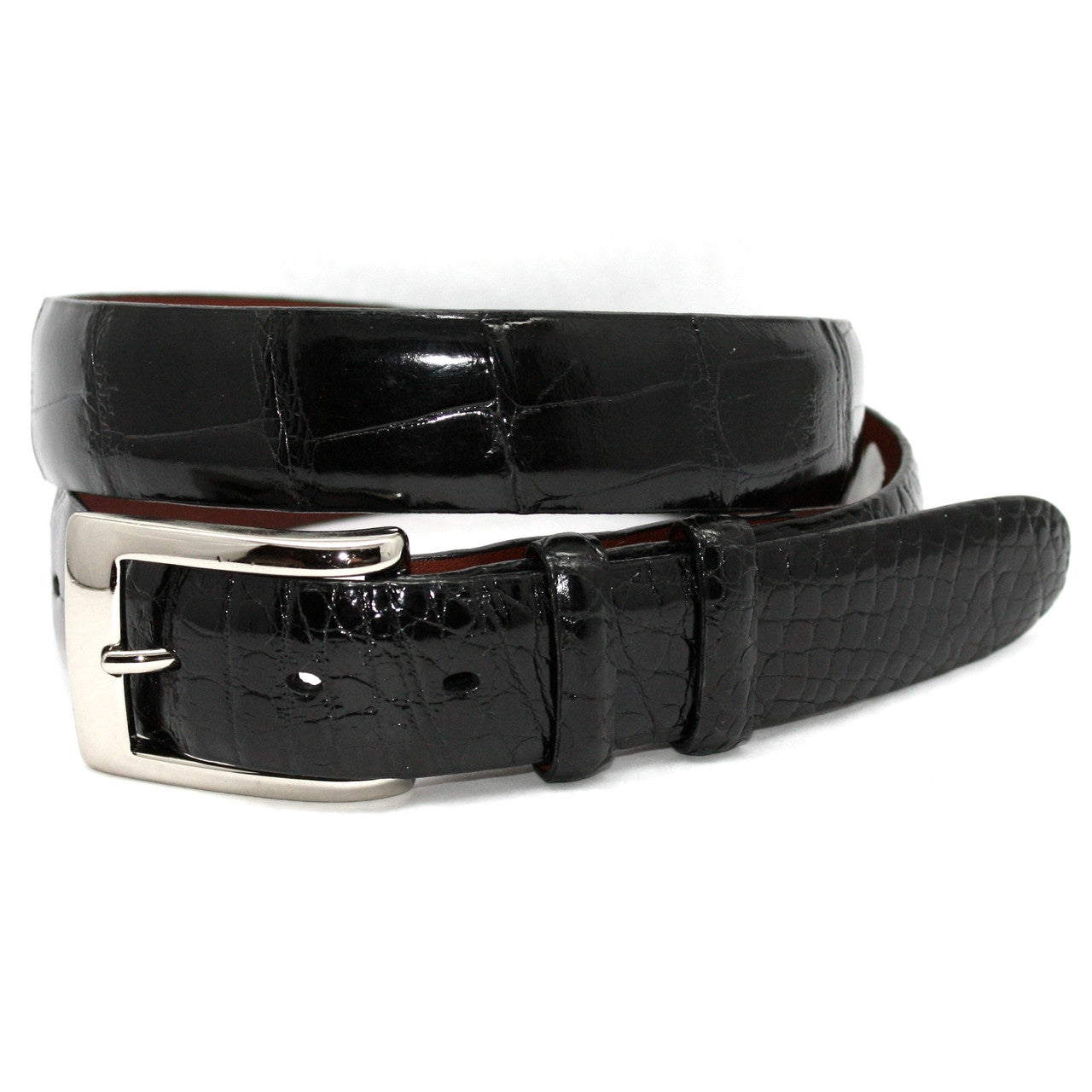
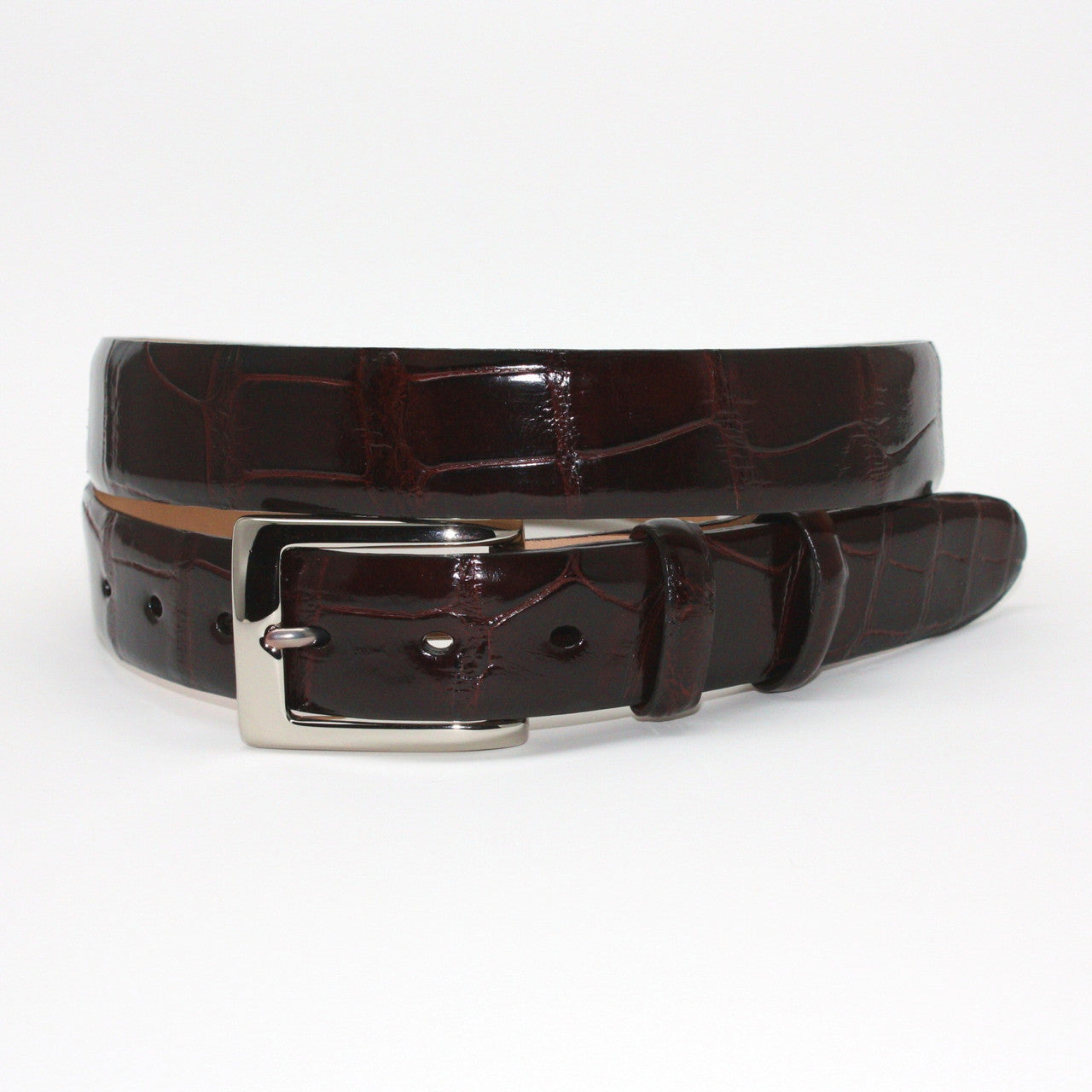
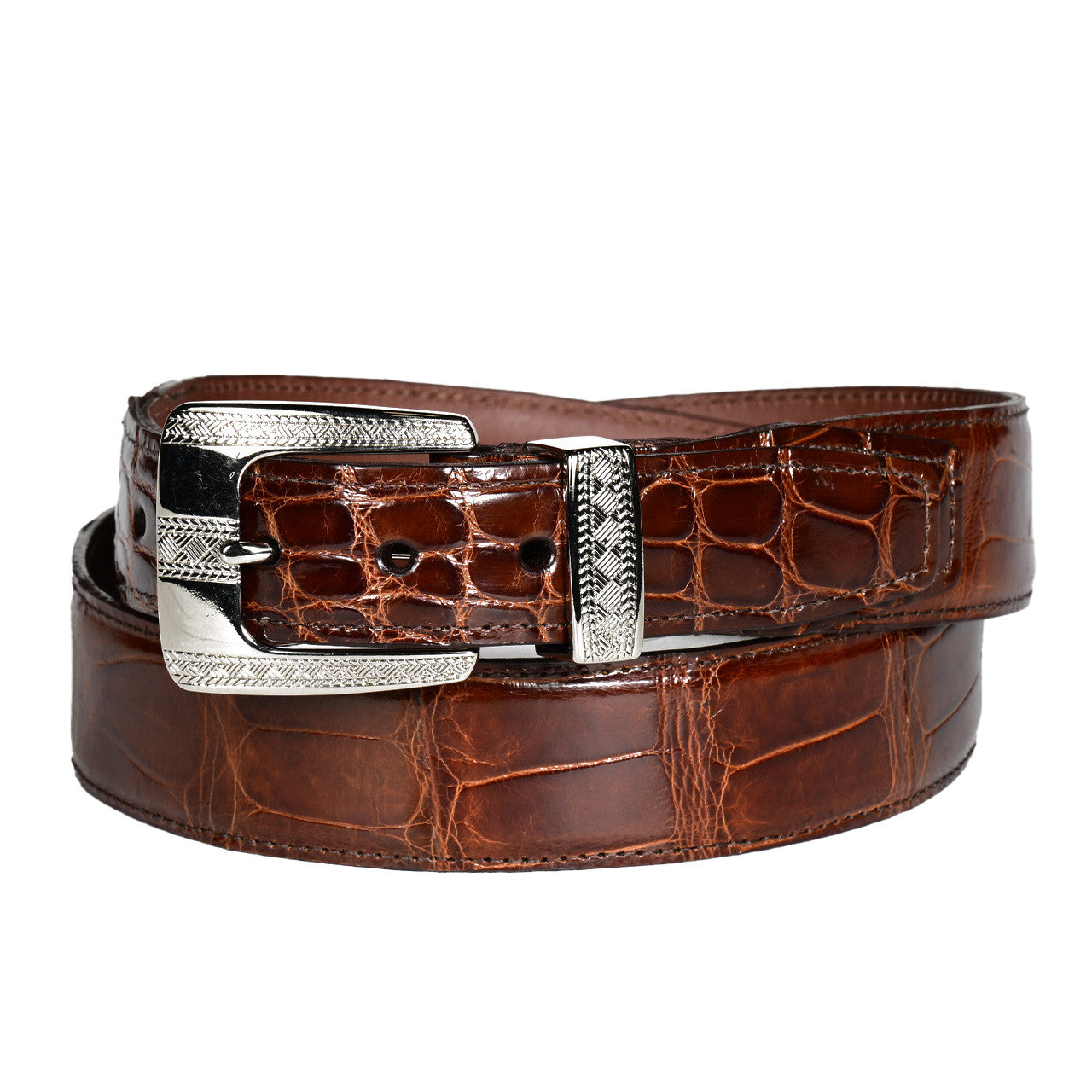
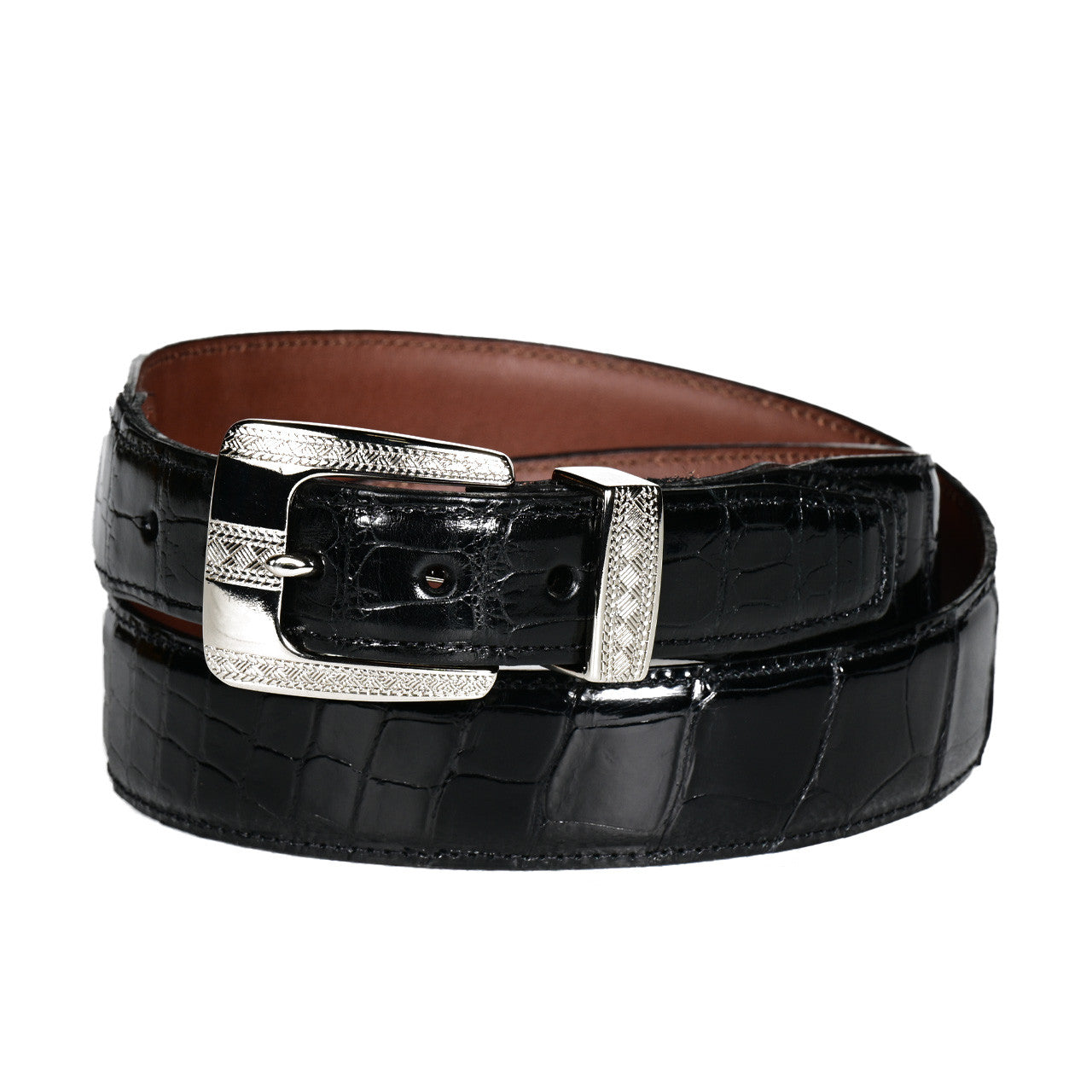
Unstitched has a clean edge with no visible thread. Nothing interrupts the tile pattern, which is why it reads dressier and why it's the traditional choice with a suit. Ours are $520 in black and brown.
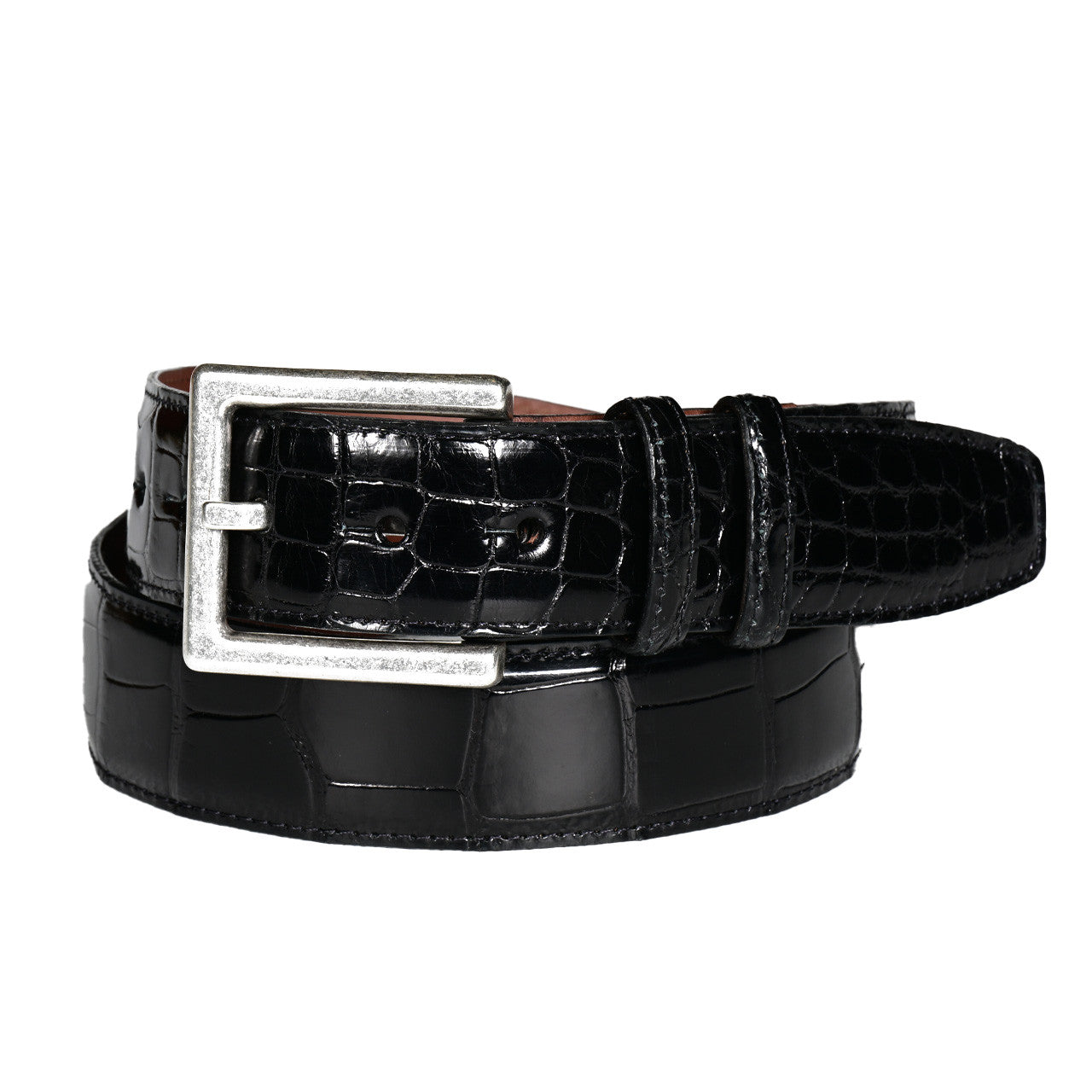
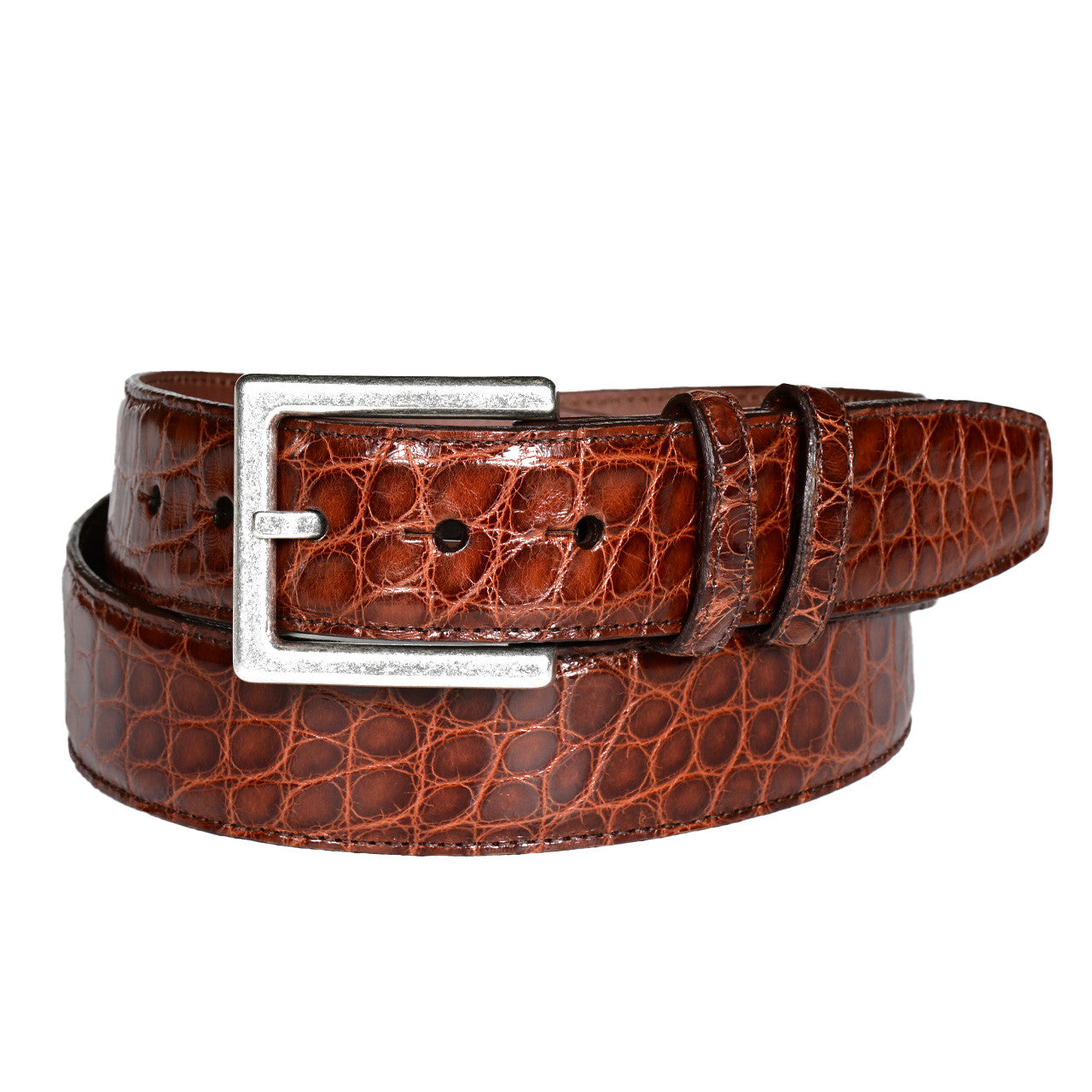
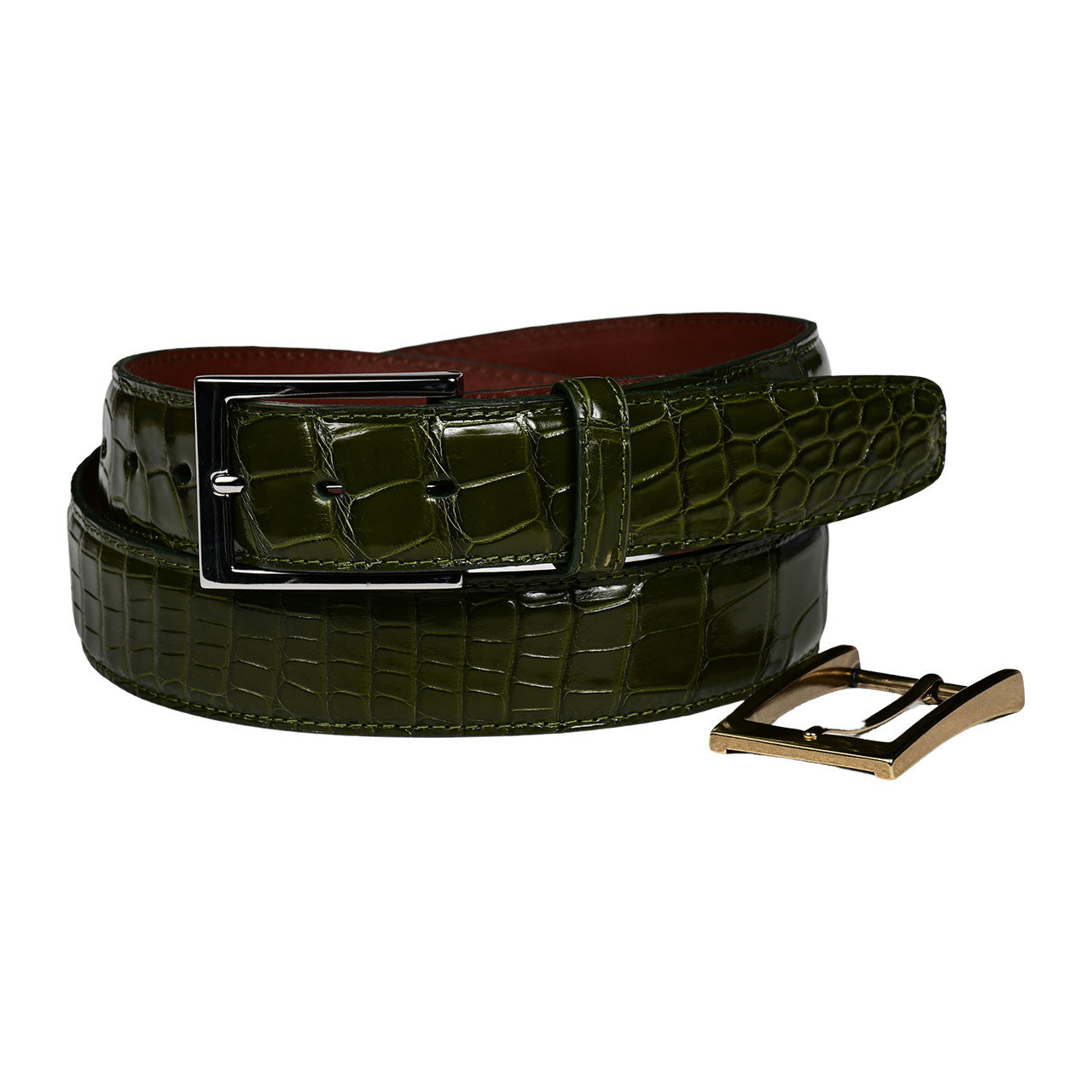
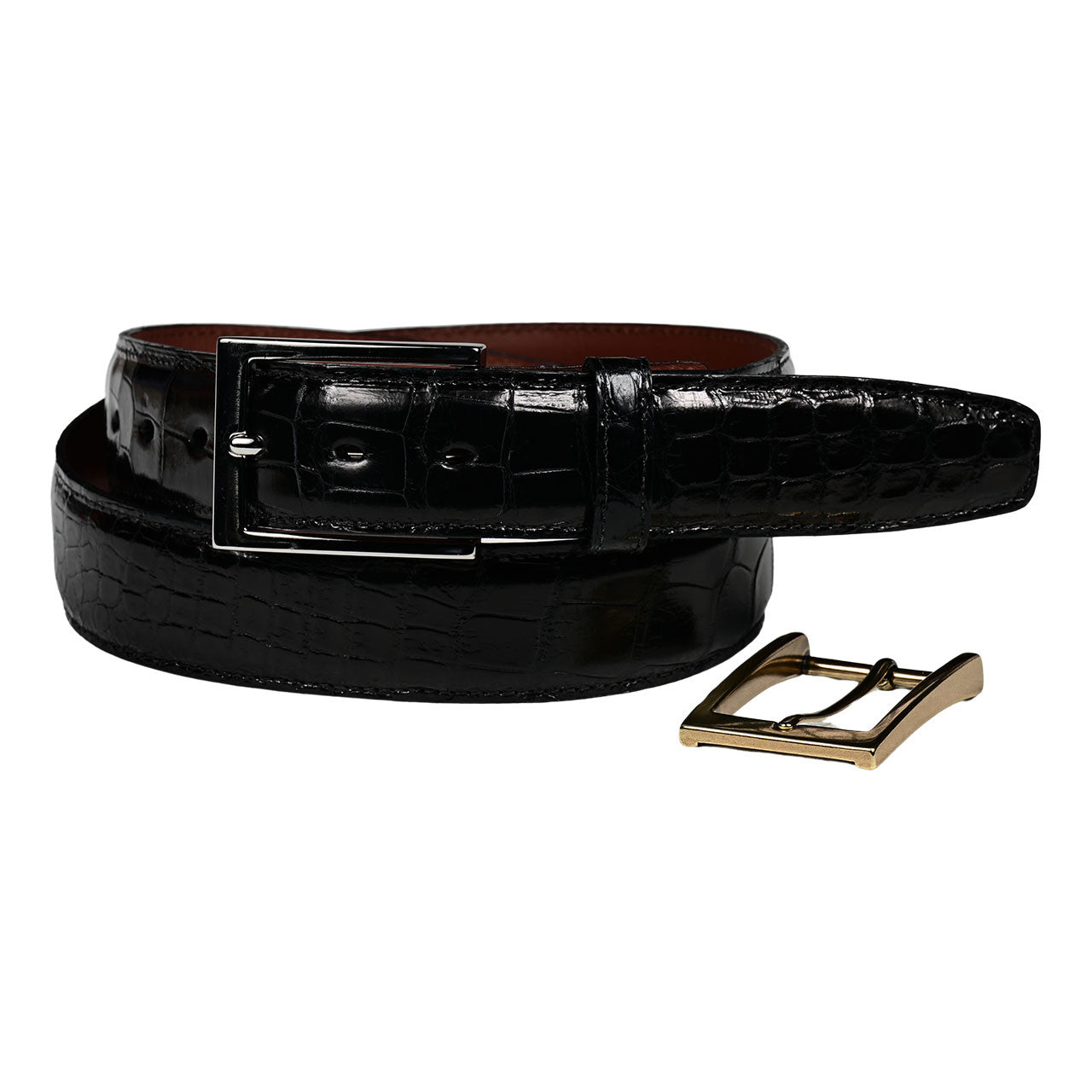
Stitched runs a line of thread along both edges. It's a slightly more rugged look and the stitch is doing real structural work at the edge. Our waxed stitched alligator is $540 in olive and black, and the olive is the most interesting color on this page.
Neither is better made. It's a question of whether you want the belt to be quiet or to have some visible construction to it.
Glazed or waxed
Finish changes an alligator belt more than color does.
Glazed is polished to a high shine. The tiles catch light and the belt announces itself. This is what most people picture when they think alligator.
Waxed is a lower, softer luster with more depth and less flash. It shows the grain of the tile rather than reflecting off it. If you want alligator without the shine, this is the one.
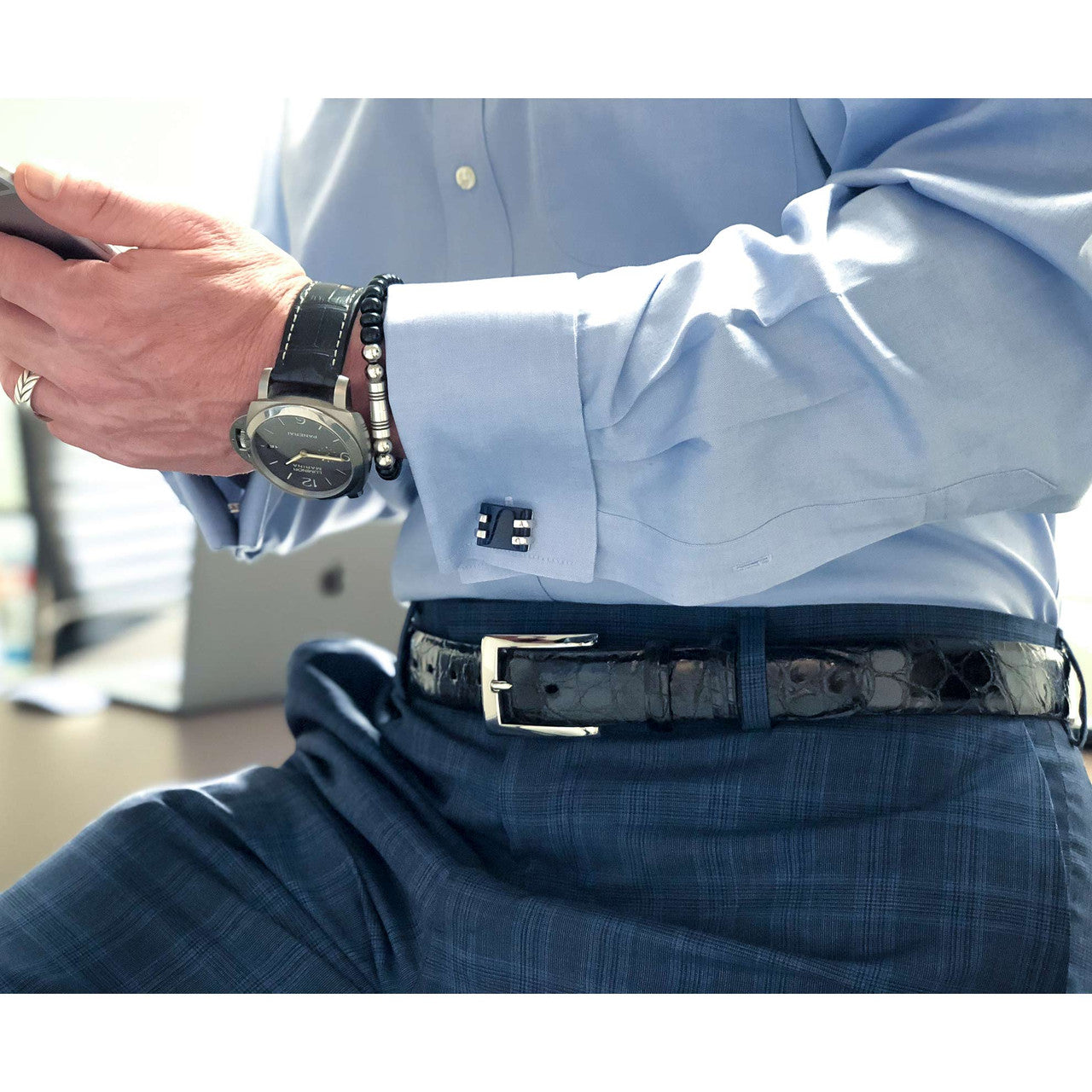
Glazed with a suit. Waxed with a sport coat and denim.
Width matters here
Most of these run standard dress width. The wide width at $575 in black and British tan is a different proposition: more strap means more visible tile, which is the point, and it balances better on a bigger frame or with heavier trousers.
If you're deciding between them, look at what you'll wear it with. A wide alligator strap under a slim suit fights the trouser loops. With chinos or jeans it looks right.
The one that isn't a full strap
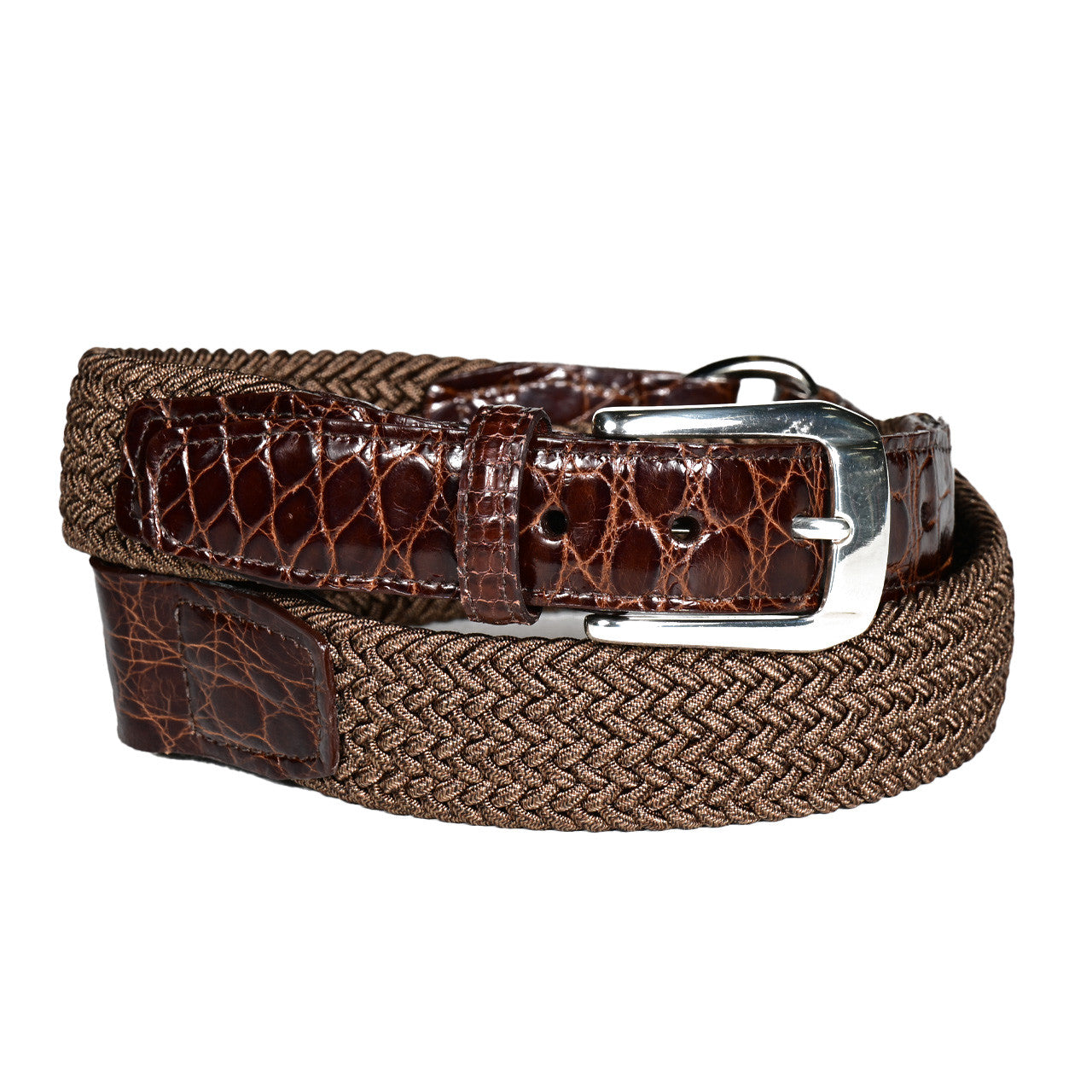
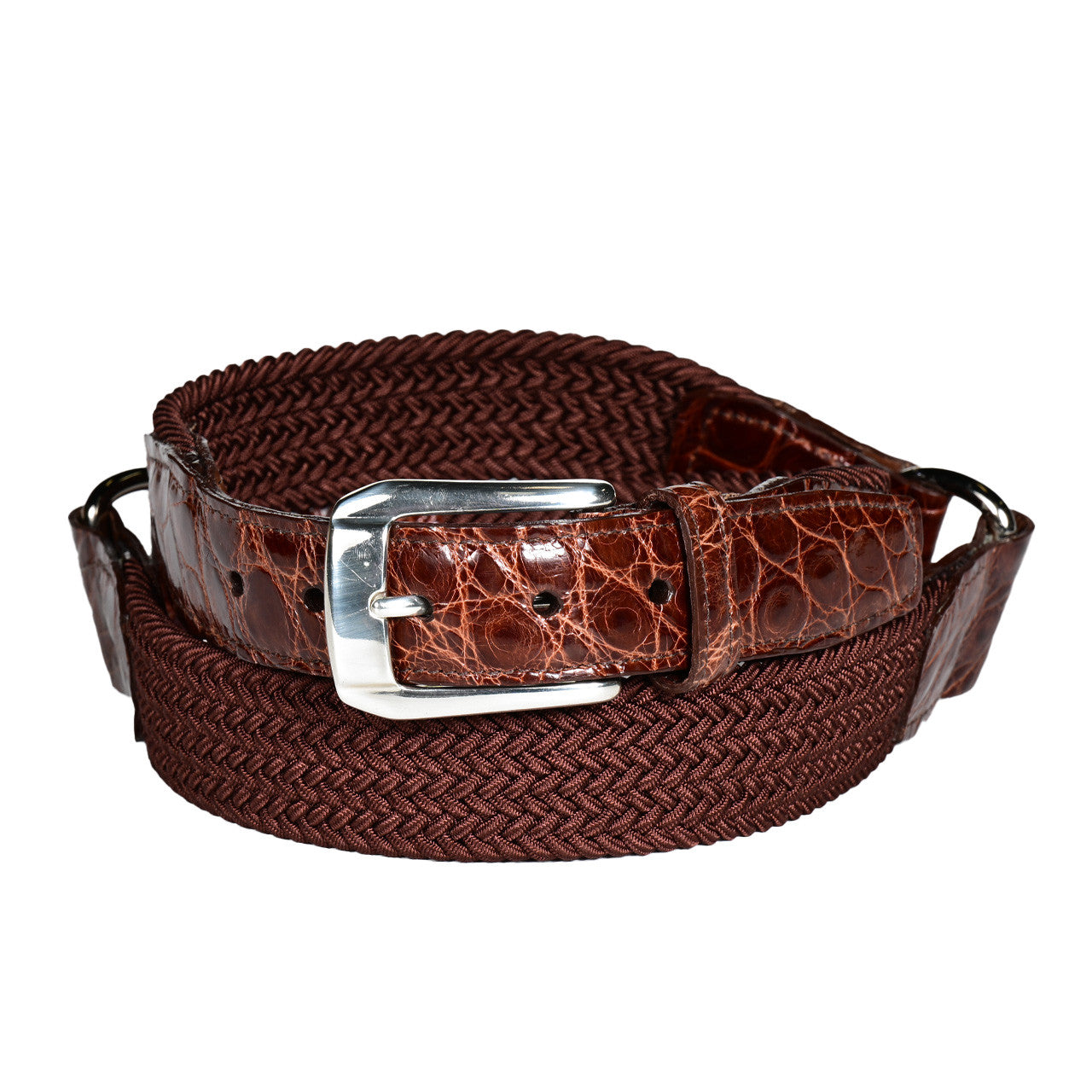
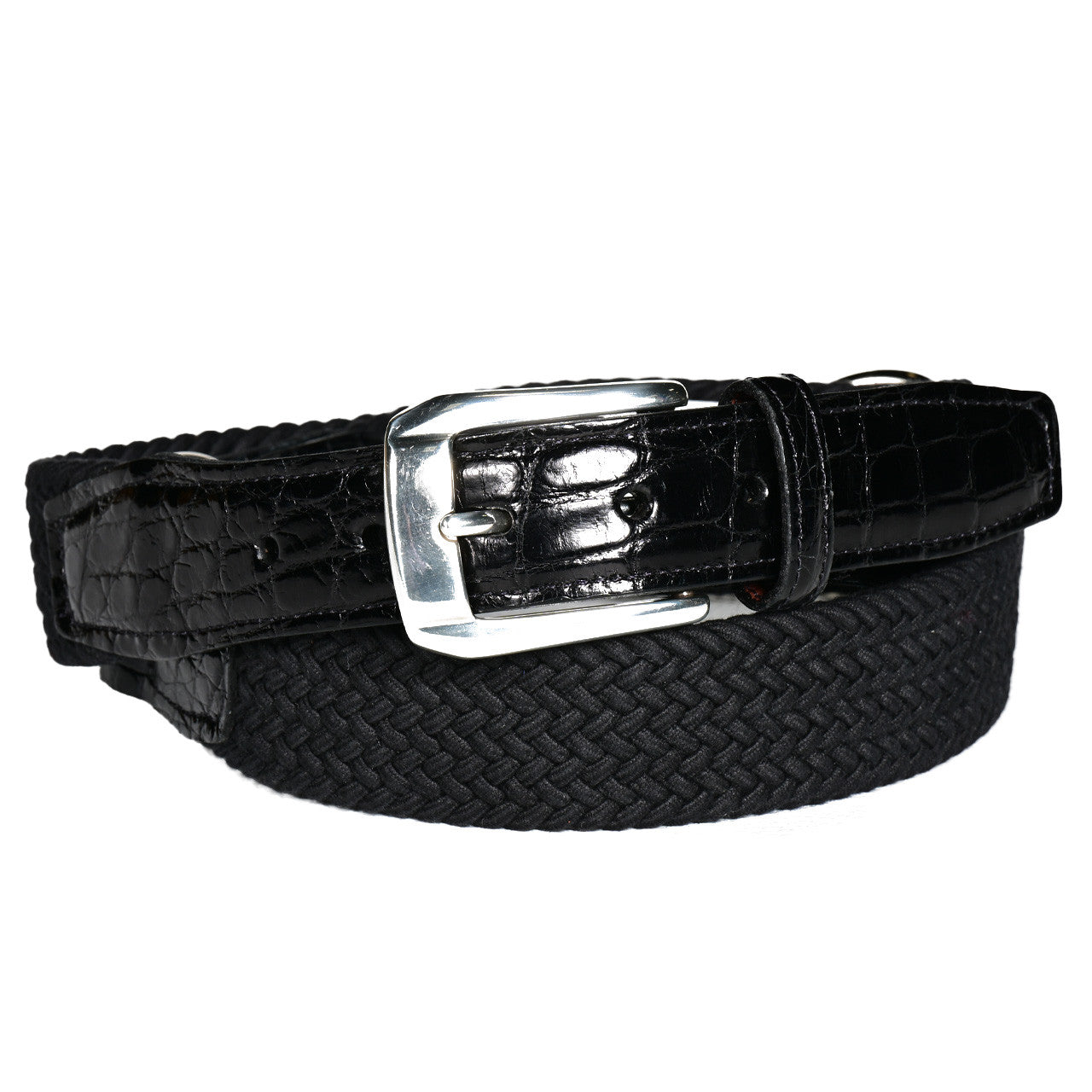
The three-piece woven Italian rayon at $475 uses genuine American alligator at the ends with a woven stretch strap through the middle. Real skin where the eye lands, give where you need it.
It's the least expensive way into genuine alligator here, and for a man who has never owned one it's a reasonable place to start. Mocha and brown, cinnamon and British tan, or black.
What separates a good alligator belt from a bad one
Three things, and none of them are obvious in a photograph.
Where the cut came from. The belly is the prize, with large rectangular tiles that grow toward the center. A belt cut from further out on the hide has smaller, less regular tiles and should cost less.
Whether it's centered. On a well cut strap, the row of largest tiles runs down the middle and stays symmetrical. Off-center cutting is the most common shortcut and the easiest to spot once you know to look.
The edge. Alligator is a demanding hide to finish. Look at how the edge is burnished or stitched, because that's where a corner gets cut.
Living with it
Less product than you think. Alligator is finished at the tannery and doesn't want to be fed the way a vegetable-tanned strap does. A dry cloth handles most of it.
Never fold it. Roll it or hang it flat, because a crease across tiles doesn't relax out. Keep it away from standing water, and if it gets wet, blot and dry away from heat.
Rotate it. A belt worn every day fatigues at the buckle fold first, and at $520 that's an expensive lesson.
Buckles
Most of these have removable buckles, so one strap isn't locked to one look and a damaged buckle doesn't cost you the belt.
The etched silver buckle and loop styles at $550 ship with that hardware as part of the design. It's a heavier, more decorative look than the polished nickel on the unstitched belts.
Related
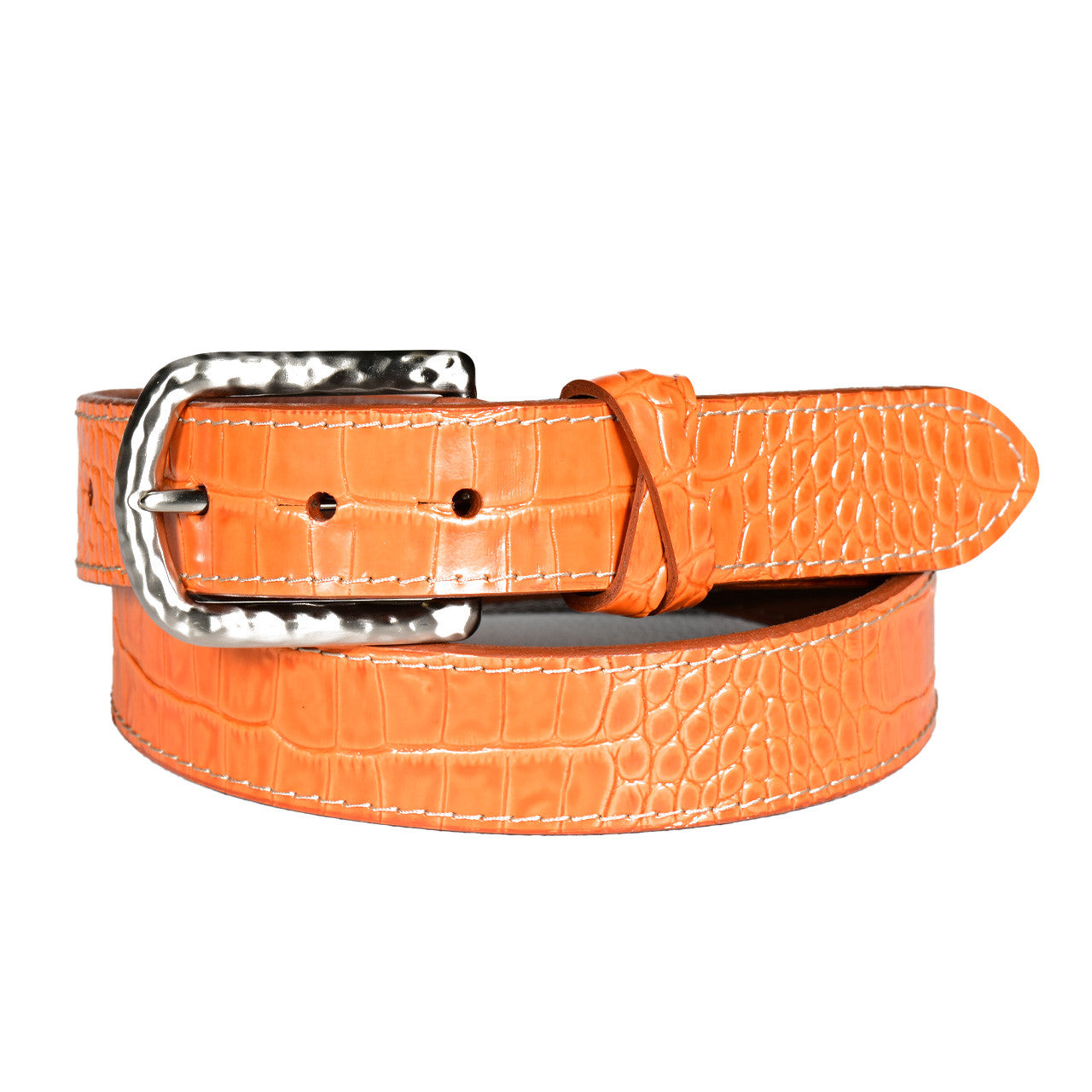
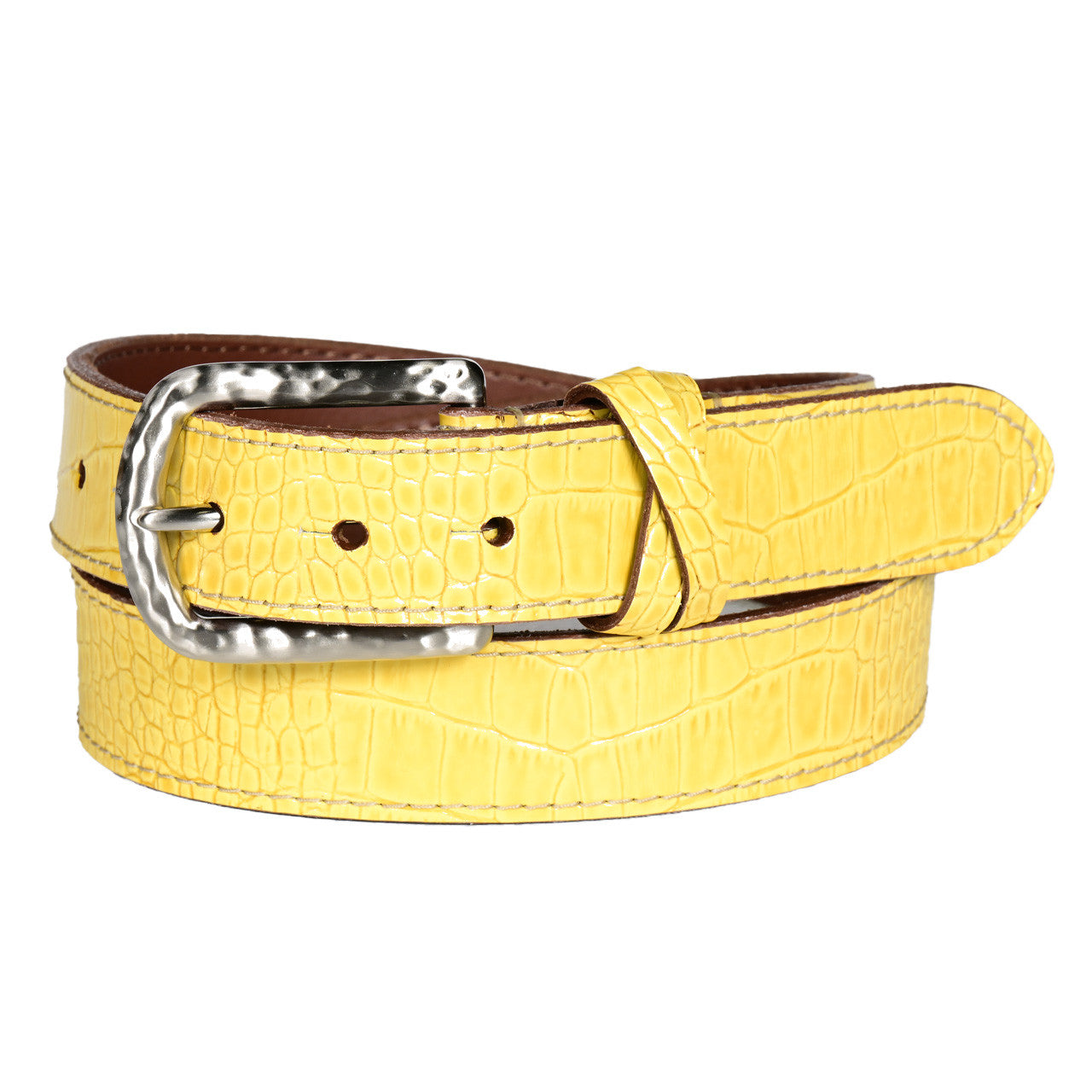
For how these hides are sourced and regulated, see Exotic Belts. To tell alligator from caiman and crocodile by sight, see Dress Belts. Caiman is the same family at a third the price. For the pattern at a fifth of the price in real calfskin, see Embossed Exotic. Everything is in all belts.
Questions we get
Why do alligator belts cost so much?
Yield and matching. Only part of a hide has tiles worth putting on a belt, so one animal produces very few straps, and each is cut and matched by hand. Ours run $475 to $575.
What's the difference between stitched and unstitched?
Unstitched has a clean edge with no visible thread, so nothing interrupts the tile pattern. Stitched runs thread along both edges for a more rugged look. Unstitched reads dressier.
What's the difference between glazed and waxed alligator?
Glazed is polished to a high shine and reflects light off the tiles. Waxed has a lower, softer luster that shows the texture instead. Waxed is the subtler of the two.
How can I tell a good alligator belt from a bad one?
Look at whether the largest tiles run centered down the strap, whether the tile pattern is symmetrical, and how the edge is finished. Off-center cutting is the most common shortcut.
Is alligator better than caiman?
It's the more valuable skin. Alligator tiles are larger, smoother, and have no bony ridge, where caiman scales are smaller and harder with a raised ridge in each. Caiman is a genuine crocodilian skin and wears well, but it isn't gator.
How should I care for an alligator belt?
Wipe with a dry cloth and use very little conditioner. Never fold it, roll or hang it instead, and keep it away from standing water and heat.
Is buying an American alligator belt legal?
Yes. American alligator is farmed and managed under state and federal programs, skins are tagged, and international trade runs under CITES.