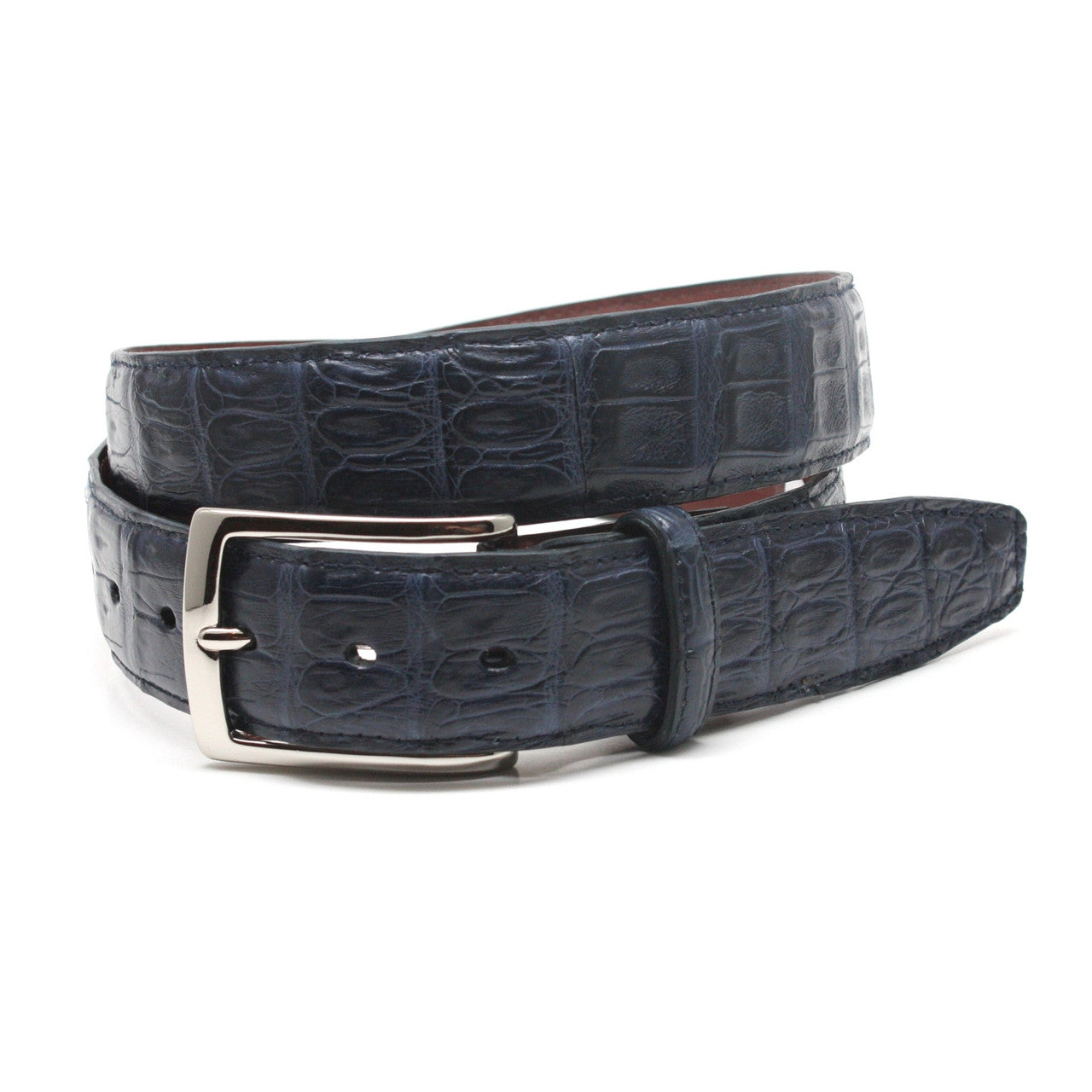
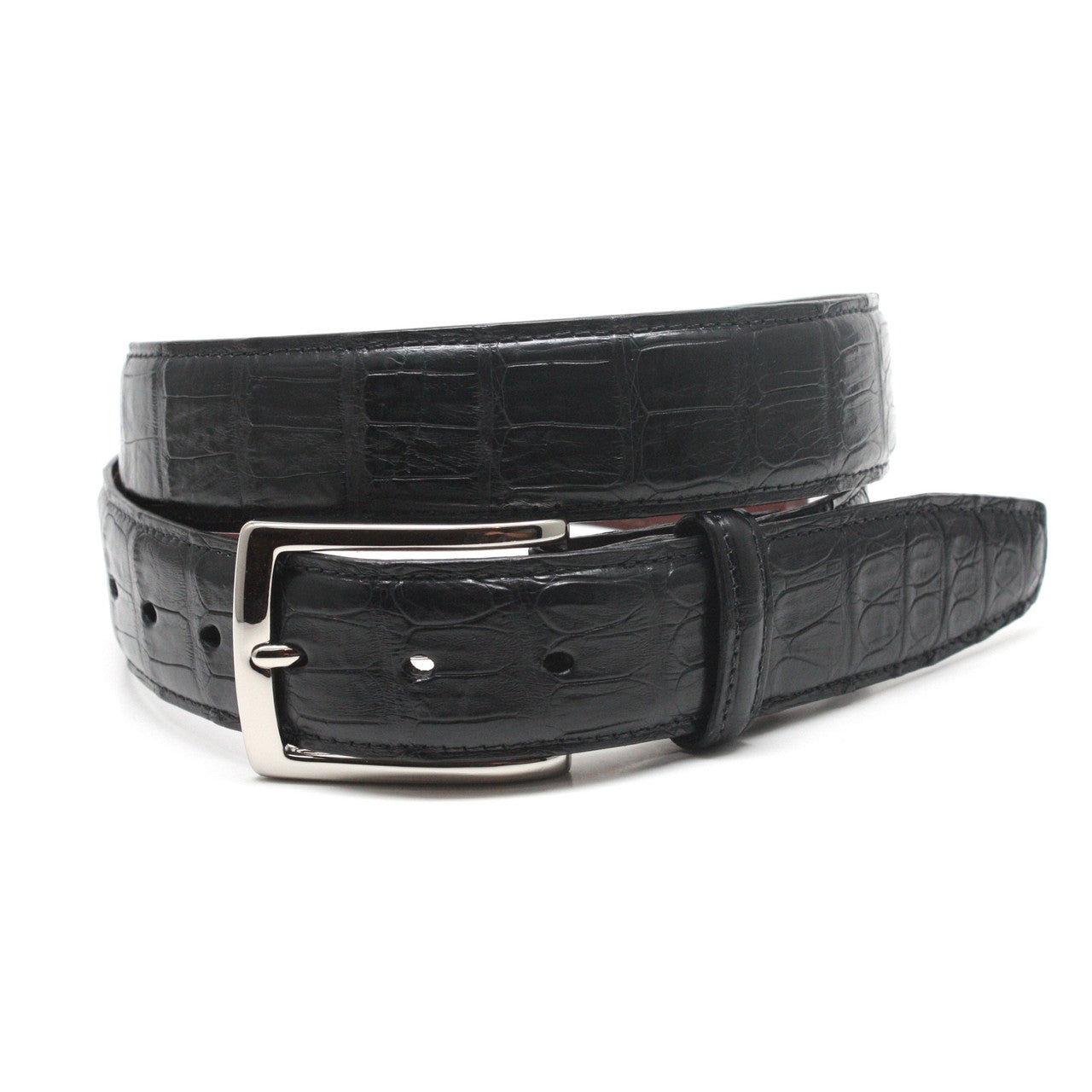
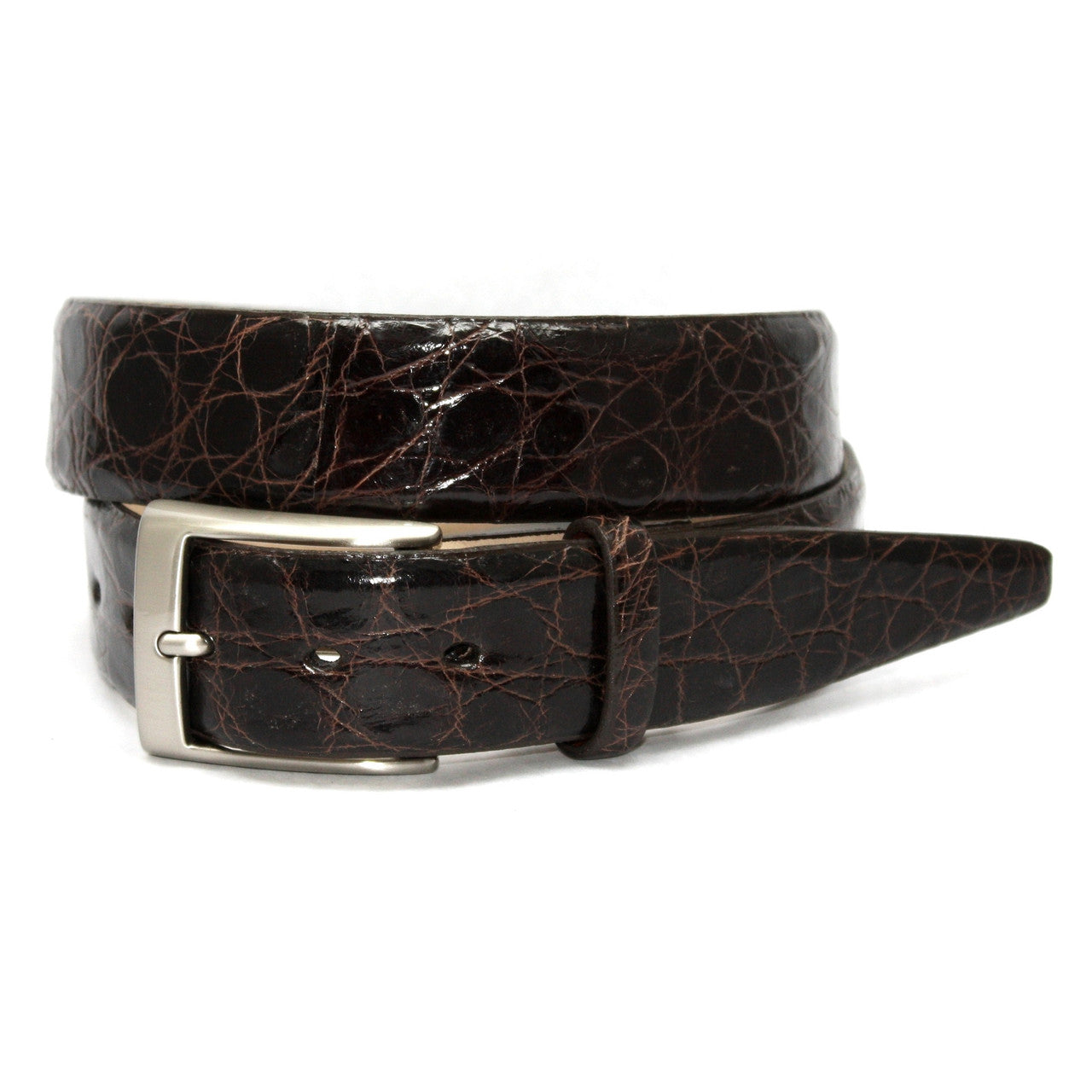
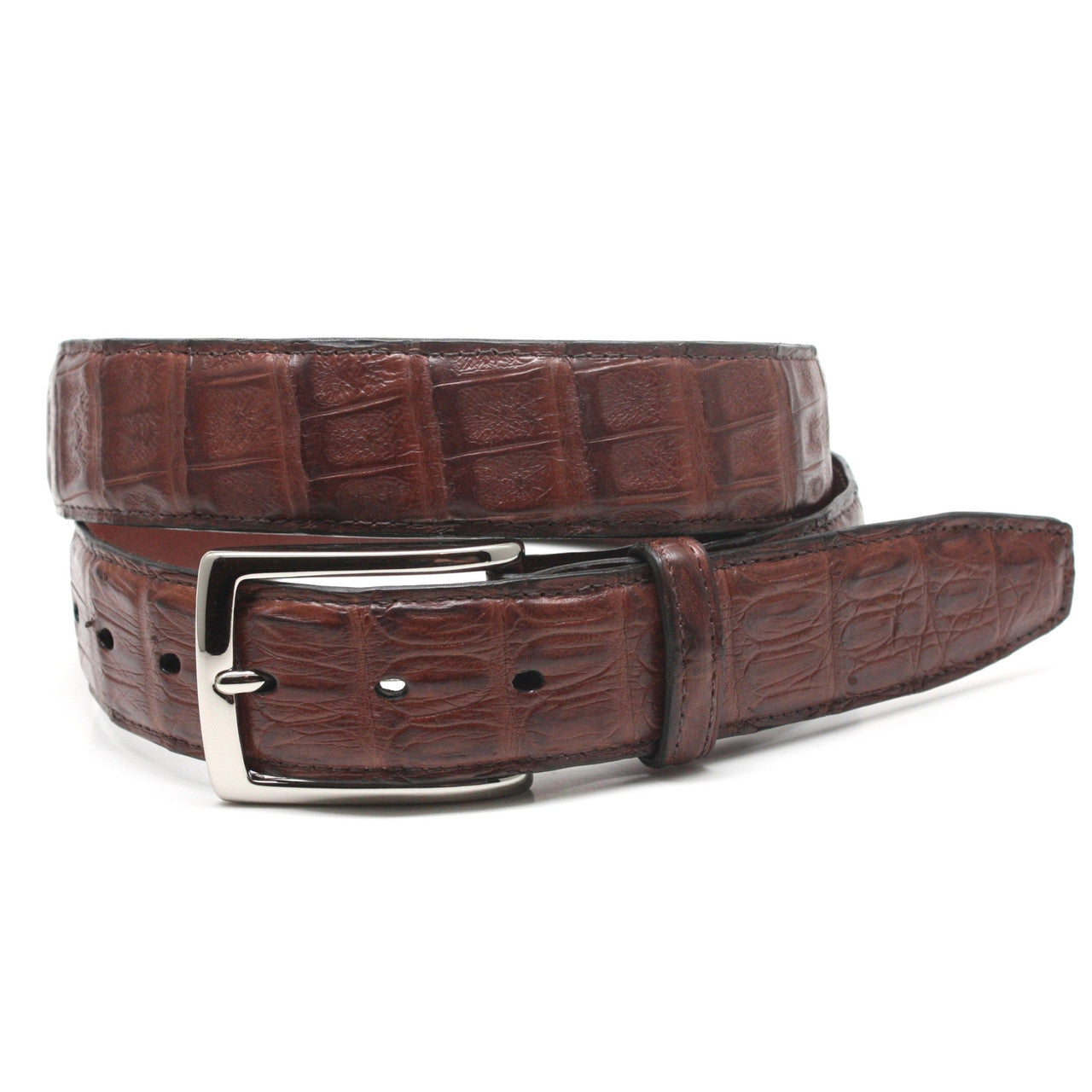
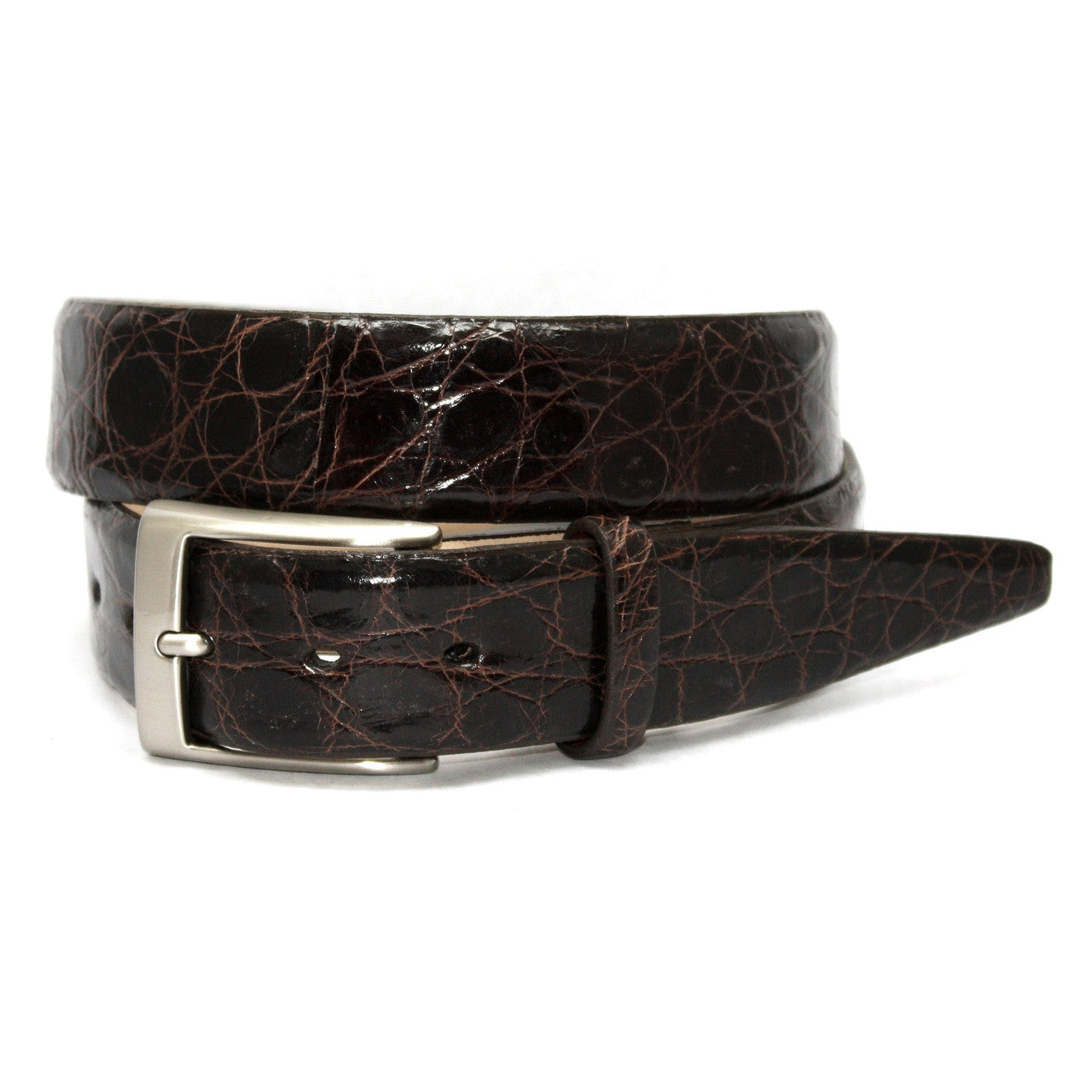
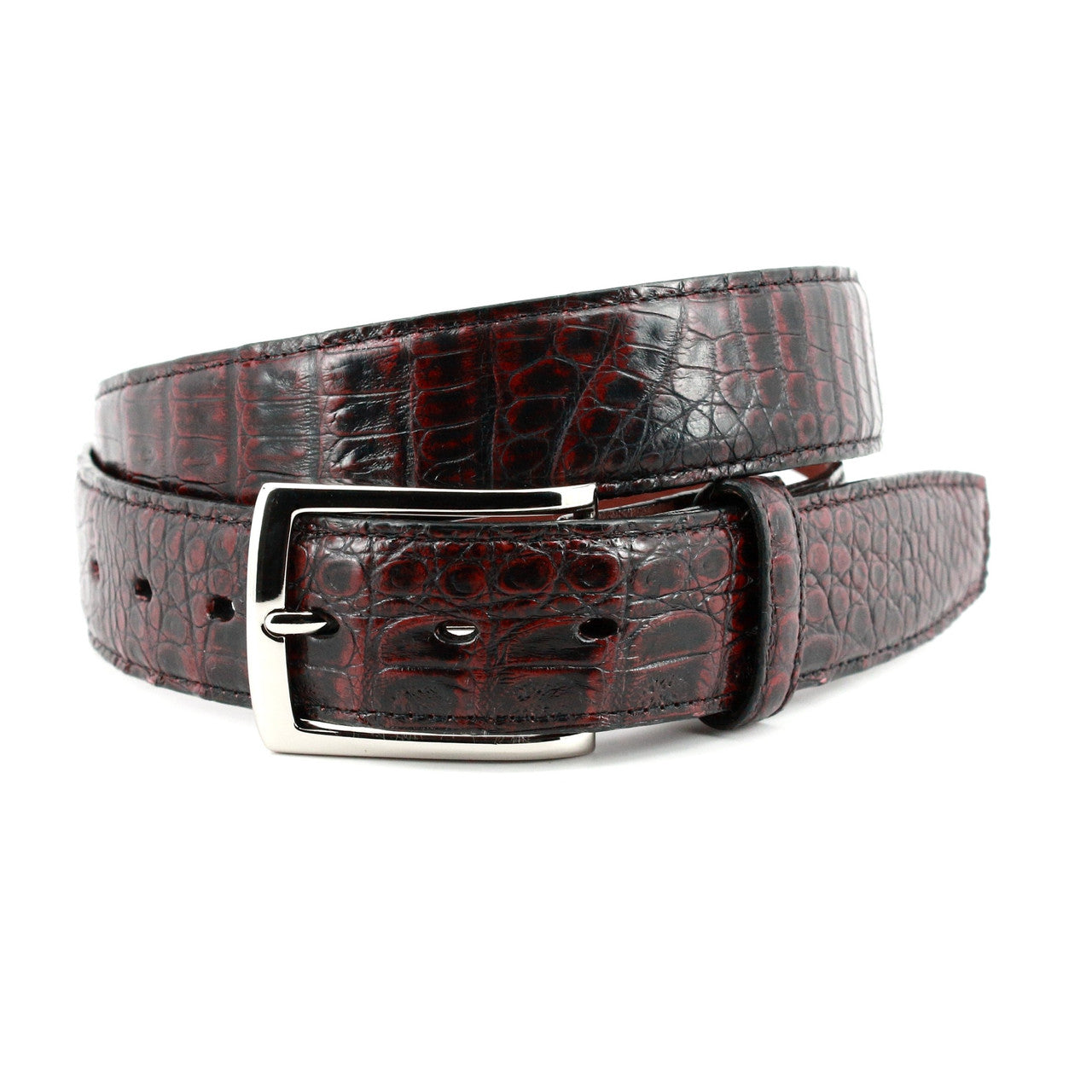
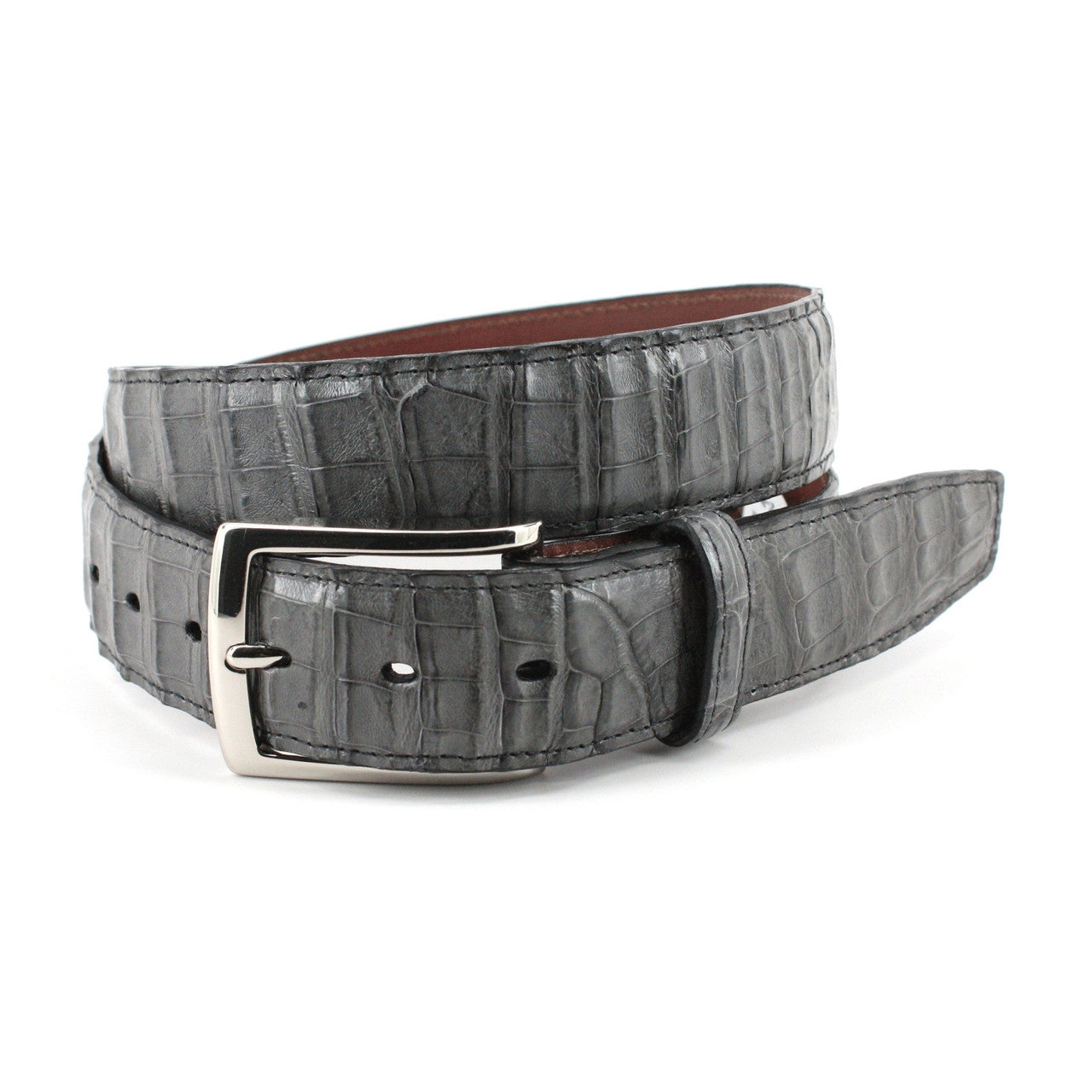
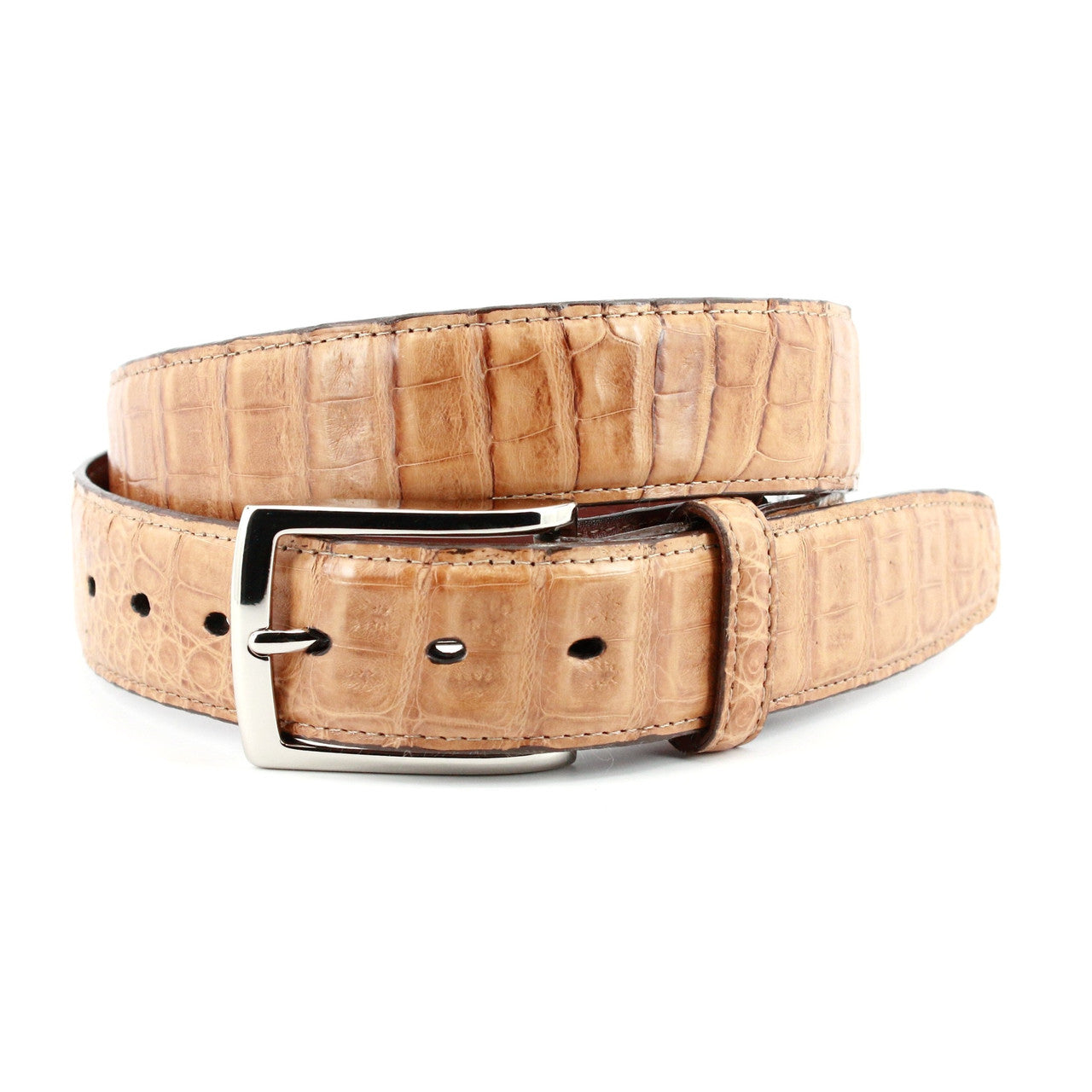
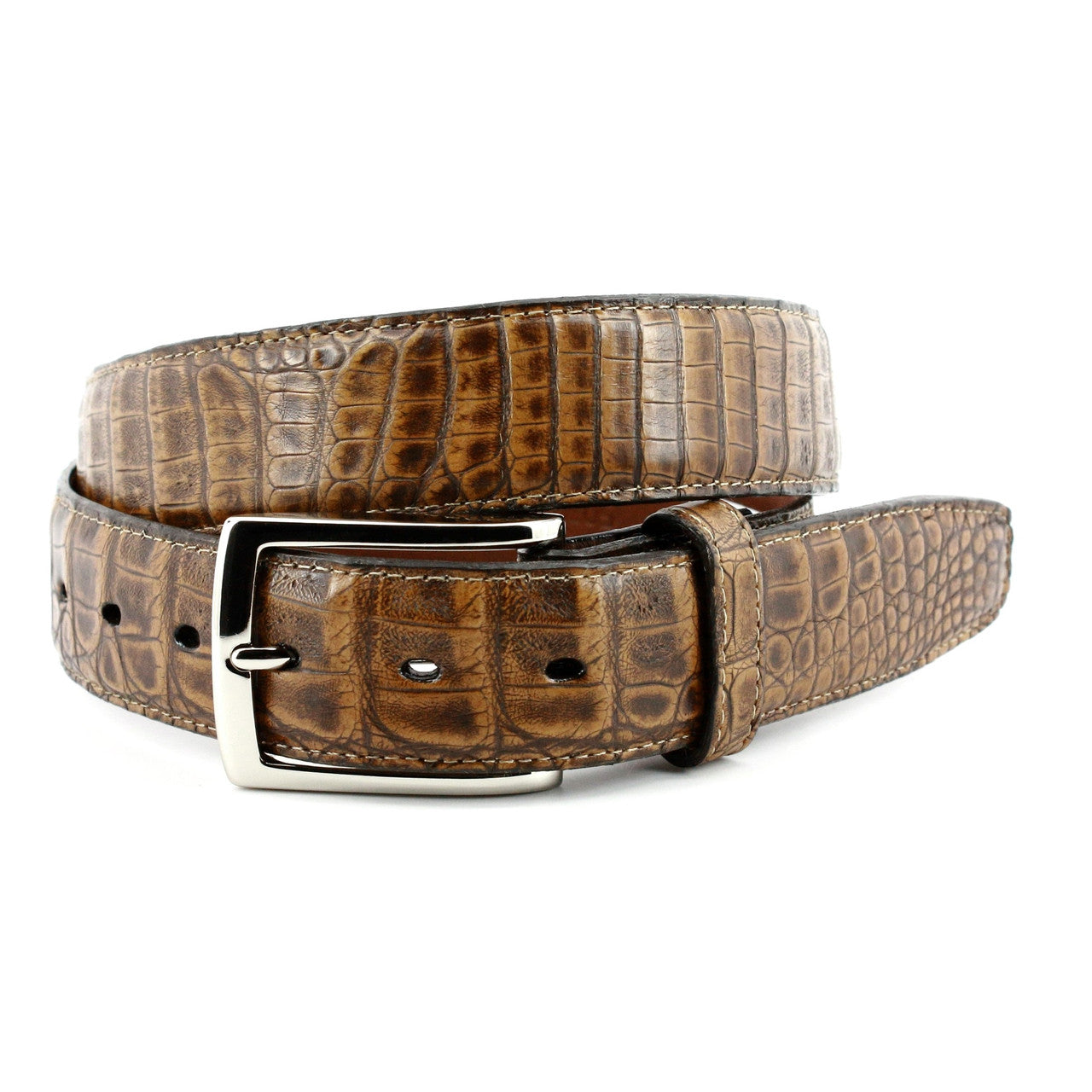
The colors
All nine full-strap colors are $345, so the decision is purely what you want rather than what it costs.
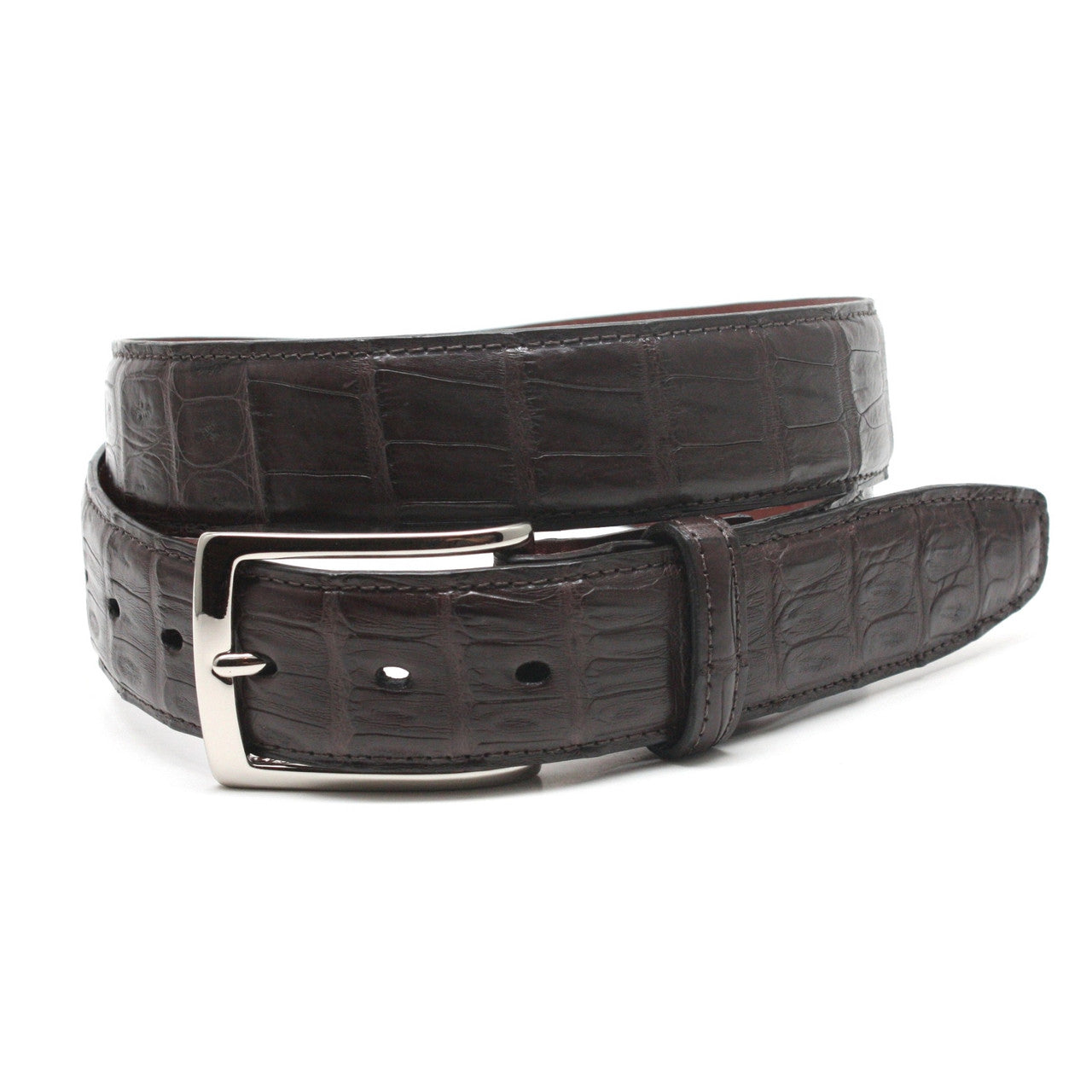
The safe ones: black, brown, cognac, saddle. These do what a dress belt does and never argue with anything.
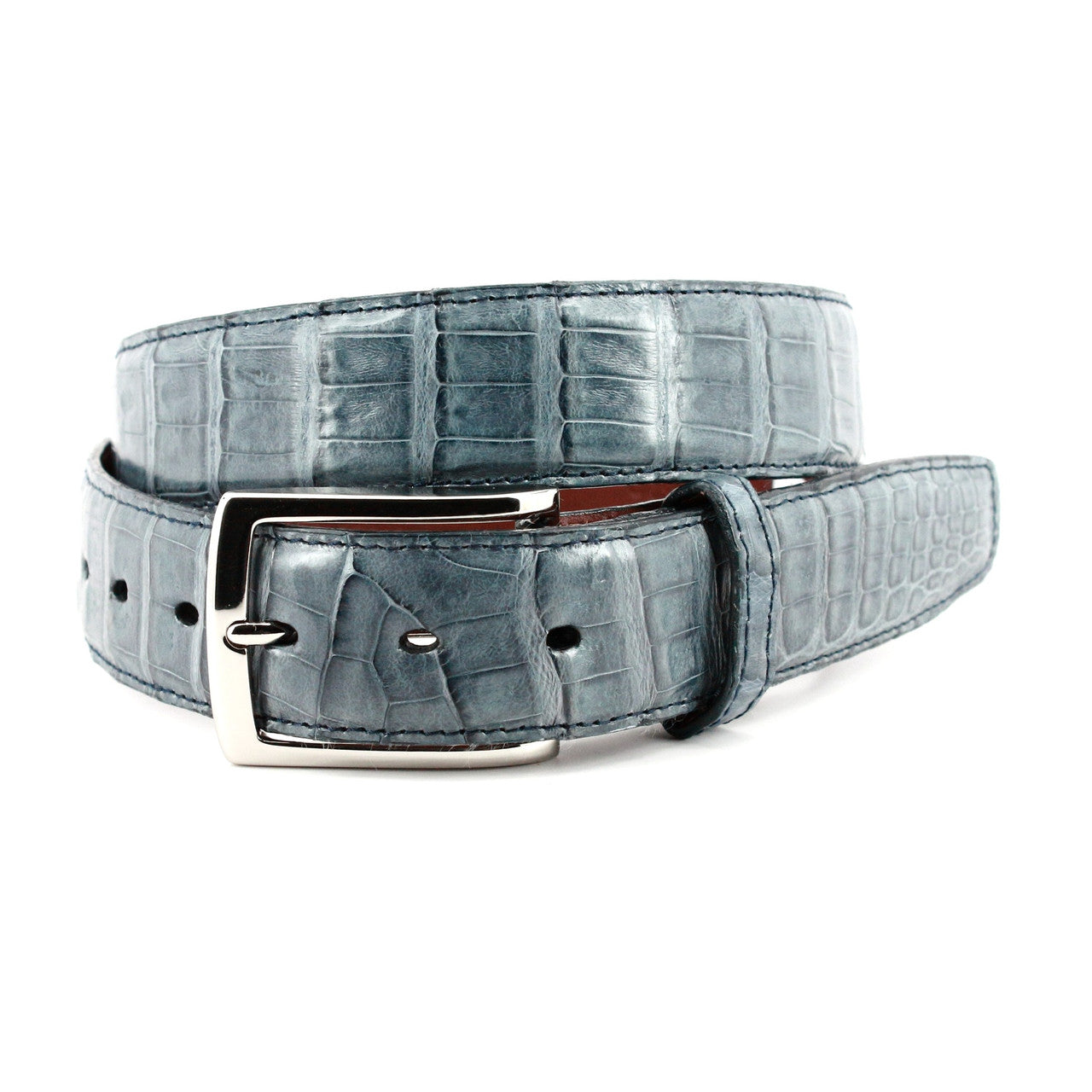
The good ones: navy, grey, black cherry, antique pecan. Navy is the most underrated exotic color there is, and it works with grey trousers in a way brown never quite does. Antique pecan has depth that photographs badly and looks excellent in person.
The interesting one: blue jean. It's exactly what it sounds like, and it's the belt people ask about.
There's also a glazed brown, which is polished to a higher shine than the standard finish.
What caiman actually is
Here's the thing almost nobody selling these gets right: caiman is not a crocodile. It's in the alligator family, Alligatoridae, so a caiman is a closer relative of an American alligator than any true crocodile is.
It's a smaller animal, farmed across South America, and its skin behaves differently from gator in one specific way. Each scale has a bony deposit under it, called an osteoderm, which gives caiman its harder feel and its distinctive raised ridge in the center of each tile. That ridge is how a trained eye identifies caiman in about two seconds.
The tiles are smaller and more regular than alligator, so the pattern reads tighter and busier. Some men prefer that. It photographs well and it doesn't shout across a room the way a big-tile gator belt does.
Why it costs a third of alligator
Supply, mostly. Caiman is farmed widely and the animals are smaller and more plentiful, so hides are easier to source and yield more usable straps.
The bony scales also make it harder to work and less pliable than gator, which is part of why the trade values it lower. That same hardness is what makes the pattern so crisp.
None of that makes it a lesser belt. It makes it a $345 belt instead of a $520 one, and anyone who tells you caiman is fake alligator is either confused or selling something.
The stretch version
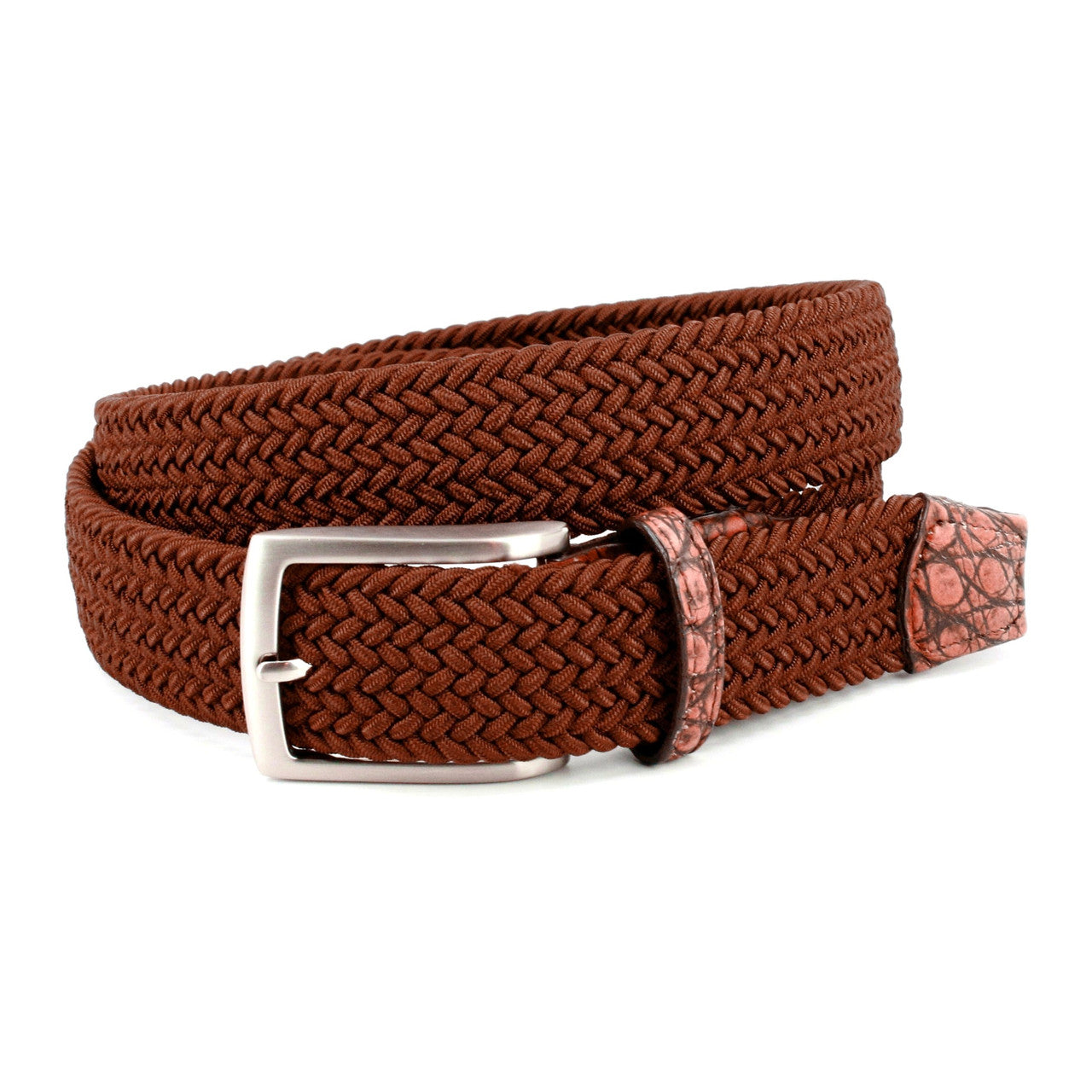
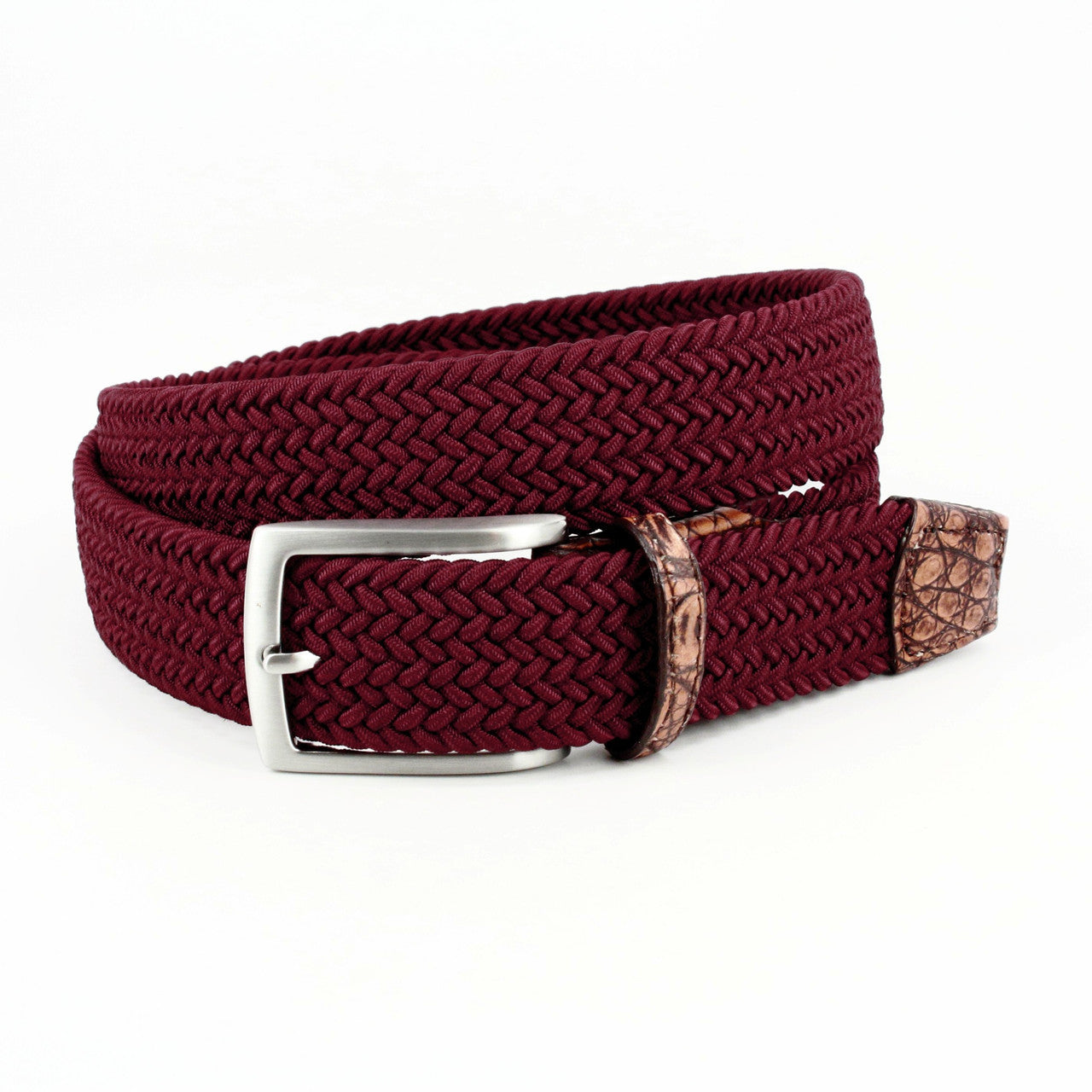
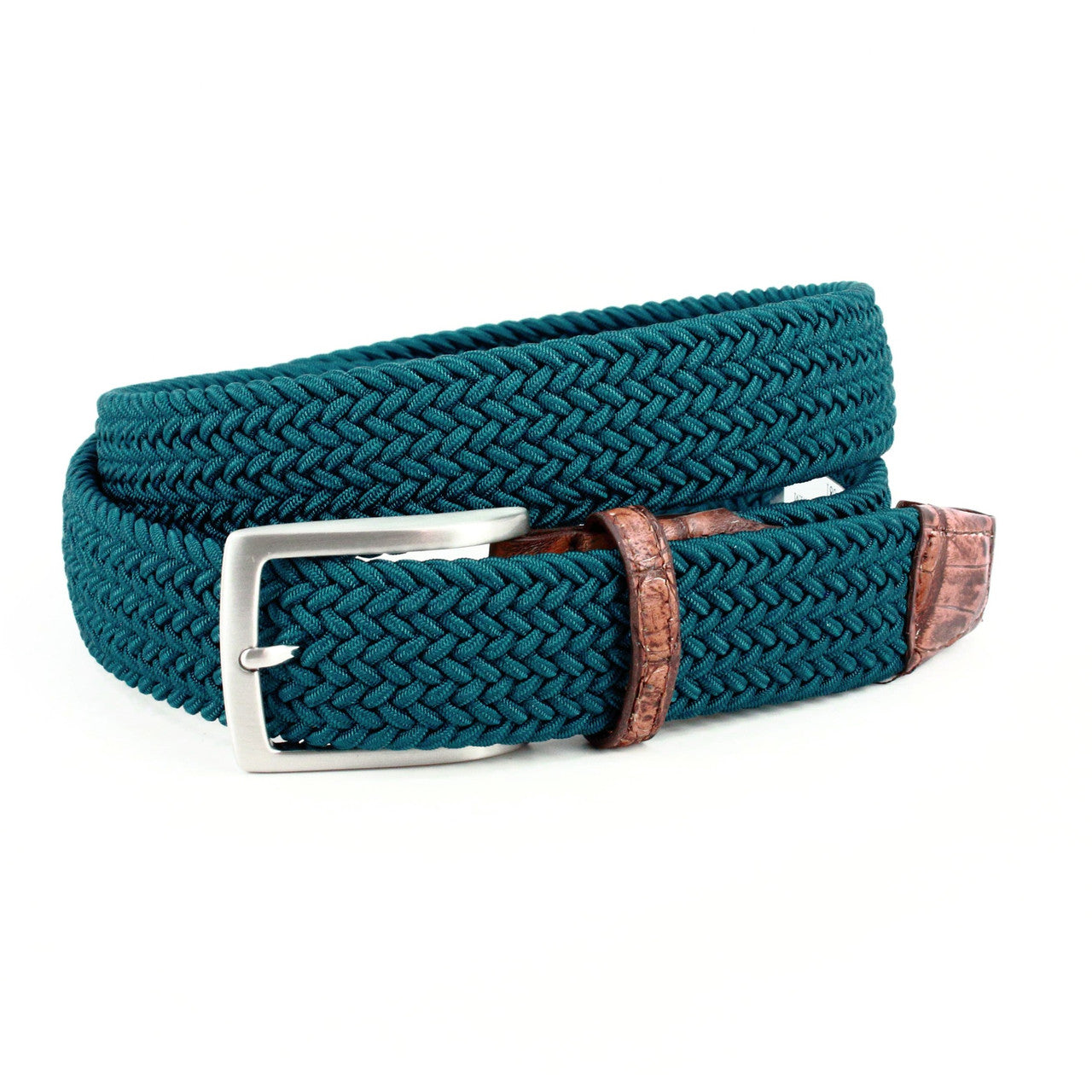
The Italian rayon stretch belt with genuine caiman tabs is $180 in cinnamon, teal, and burgundy. Real skin at both ends, woven stretch through the middle.
It's the least expensive way to own genuine caiman here, it's more comfortable through a long day than any solid strap, and the teal is the sort of thing you'd never find in a full skin.
Longer sizes
The glazed brown comes in an extended length at $500, which is $155 above the standard version. That gap is bigger than on any other belt we sell, and the reason is simple: finding a single caiman belly long enough and clean enough for a 50 is genuinely difficult. Most hides can't produce one.
More extended sizes are in Extended Sizes.
Living with caiman
Use very little product. The skin is finished at the tannery and doesn't want conditioner the way a vegetable-tanned strap does. A dry cloth does most of the work.
One thing specific to caiman: dust and product collect around the raised ridges. A soft brush lifts it out. Don't work anything greasy into those grooves, because it darkens there first and looks uneven.
Never fold it. Roll it or hang it flat. Keep it out of standing water, and if it gets wet, blot and dry away from heat.
Related
American Alligator is the larger-tile, higher-priced relative. For how these skins are sourced and regulated, see Exotic Belts. To tell the three crocodilians apart by sight, see Dress Belts. For the pattern in real calfskin at a fraction of the price, see Embossed Exotic. Everything is in all belts.
Questions we get
Is caiman a crocodile or an alligator?
Neither exactly, but it's much closer to an alligator. Caiman belongs to Alligatoridae, the alligator family, so it's more closely related to an American alligator than a true crocodile is.
Is caiman real exotic leather?
Yes. It's a genuine crocodilian skin from a real animal, farmed in South America. It is not embossed calfskin and it is not an imitation of anything.
What's the difference between caiman and alligator?
Caiman scales are smaller and harder, with a raised bony ridge in the center of each tile. Alligator tiles are larger, smoother, and have no ridge. Caiman runs $345 here and alligator starts at $520.
Why is caiman cheaper than alligator?
Supply and workability. Caiman is farmed widely, the animals are smaller and more plentiful, and the bony scales make the hide harder to work. That's pricing, not quality.
What colors do you carry?
Nine at $345: black, brown, cognac, saddle, navy, grey, black cherry, blue jean, and antique pecan, plus a glazed brown.
How do I clean a caiman belt?
Wipe with a dry cloth and use very little conditioner. A soft brush lifts dust from around the raised ridges. Never fold the strap and keep it away from standing water and heat.
Do you carry caiman in big and tall sizes?
Yes, the glazed brown in an extended length at $500.