Why the front pocket matters
Three practical reasons, and none of them are complicated.
You stop sitting on it. A bifold in a back pocket spends eight hours a day compressed under your own weight. It takes the shape of the chair, the fold line breaks down, and it splits at the spine years earlier than it should. Nothing you do to a wallet wears it out faster than sitting on it.
It's harder to lose and harder to take. A front pocket is in your line of sight and against your leg. A back pocket is neither, which is why every travel guide ever written says the same thing.
It sits flat. No bulge under a jacket, no reaching around, and no standing up in a restaurant patting four pockets.
How it's built
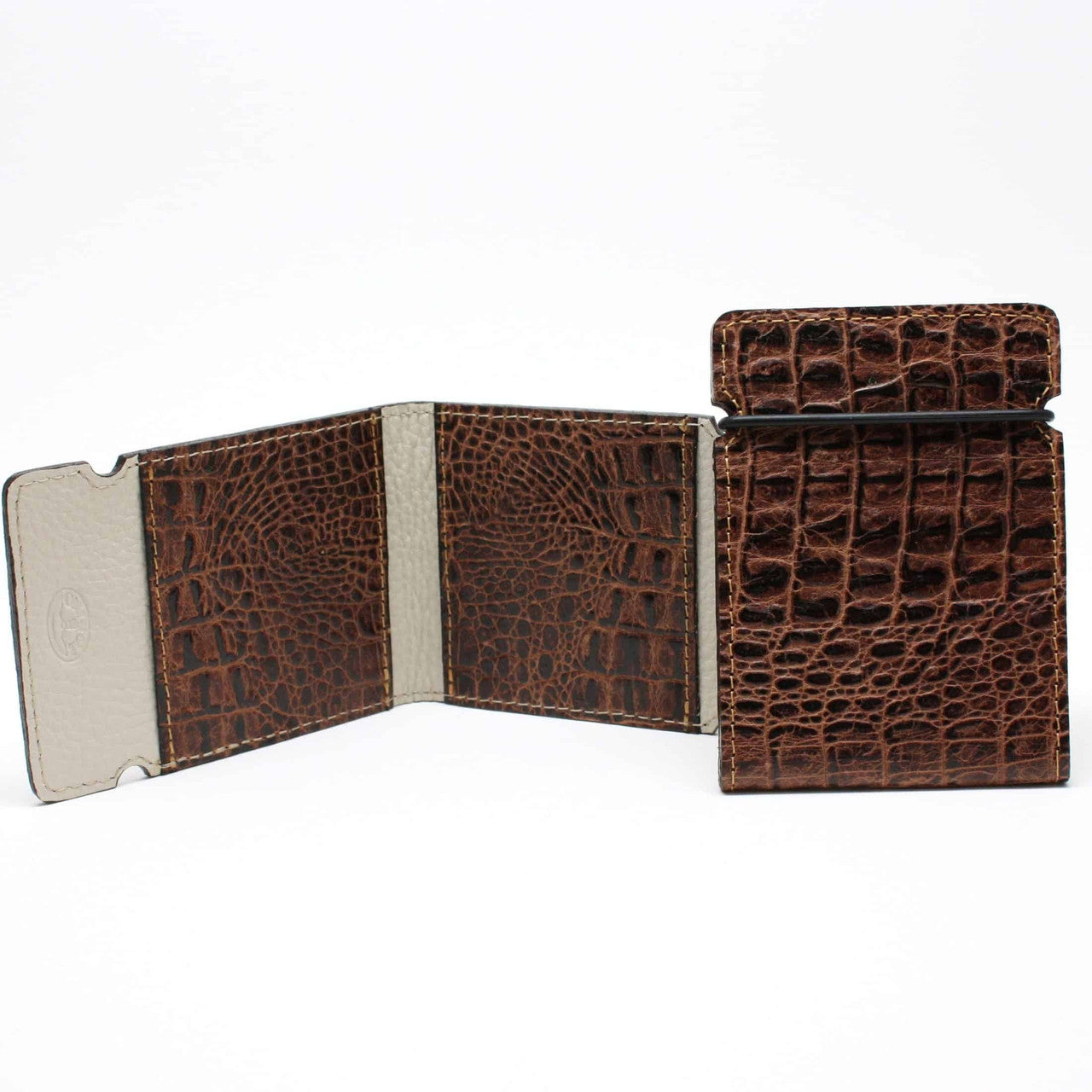
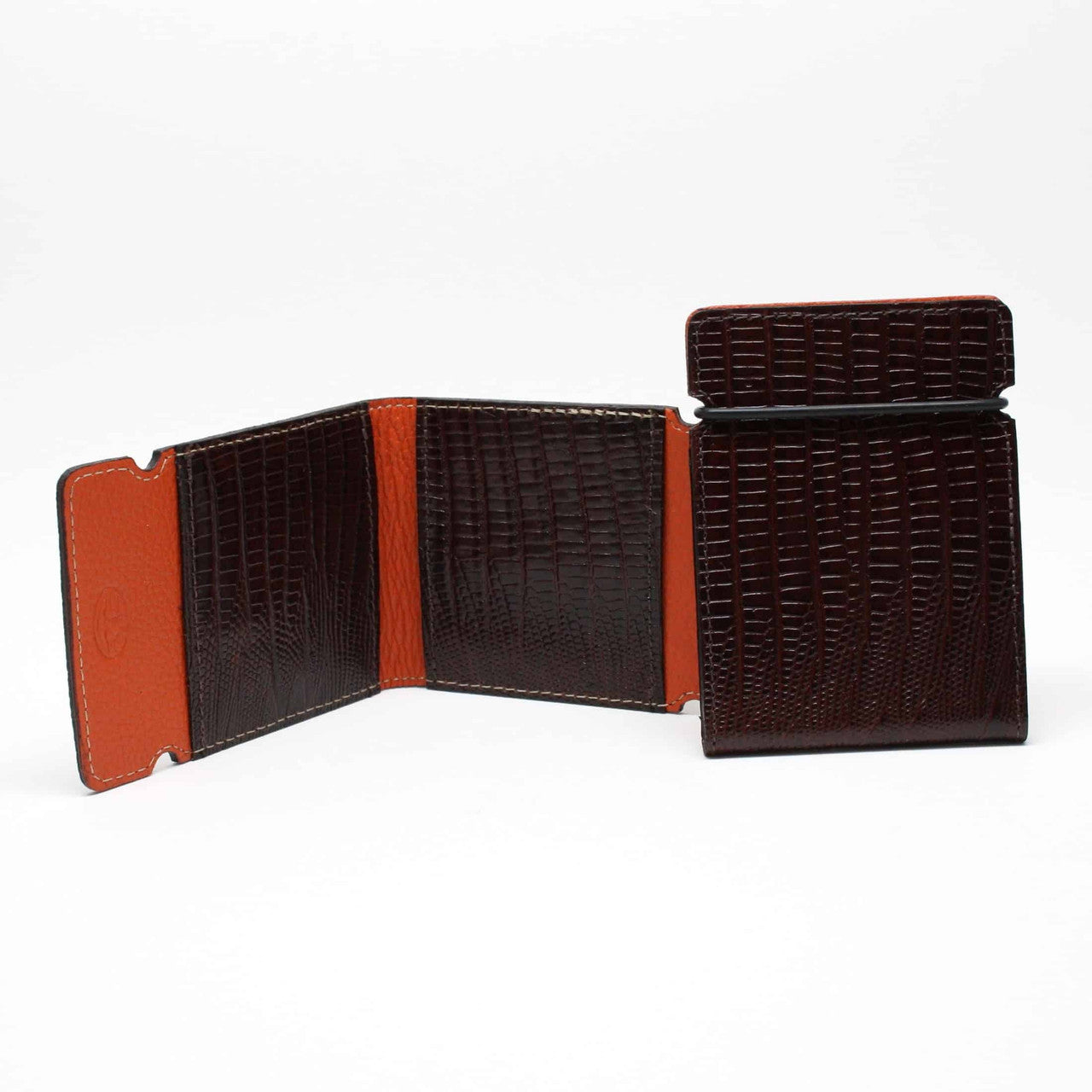
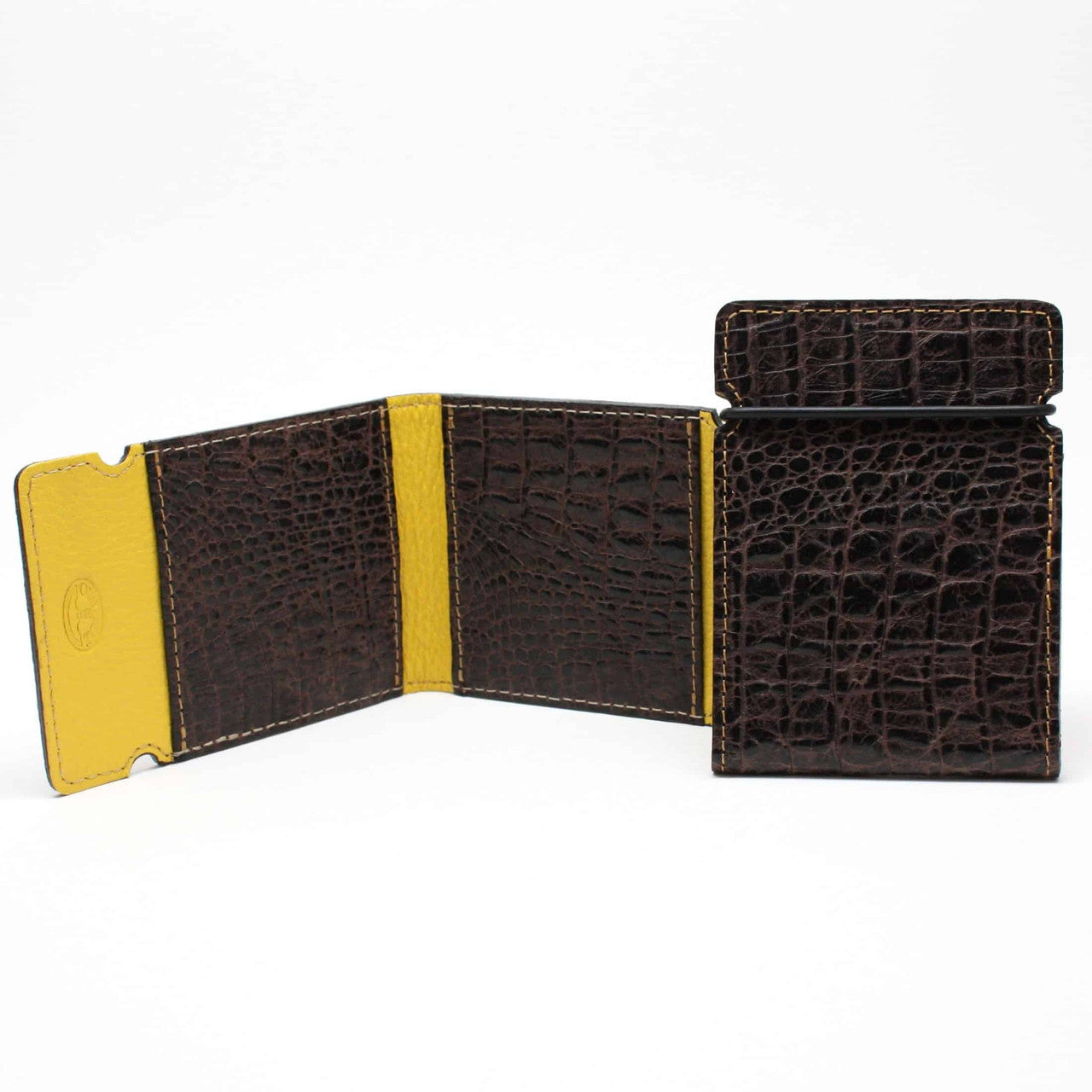
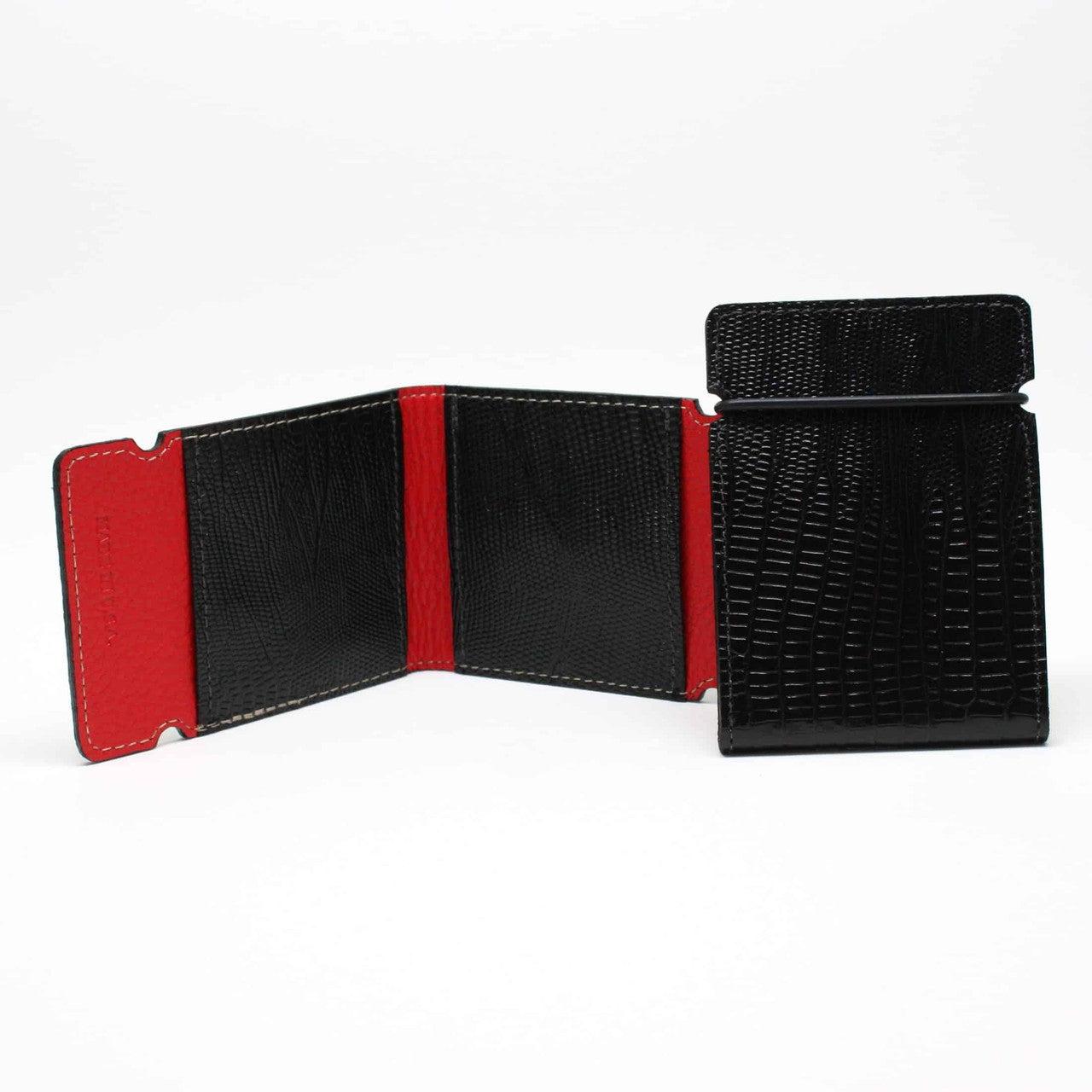
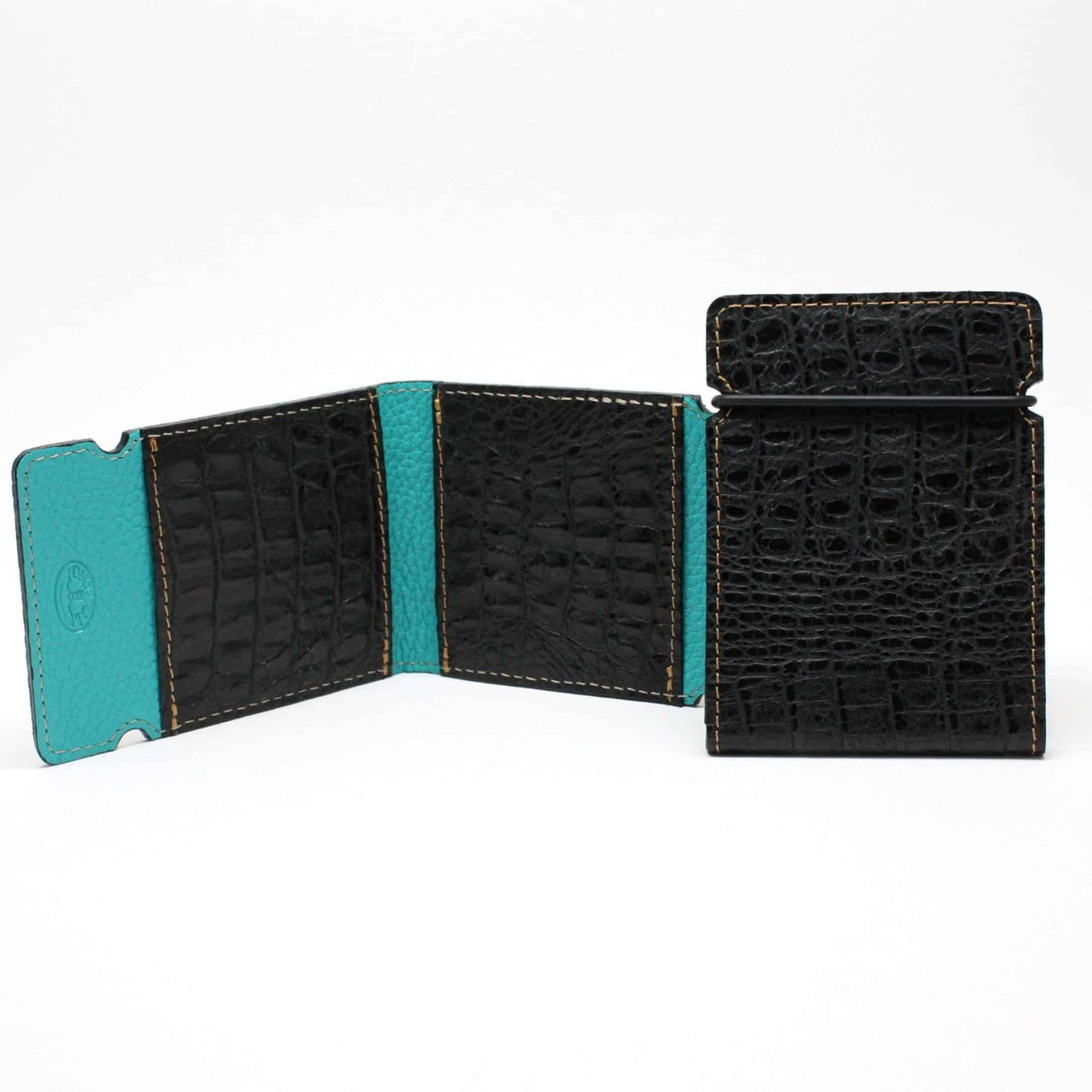
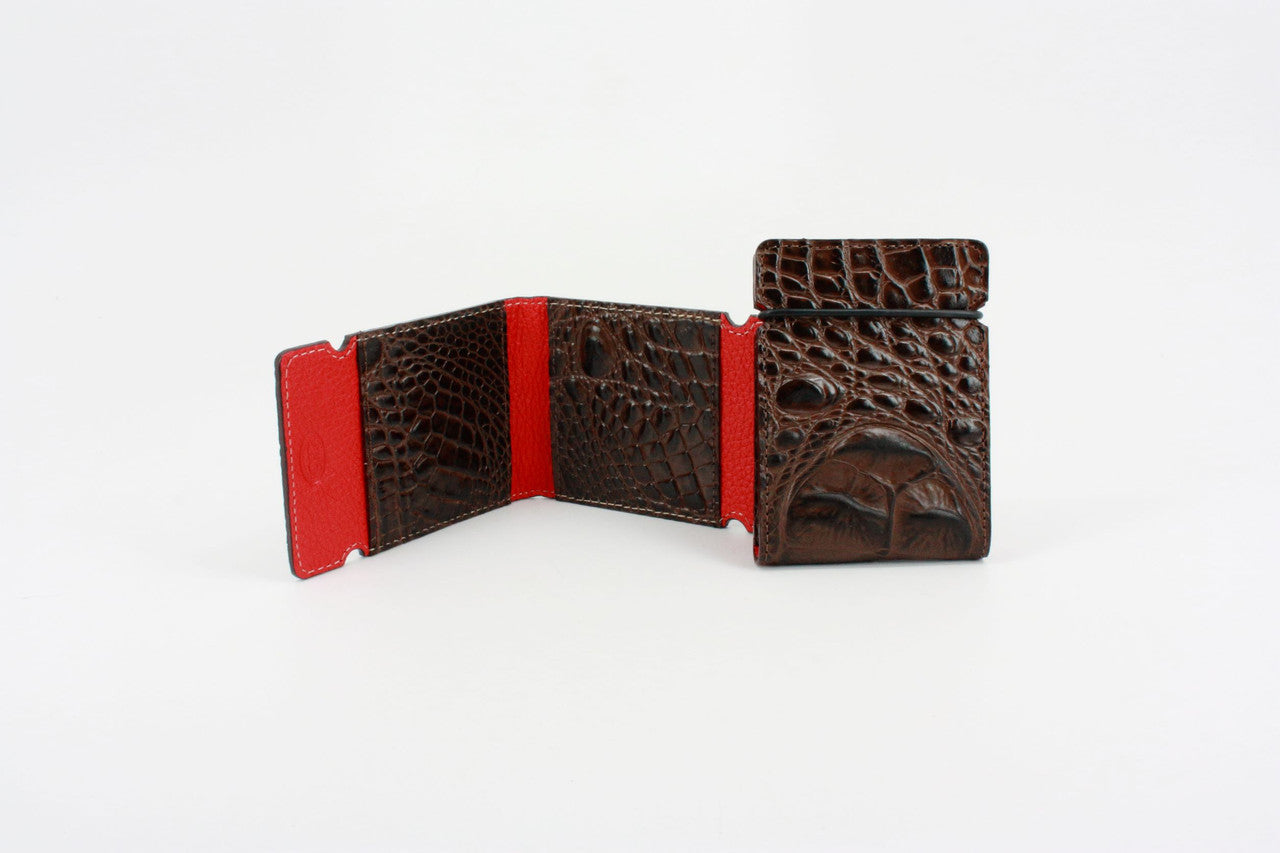
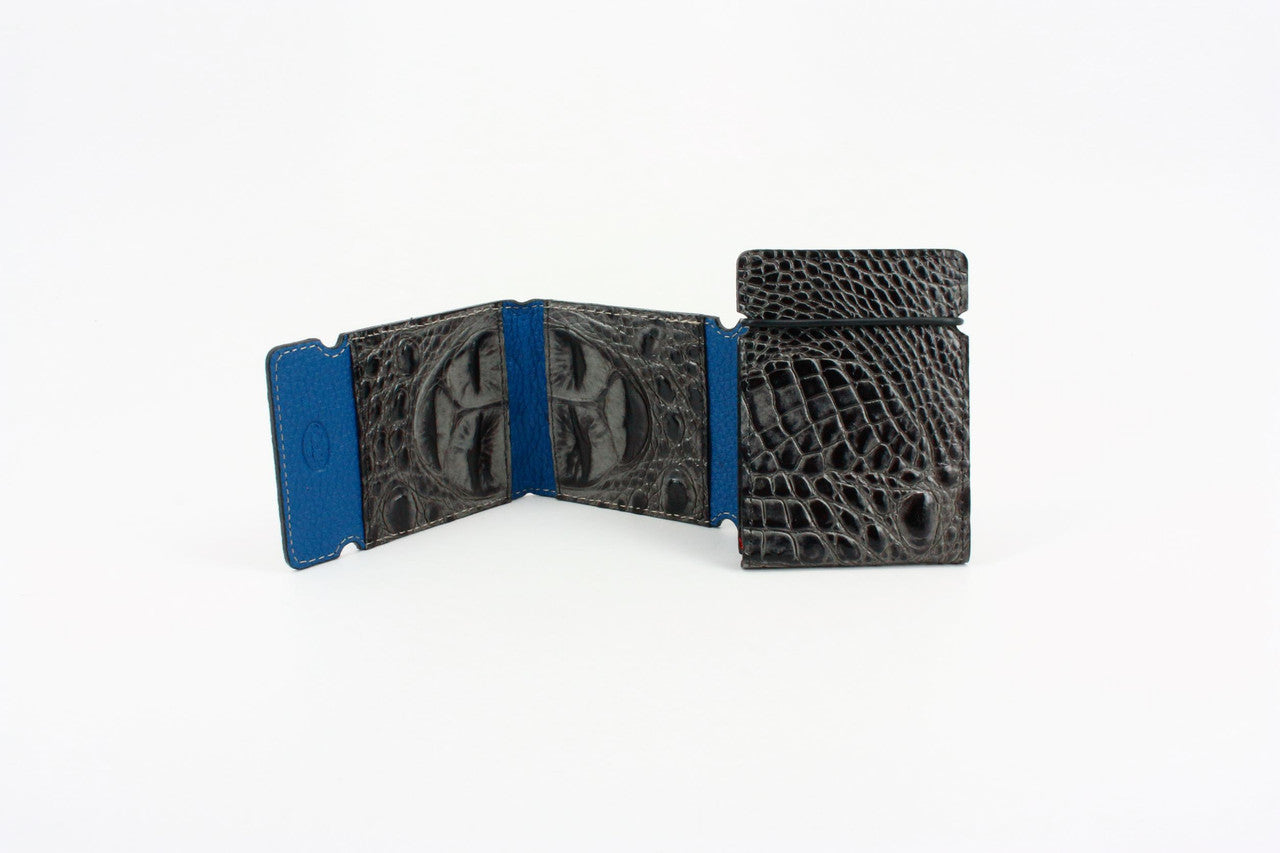
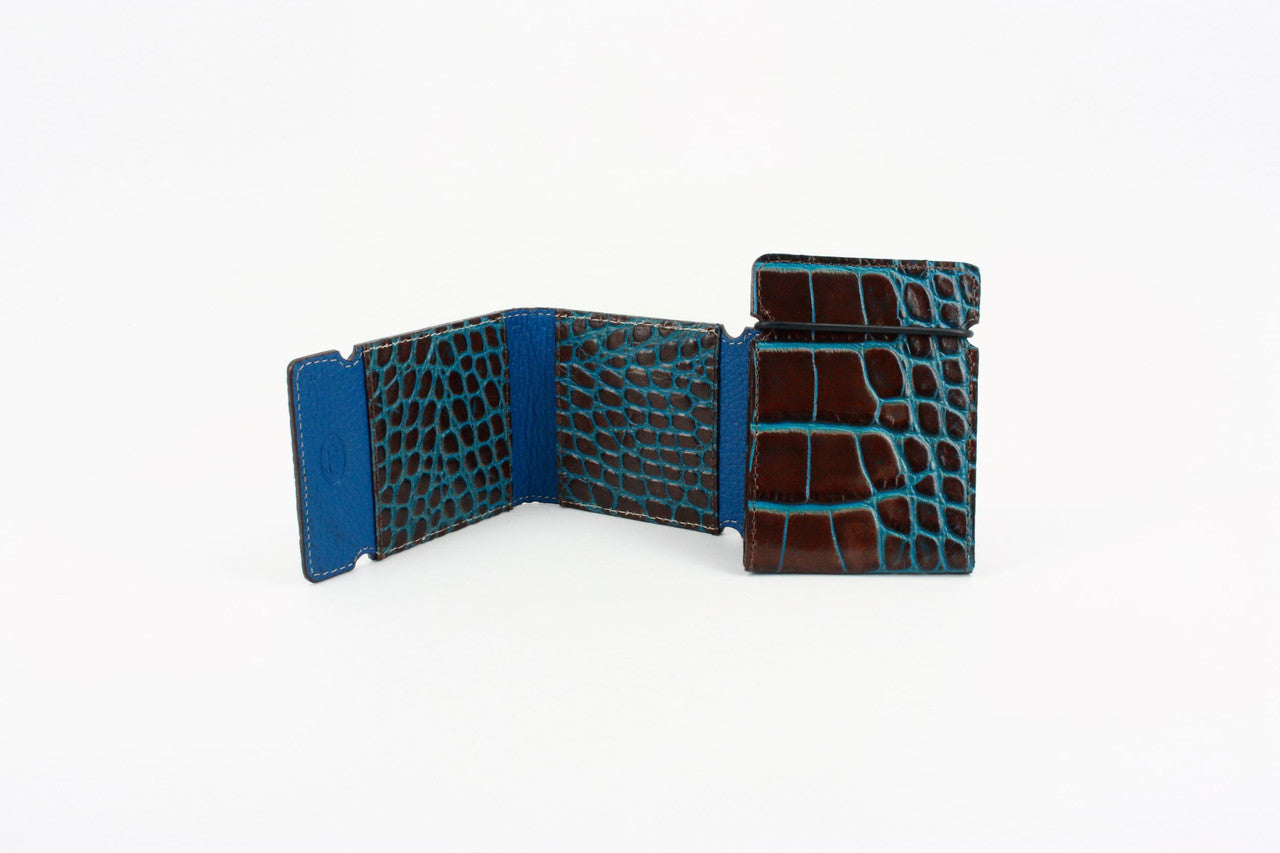
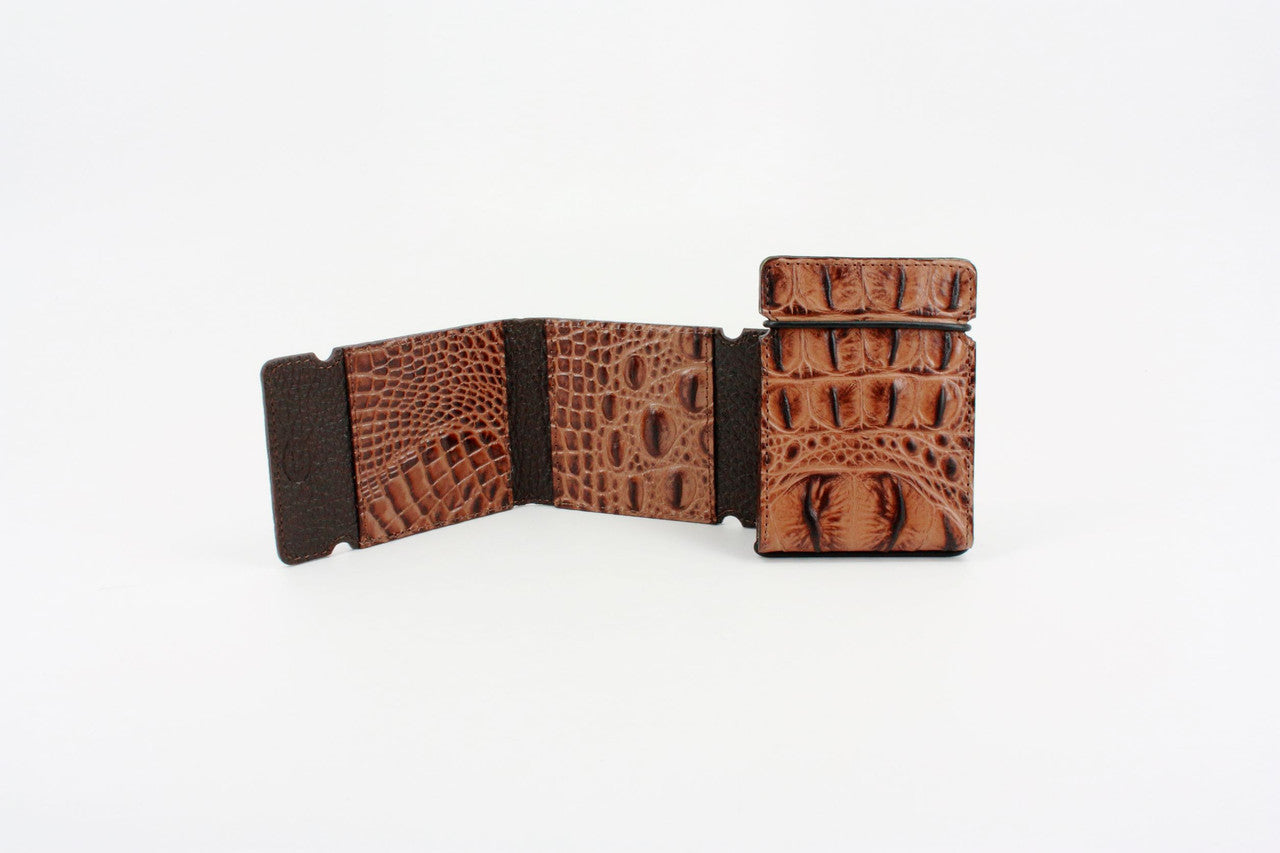
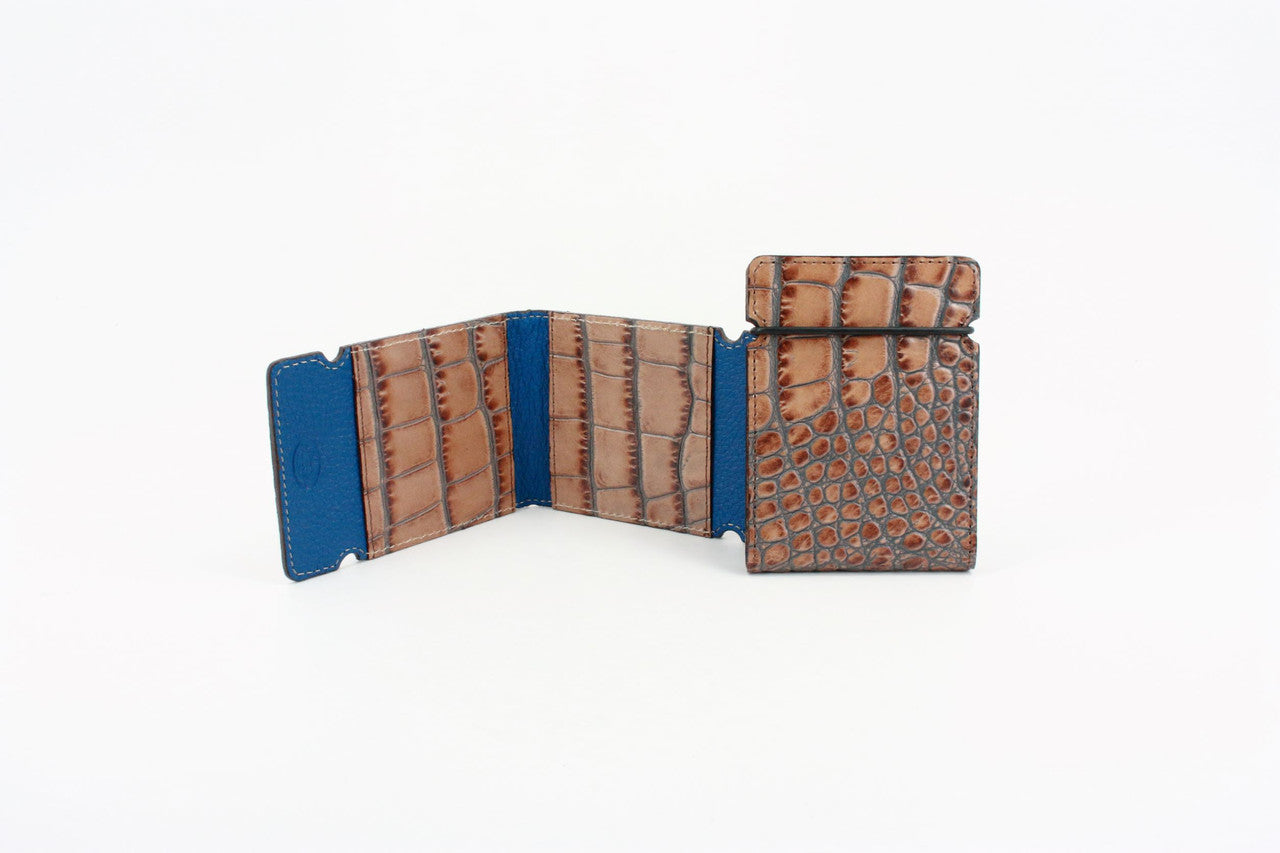
The cover is the piece that makes it work. A leather flap holds your folded bills against the body of the wallet, so there's no second fold and no thick spine like a bifold has.
Cards go in slots on the outside faces. That keeps the card thickness spread across the wallet rather than stacked at one edge, which is the other reason it stays flat.
The tradeoff is capacity. A cash cover holds what you use, not everything you own. If you need a dozen card slots, a bifold is the honest answer.
Every one of these is embossed calfskin
All ten are real Italian calfskin with an exotic pattern pressed into the hide. Not exotic skin, not synthetic. Full grain calf, stamped under heat and pressure, and we say so on every product.
That's also why the colors exist at all. Brown with blue, taupe with blue, grey. No crocodile was ever those colors and never will be.
Alligator embossed in black, brown, and cognac. The large tile pattern, the most recognizable.
Hornback crocodile embossed in brown, grey, and cognac. The ridged spine pattern, the most aggressive texture here.
Lizard embossed in black and brown. Small, tight, and the subtlest of the three from a distance.
Crocodile embossed two-tone in brown with blue and taupe with blue. The contrast interior is visible when it's open, which is the sort of thing only you and whoever you're paying will notice.
All of them are $117
One price across the collection, so the decision is purely which pattern and color you want. No pretending one is better because it costs more.
Making the switch
Give it a week. Moving from a back pocket bifold means carrying less and reaching to a different place, and for a few days you'll pat the wrong pocket. Then you'll stop, and you won't go back to sitting on a wallet.
Start by emptying your current wallet onto a table and putting back only what you used in the last month. Most men find the cash cover fits everything that survives that test.
Care
Treat it as calfskin, because that's what it is. Wipe with a dry cloth. Condition lightly at most twice a year and use very little, since too much conditioner darkens leather permanently and can soften the definition of the pattern.
Dust settles into the low points of an embossed grain. A soft cloth or a horsehair brush lifts it out without wearing down the high points.
Related
For cards without cash, see Card Holders. For cash without card slots, see Money Clips. For the traditional format, see Bifold Wallets. Everything is in all wallets. The embossing process is explained in Embossed Exotic, and the belts in the same patterns are there too.
Questions we get
What is a cash cover wallet?
A slim front pocket wallet. Bills fold once and tuck under a leather cover in the middle, and cards sit in slots on the outside faces. It carries flat rather than thick, which is what makes a front pocket work.
What's the difference between a cash cover and a bifold?
A bifold folds around a spine and holds cards stacked on one side, which makes it thick. A cash cover holds bills under a cover with cards spread across the outside, so it stays flat. A bifold holds more; a cash cover carries better.
Why carry a wallet in your front pocket?
You stop compressing it under your own weight all day, which is what wears a wallet out fastest. It's also harder to lose and harder for someone else to take.
How many cards does a cash cover hold?
Fewer than a bifold, by design. It's built for the cards you use rather than every card you own.
Are these real leather?
Yes. All ten are Italian calfskin with an exotic pattern pressed into the hide. The leather is real and only the pattern is borrowed, and we label it that way every time.
How much do cash covers cost?
All ten are $117.
How do I clean an embossed cash cover?
Wipe with a soft dry cloth. Dust collects in the low points of the pattern, so a horsehair brush helps. Condition lightly at most twice a year with very little product.