Quill
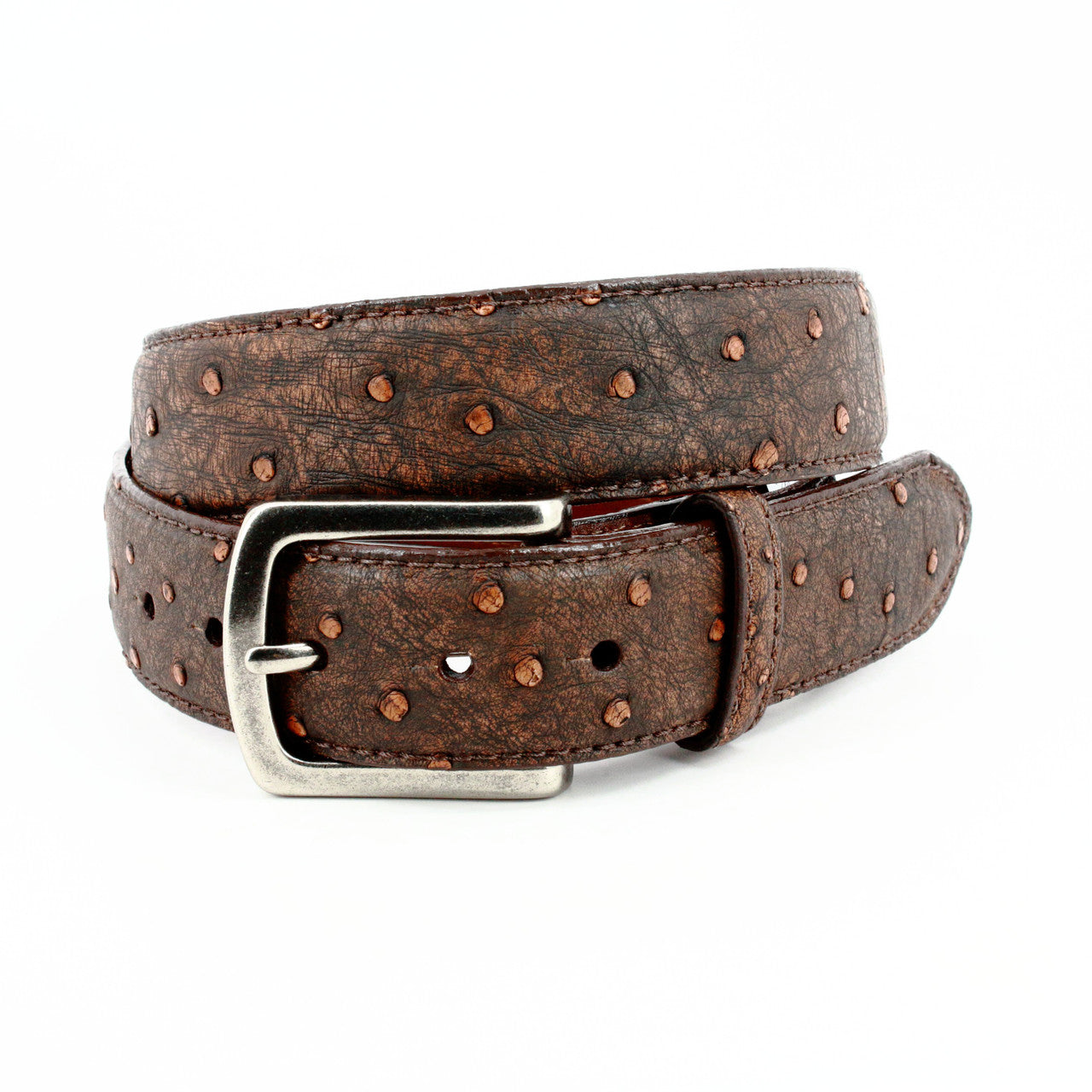
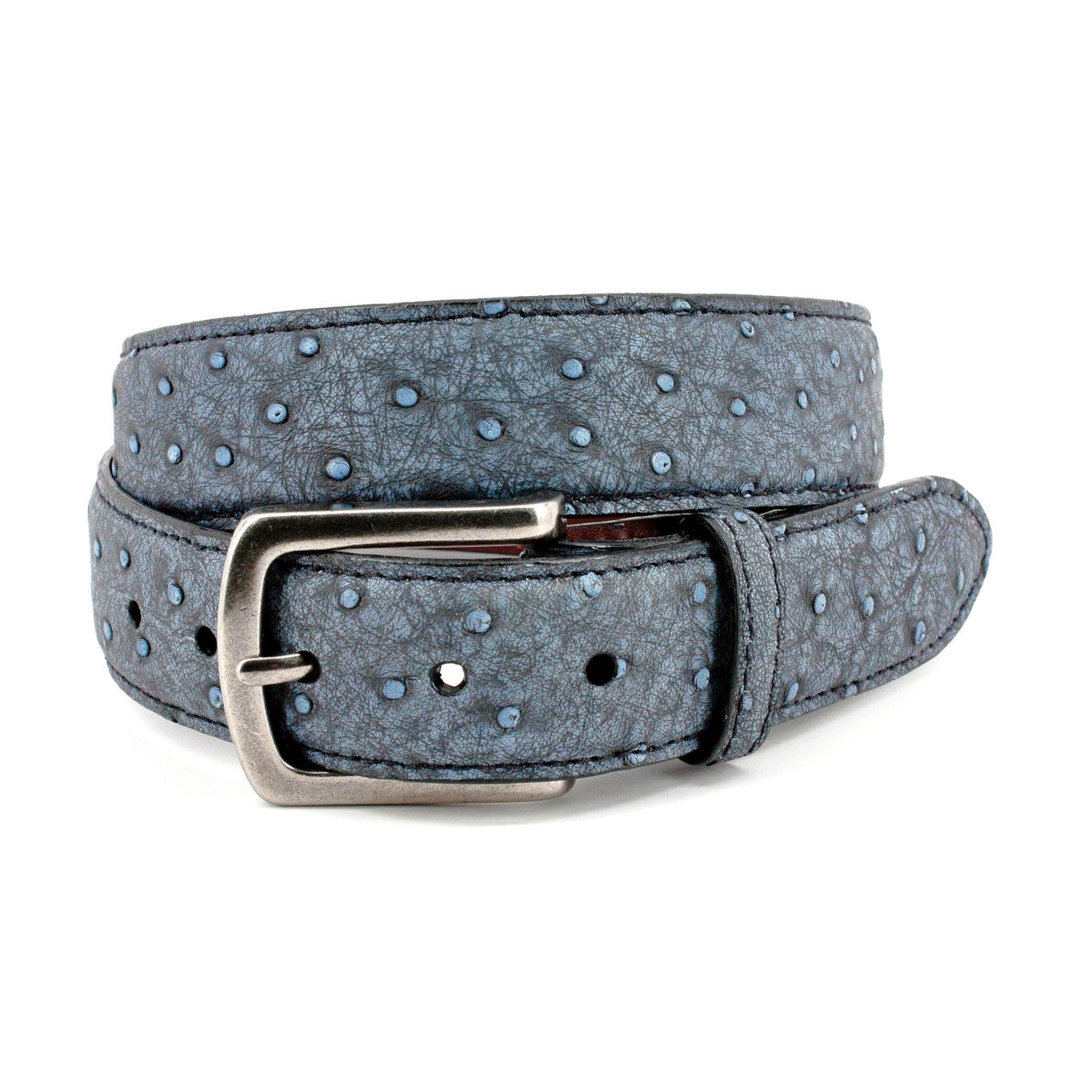
The bumps are follicles. Each one is where a feather came out of the bird, which is why the pattern is irregular and organic rather than repeating like a scale.
Here's the part that explains the price: the quills only cover the crown, a patch across the back of the bird. The rest of the hide is smooth and useful for other things, but it isn't what anybody means by ostrich. So one bird produces a limited area of full quill, and a belt has to be cut from within it, centered, with the density running down the middle of the strap.
Ours are genuine South African, $345, in vintage dark cognac and vintage antique denim. The denim is the one worth looking at twice. A soft washed blue in a real exotic skin is not something you find often, and it works with grey and navy in a way brown can't.
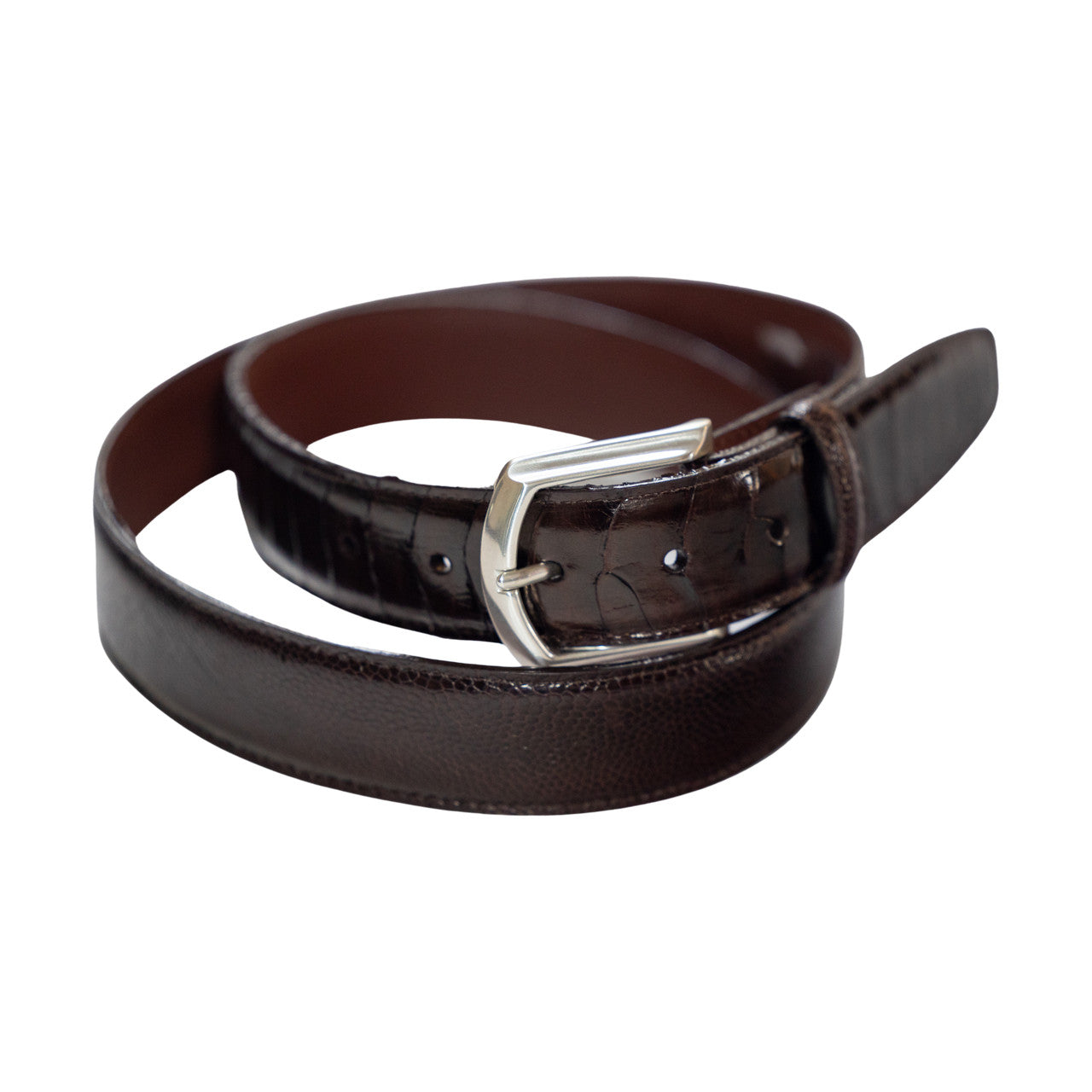
Ostrich leg
Same bird, different half, and nobody guesses it right.
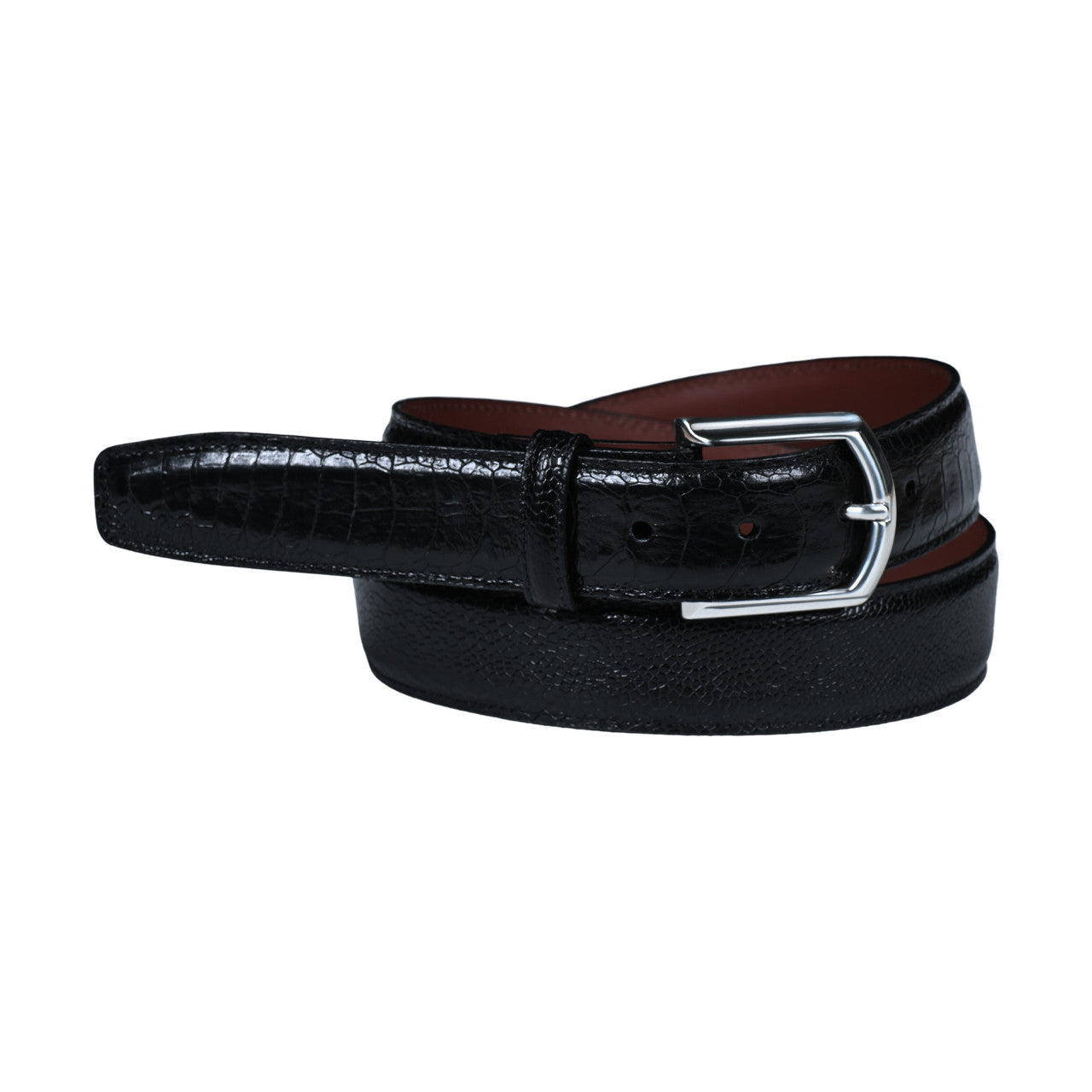
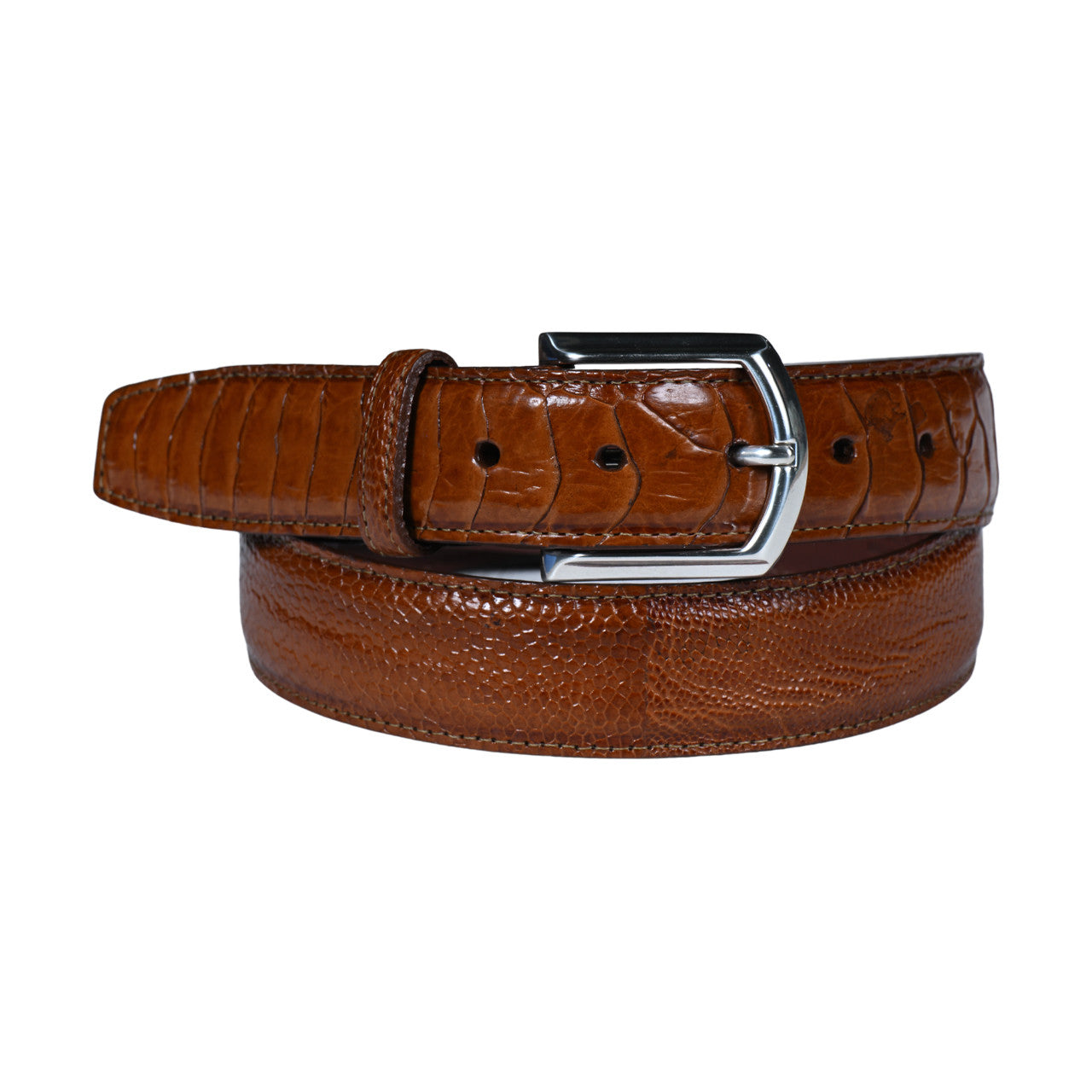
The leg skin is scaled and reptilian, closer in appearance to a snake or lizard than to the quill everyone recognizes. The scales run in bands down the length of the strap and get finer toward one end.
This is the one to buy if you like the idea of an exotic but find the quill too recognizable. It reads quieter across a room, it works better with a suit, and roughly nobody will identify it correctly. $347 in black, tan, and brown.
Why ostrich is the comfortable exotic
Ostrich is the softest and most pliable skin on our exotic pages. It has a high natural oil content, which keeps it supple and makes it resistant to cracking and drying in a way that harder crocodilian skins are not.
The practical difference: an alligator belt is a structured object you get used to. An ostrich belt is soft from the first day and molds to you.
It's also lighter than it looks, which matters more than you'd expect on a belt you wear all day.
How to judge one
For quill, look at three things. Whether the quills run centered down the strap. Whether the density is consistent rather than crowded at one end and sparse at the other. And whether the bumps are full and rounded rather than flattened, which happens when a hide is over-pressed during finishing.
For leg, look at whether the scale bands run straight and symmetrical, and whether the color sits evenly across the ridges rather than pooling in the low points.
Care
Less product than you think, same as any exotic. A dry cloth handles most of it.
Quill takes a soft brush well, because dust settles around the base of each follicle. Don't rub conditioner into the quills, because it collects at the base and darkens unevenly, which is the most common way a good ostrich belt gets ruined.
Never fold either one. Roll or hang flat. Keep out of standing water and dry away from heat.
Related
For how exotic skins are sourced and regulated, see Exotic Belts. American Alligator and Caiman are the crocodilian options. To tell the exotic skins apart by sight, see Dress Belts. Everything is in all belts.
Questions we get
What is the difference between ostrich and ostrich leg?
They come from the same bird and look nothing alike. Ostrich, or quill, is the bumpy pattern from the crown of the body, where the bumps are feather follicles. Ostrich leg is scaled and reptilian, more like a lizard, and comes from the bird's leg.
What are the bumps on an ostrich belt?
Feather follicles. Each bump is where a feather grew, which is why the pattern is irregular rather than a repeating scale.
Why are ostrich belts expensive?
The quill pattern only covers the crown, a limited patch on the back of the bird. A belt must be cut from within that area and centered, so one hide yields very few straps.
Is ostrich leather durable?
Yes, and it's unusually soft. Ostrich has a high natural oil content that keeps it supple and resistant to cracking, which is why it stays comfortable rather than needing a break-in period.
Which ostrich belt is more formal?
Ostrich leg. The scale pattern is quieter and reads better with a suit. Quill is more recognizable and more of a statement.
How do I clean an ostrich belt?
Wipe with a dry cloth and use a soft brush around the quills, where dust settles. Avoid working conditioner into the follicles, because it collects at the base and darkens unevenly.
Where does your ostrich come from?
South African farms, where the birds are raised primarily for meat and the skin is a byproduct.