Bison against cowhide
Same idea, different animal, and the differences are real rather than marketing.
The grain is natural. Bison hide has a coarse, open pebble that came with the animal. On most cowhide belts, that same look is pressed in with an engraved plate. Both are real leather, but only one of them is showing you the actual hide.
It's softer than it looks. Bison has a looser fiber structure than cow, which means a bison belt of the same thickness feels more pliable and breaks in faster. There's essentially no stiff period.
It hides wear. A smooth calfskin belt shows every scuff. On bison, the grain is already irregular, so scratches disappear into it. A bison belt at year three looks better than it did new, which is not something you can say about most leather.
What you give up: bison doesn't take a high polish. If you want a belt that gleams under a suit, that's calfskin. Bison is for everything else.
The three colors
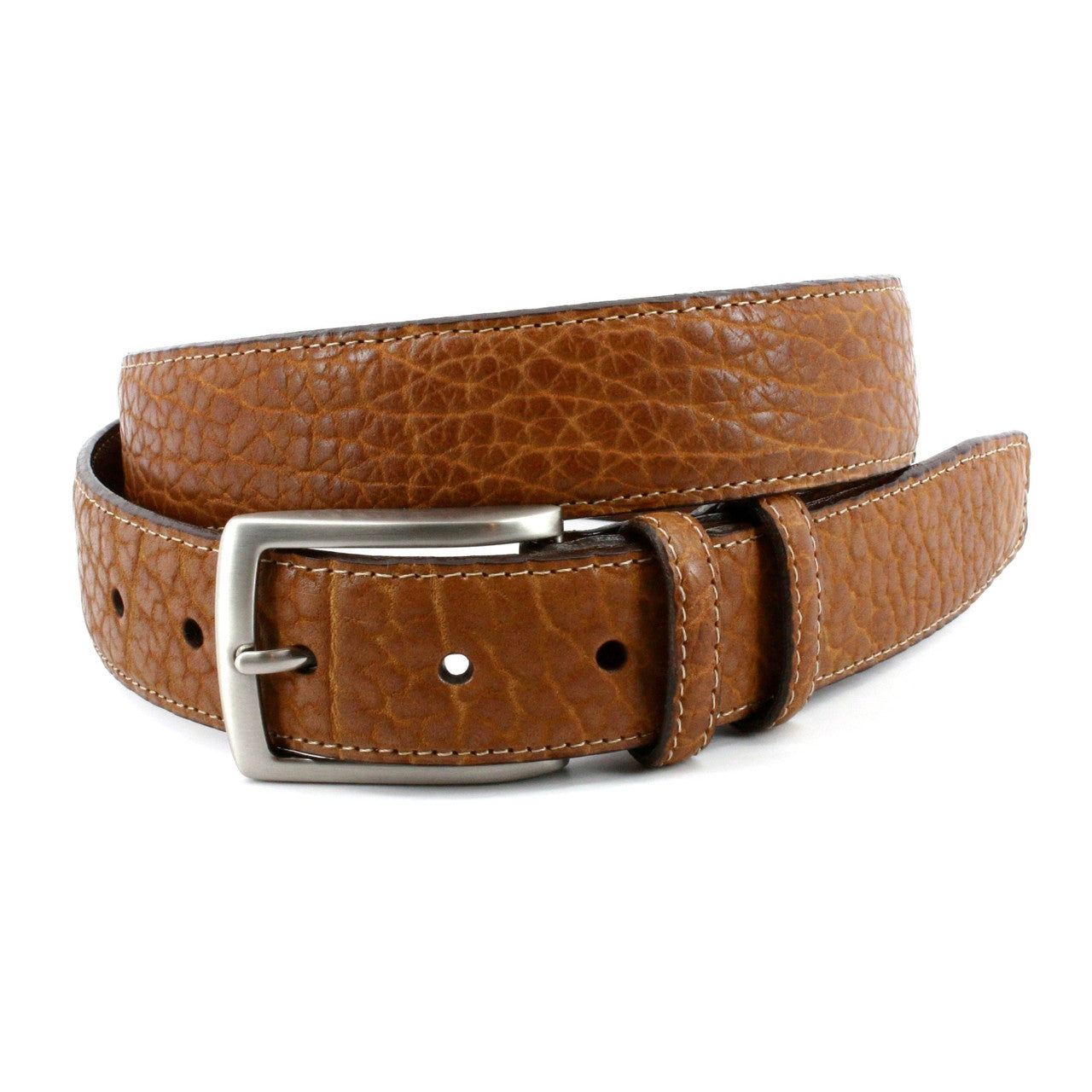
Saddle at $155 is the one to start with. A warm mid-brown that works with everything from jeans to a sport coat, and it darkens beautifully.
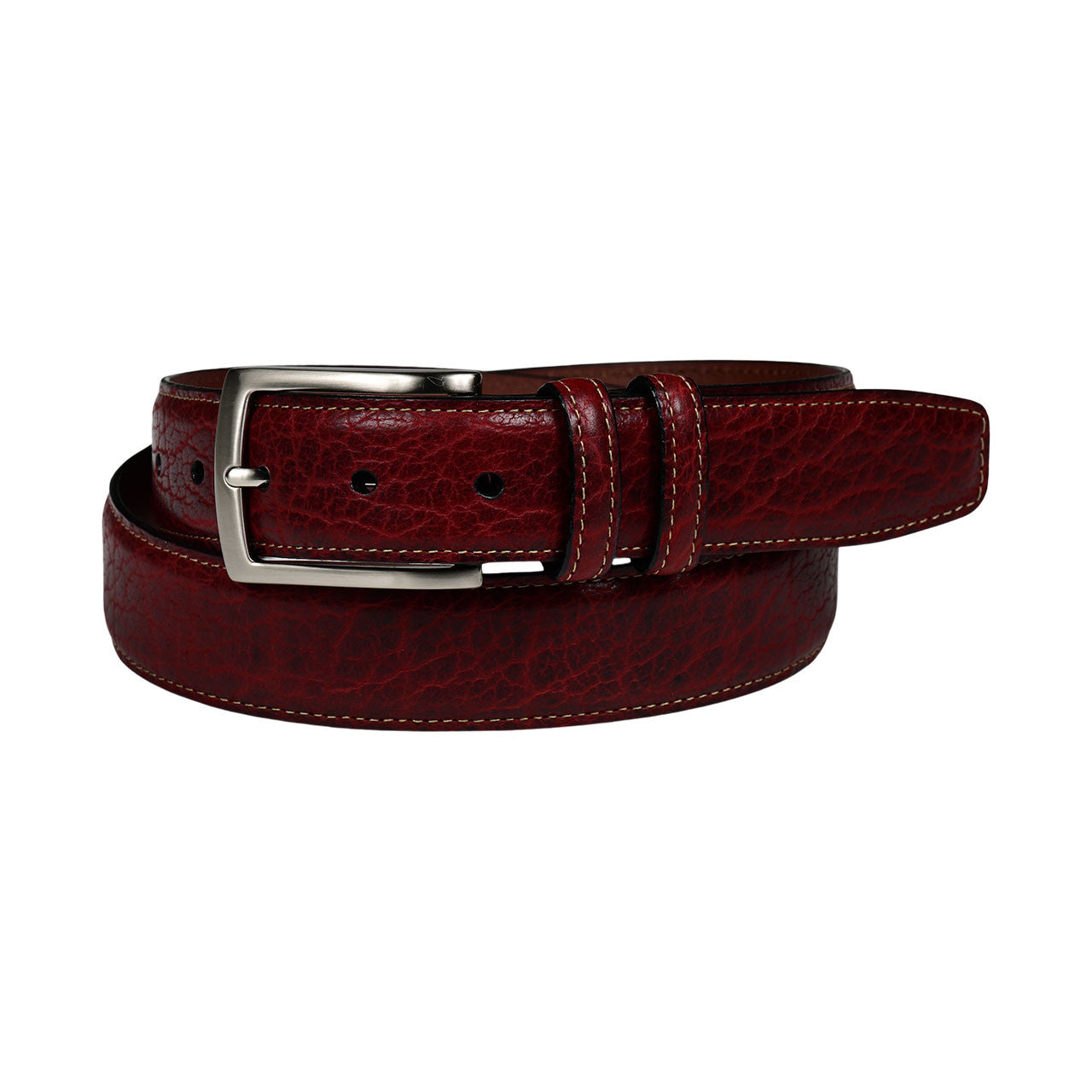
Black cherry at $155 is a deep red-brown with real depth. It reads as brown from across a room and as something more interesting up close. Good with grey and navy.
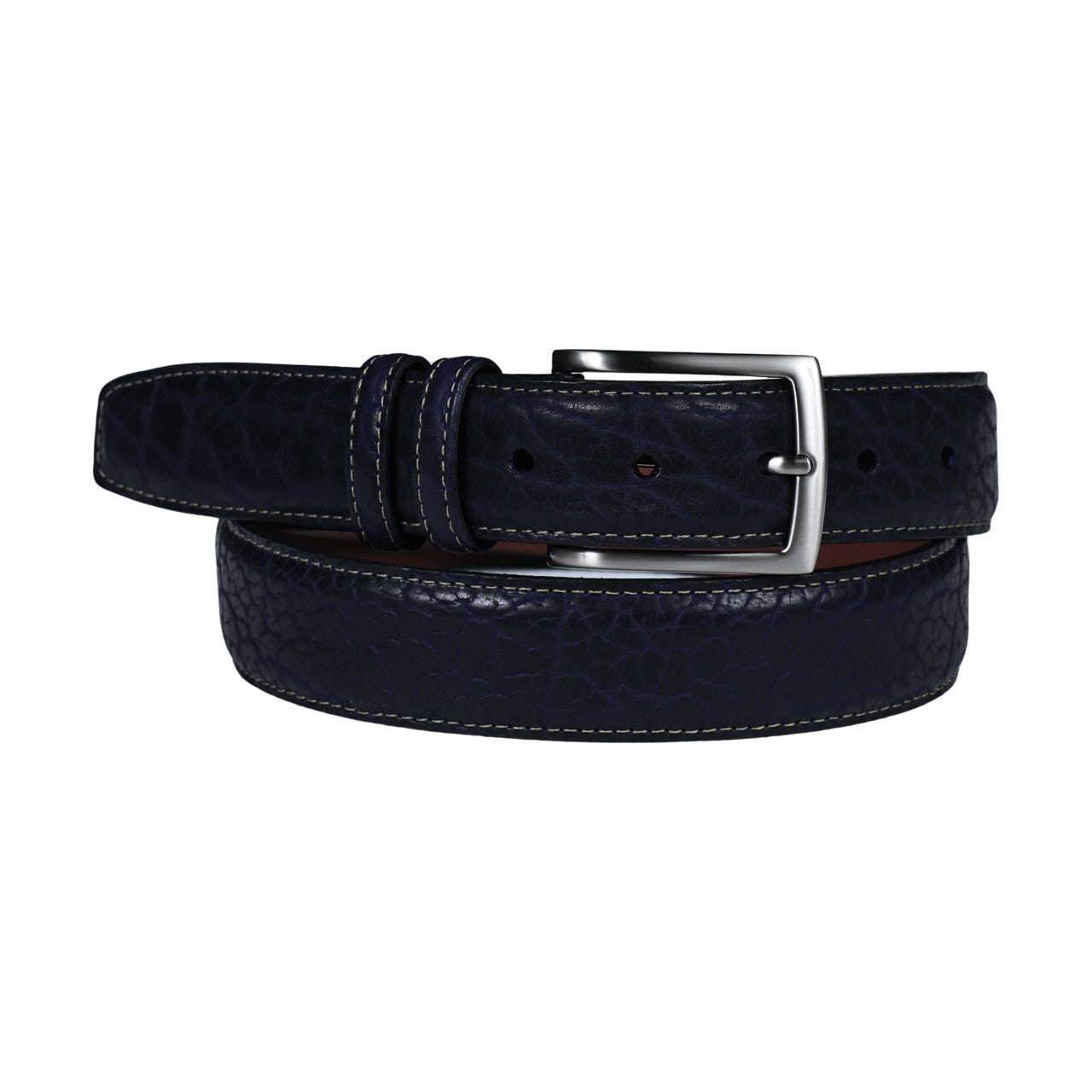
Purple at $155 is unexpected, and it exists because bison takes dye differently than cow does. If you want a belt nobody else at the table has, this is it.
The woven ones with bison tabs
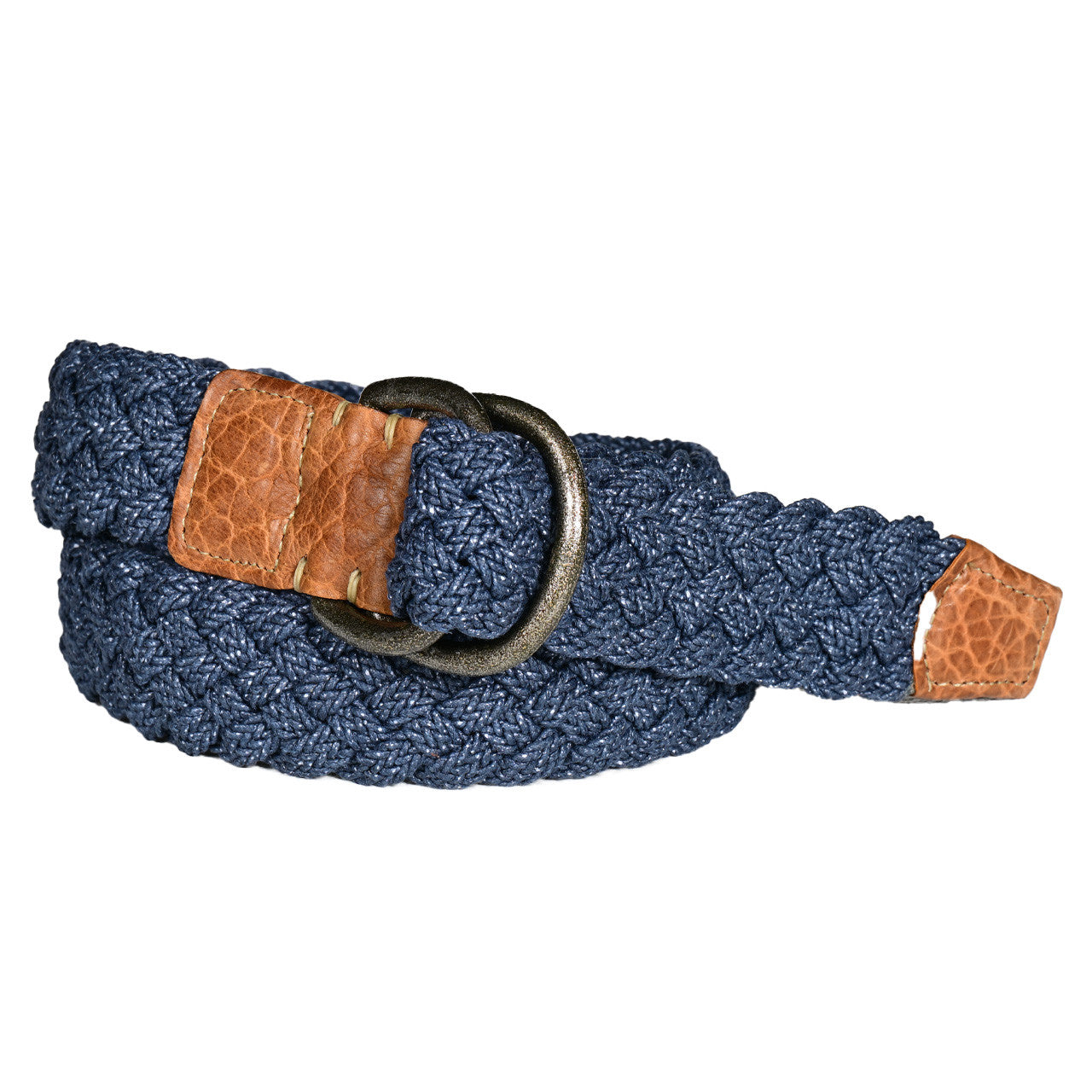
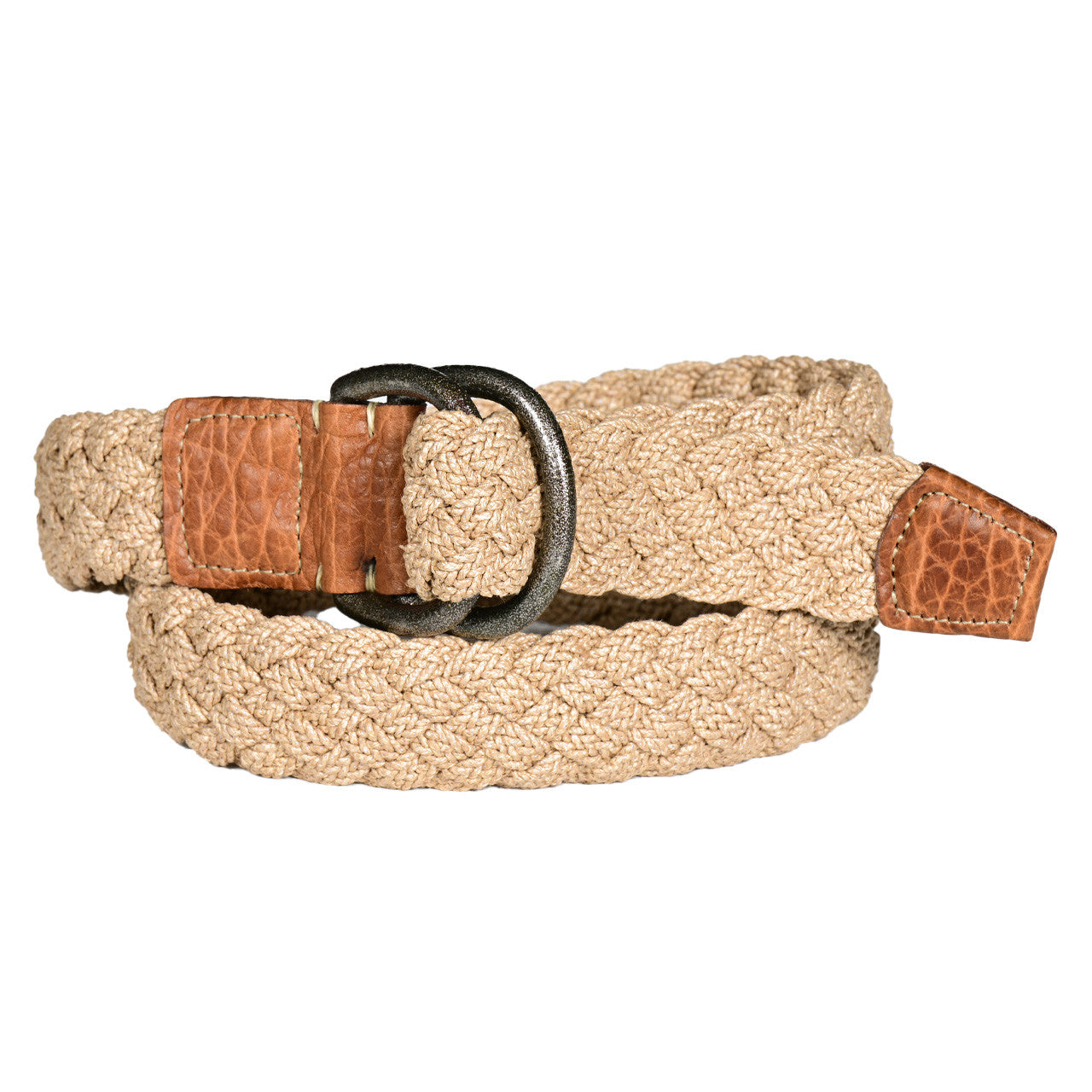
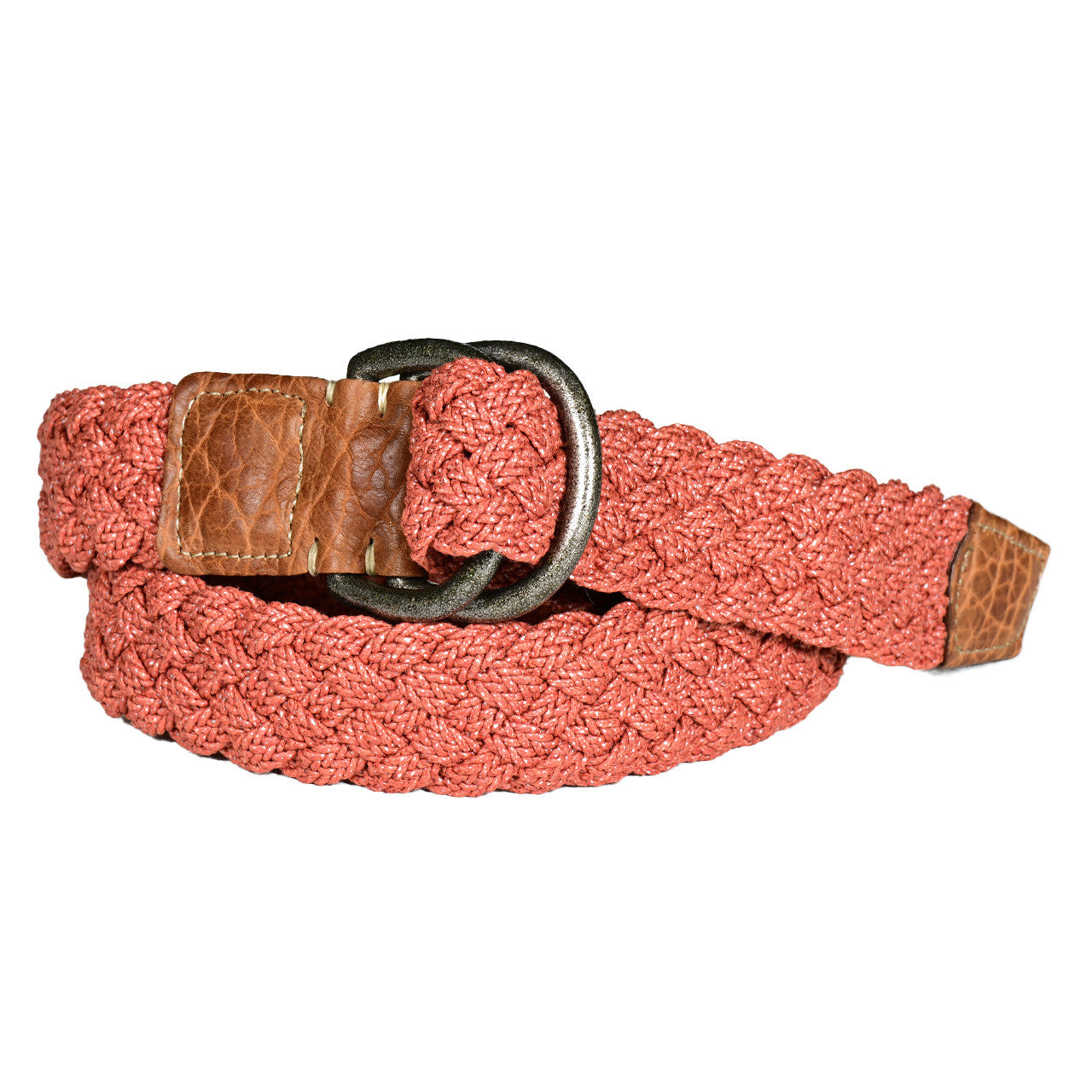
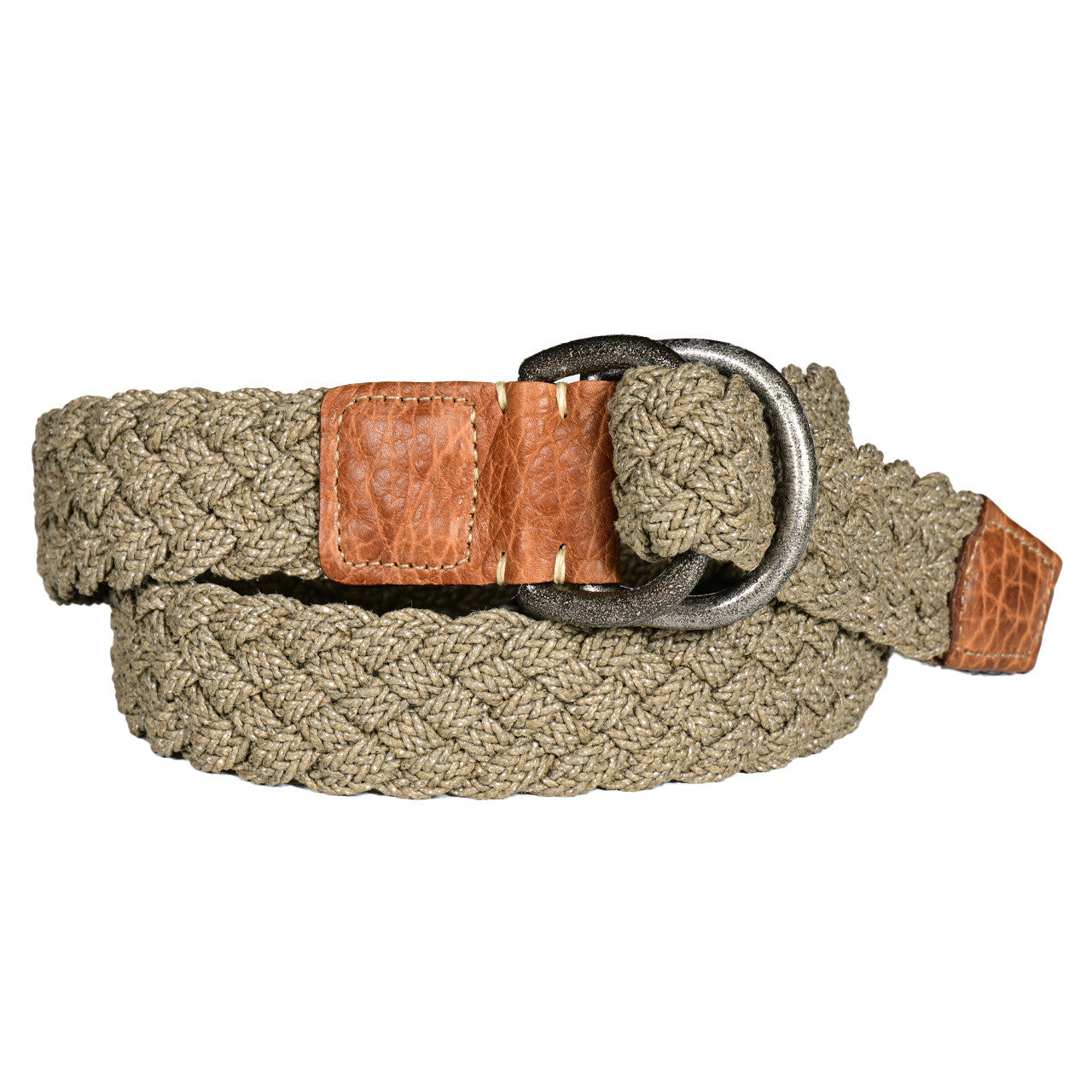
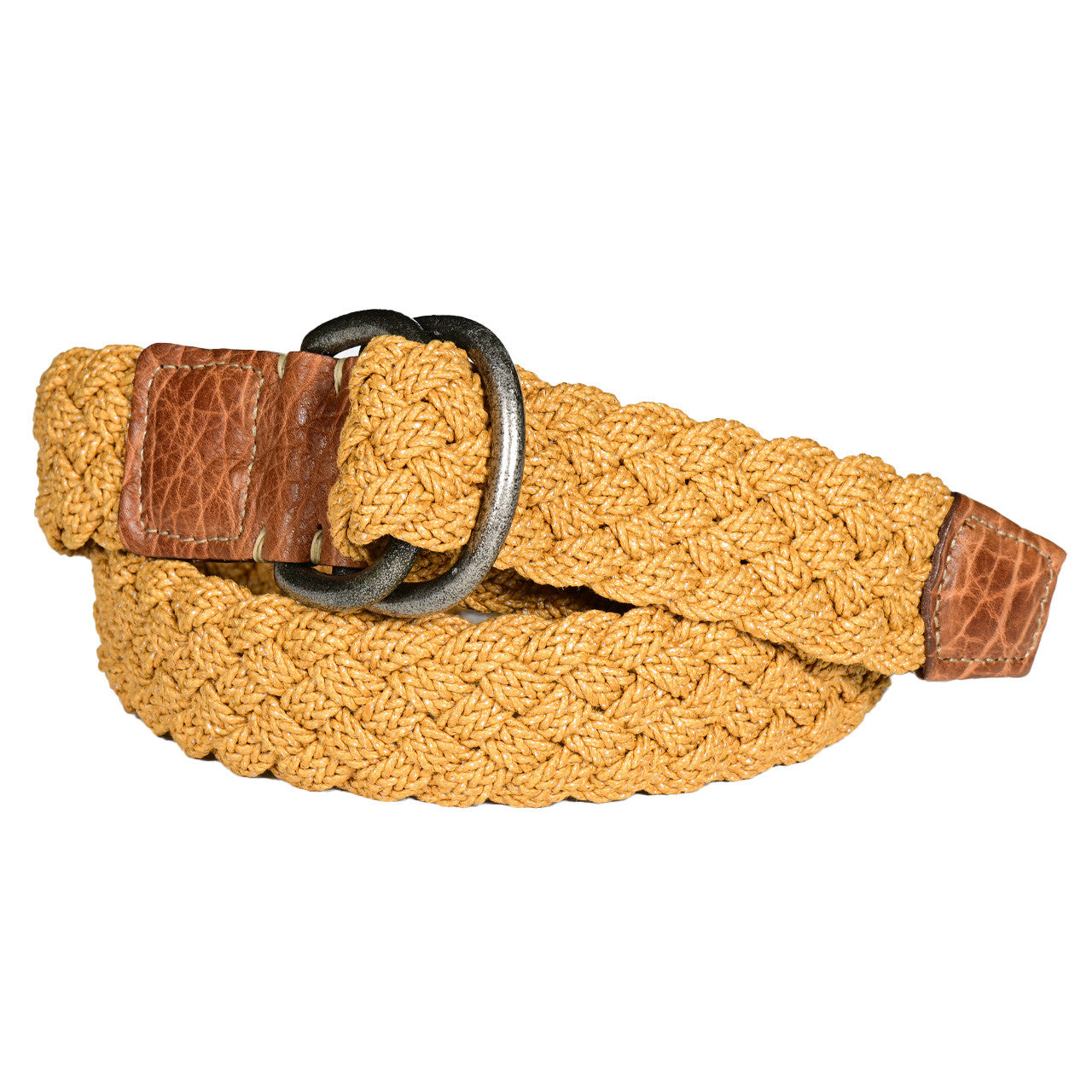
Five belts here are Italian woven cotton with tan bison at the tabs, regularly $120, in blue, camel, cinnamon, olive, and mustard.
The tab is where the buckle load lands and where the prong presses, so bison is a sensible choice for it. You get the give of a woven strap with a hard-wearing leather at the two points that actually take stress. Mustard and olive are the two that surprise people.
Where it comes from
American bison are ranched across the plains states and raised primarily for meat, so the hide is a byproduct rather than the reason. The species went from near extinction to several hundred thousand animals in North America, and commercial ranching is a large part of why.
It's the same logic as the alligator story. An animal with economic value gets a lot more attention than one without.
Care
Bison is forgiving. Wipe it with a dry cloth and condition lightly maybe twice a year, using very little, because too much conditioner darkens leather permanently.
Don't try to buff out scuffs. They're supposed to be there and working at them just makes a shiny patch in an otherwise matte strap.
Rotate it and store it rolled or hanging flat. A belt worn every day fatigues at the buckle fold first.
Related
There's bison in the wallets too, including a billfold and an ID card case in the same leather. See Wallets. For smooth leather that takes a polish, see Calfskin. For pressed-in patterns and an honest explanation of how embossing works, see Embossed Exotic. Everything with texture and weight is in Casual, and the whole line is in all belts.
Questions we get
Is bison leather better than cowhide?
It's different. Bison has a natural pebble grain rather than a pressed one, a looser fiber structure that makes it softer and quicker to break in, and it hides scuffs well. Cowhide takes a higher polish. For a casual belt, bison. For a dress belt that gleams, calfskin.
Is the pebble grain on bison real?
Yes. It's the natural grain of the hide. Most pebble grain belts elsewhere are cowhide with the pattern embossed into them.
Is bison leather durable?
Yes. It's thick and hard-wearing, and because the grain is already irregular, scratches blend in instead of standing out.
Does bison leather stretch out?
It relaxes slightly to your shape in the first weeks and then holds. That's break-in, not stretching out.
Where does American bison leather come from?
Ranched American bison, raised primarily for meat. The hide is a byproduct.
How do I care for a bison belt?
Wipe with a dry cloth and condition lightly at most twice a year with very little product. Leave the scuffs alone, since buffing them creates a shiny patch on a matte strap.
What color should I buy first?
Saddle. It's the most versatile brown here and it darkens well with wear.