How to get the size right
Same rule as any belt: order two inches larger than your pant waist. A 46 trouser takes a 48 belt. That puts you on the middle hole with room in both directions.
If the pant-size rule has burned you before, and past 44 it burns people more often, measure a belt you already wear. Lay it flat, measure from the fold at the buckle to the hole you actually use, and ignore whatever is stamped on the back. That number in inches is your size.
Why it goes wrong more often in this range: trouser waist labels get less accurate the further you go from a 34, and a lot of men are buying two sizes off their actual measurement without knowing it. The tape doesn't lie.
What a longer strap needs
A longer belt isn't just more inches. It's more leverage.
Every belt takes its load at the buckle fold, and a longer strap means more strap pulling on that one point. Cut a 52 out of a thin, loosely finished hide and it will curl at the edges, twist in the loops, and fail at the fold in a year. That's why cheap big and tall belts feel like cheap belts, and it isn't about the size.
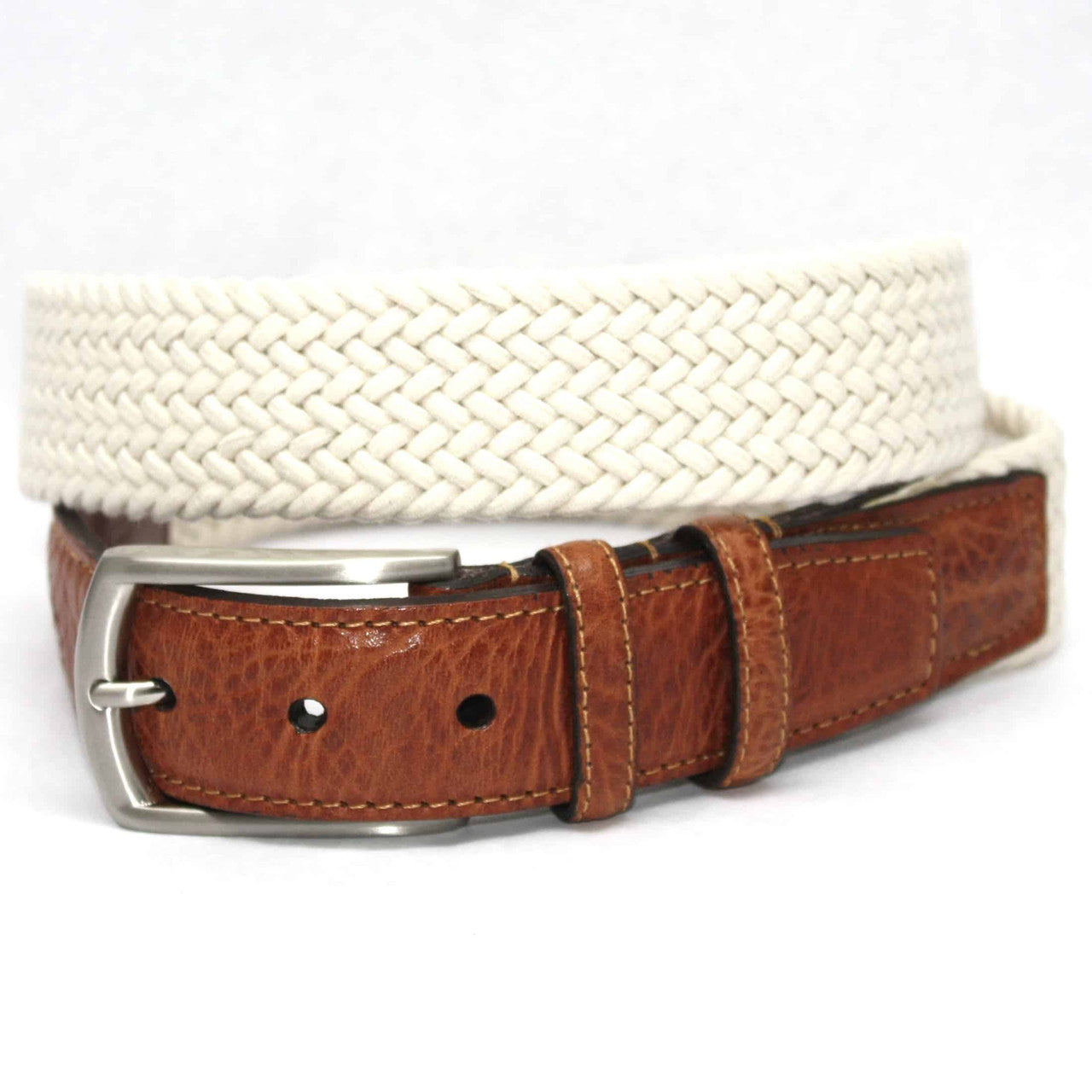
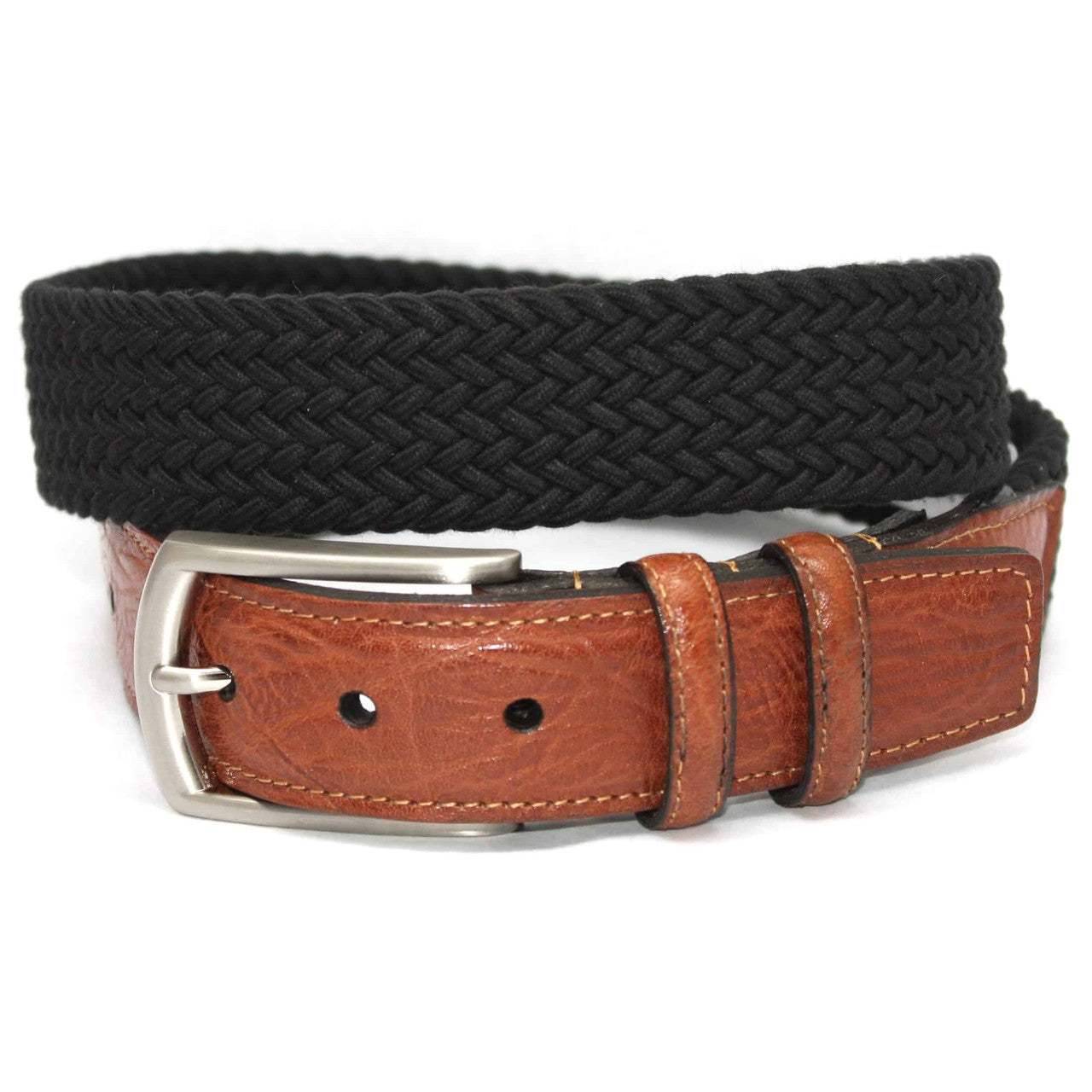
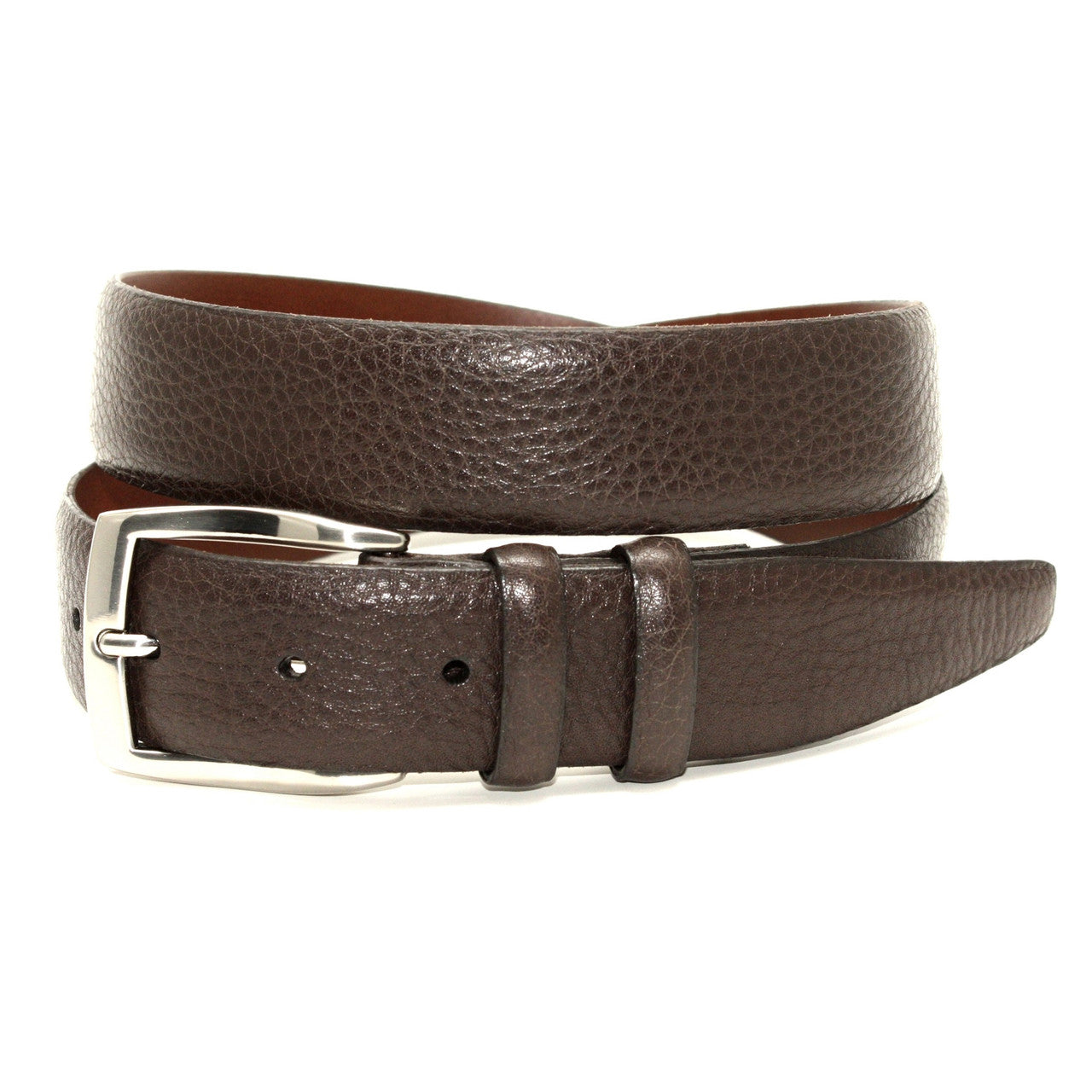
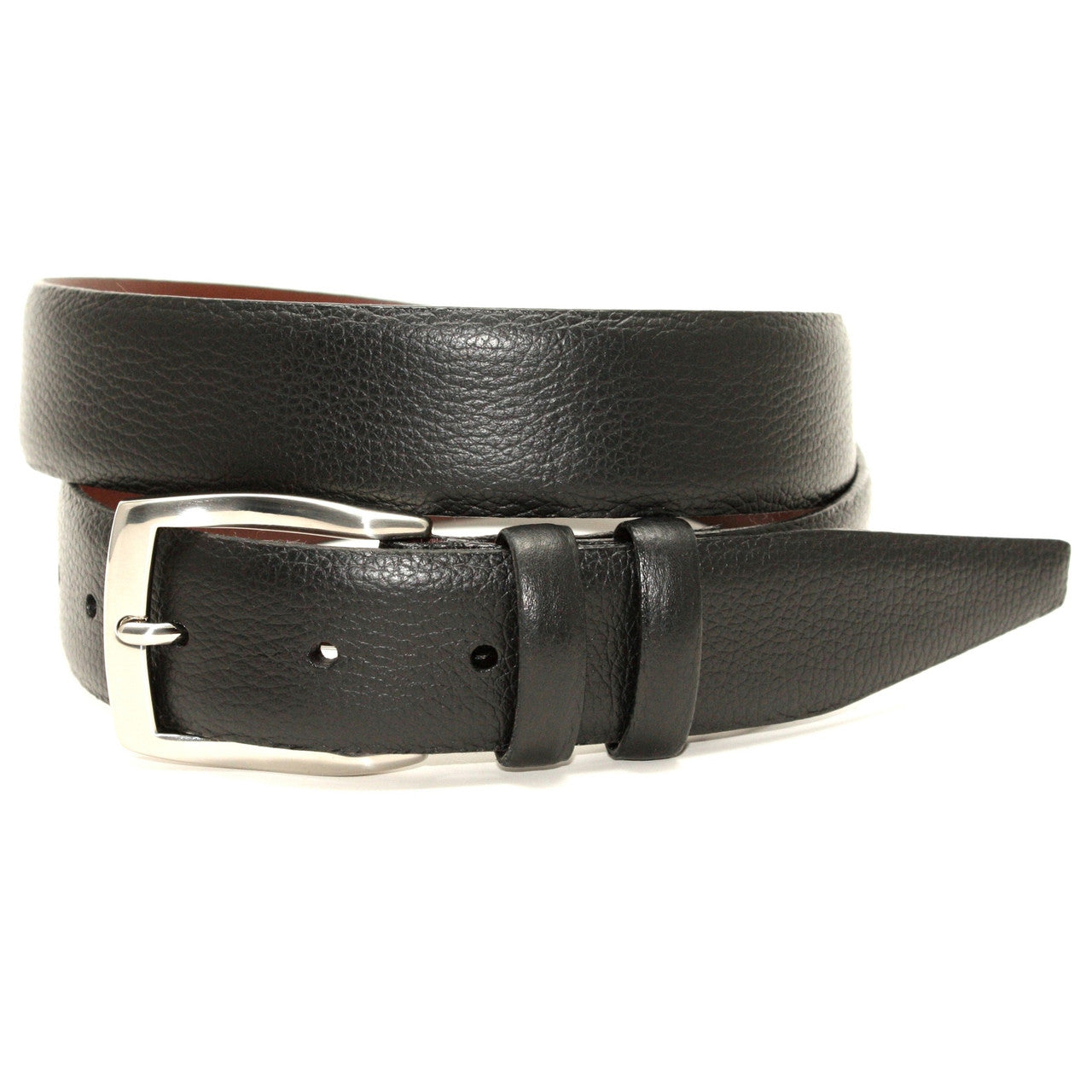
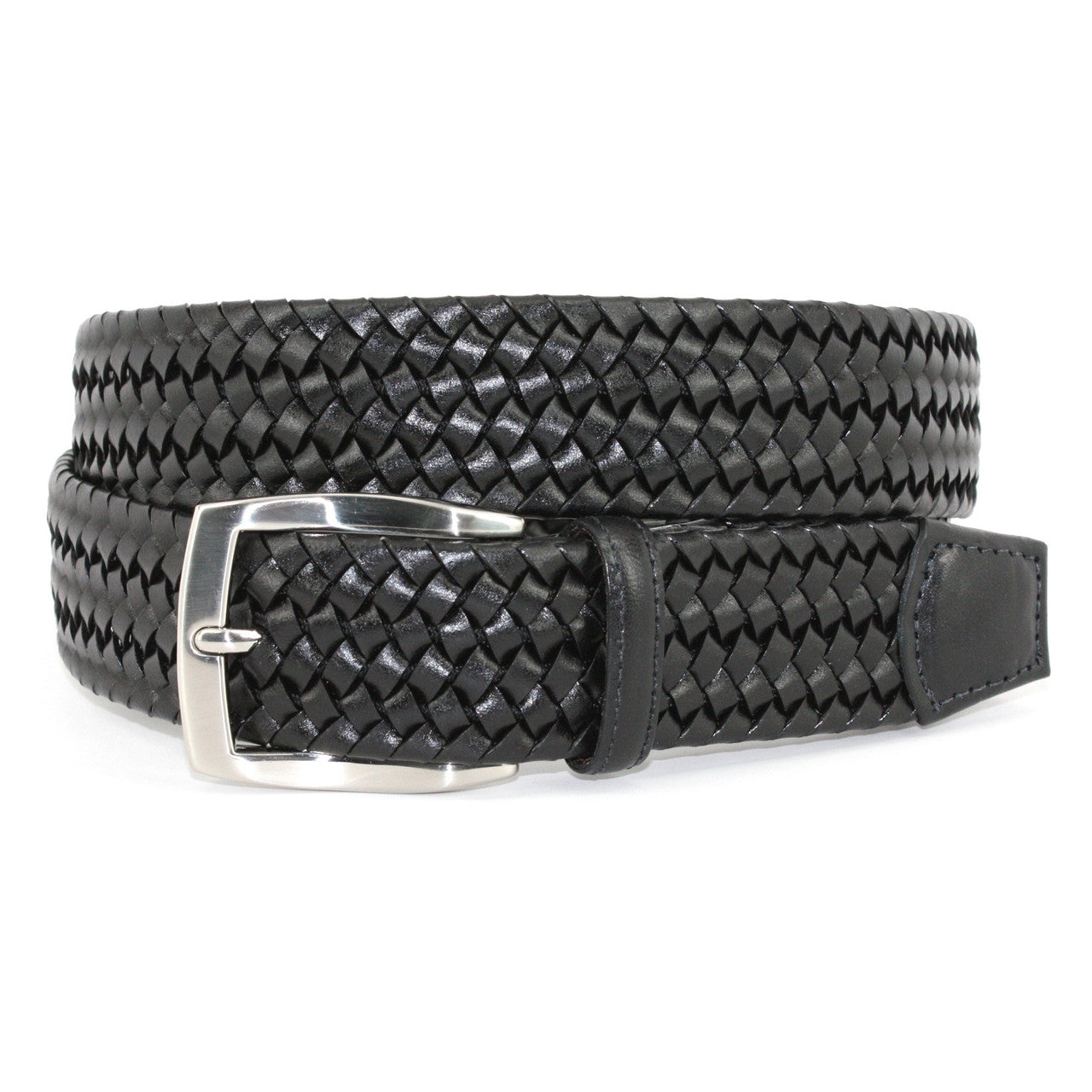
What holds up: a firm, full grain hide with properly finished edges, or a woven construction where the load spreads across the weave instead of concentrating at a hole. Both are on this page.
Yes, they cost a little more
An extended size runs about $20 to $30 above the standard length of the same belt. The pebble grained calfskin is $95 standard and $125 extended. The woven cotton elastic is $90 and $110.
It's a yield problem, not a markup. A hide only has so much usable length, and the longer the strap, the fewer you get out of it and the more of the hide gets rejected for a flaw that would have fallen outside a shorter cut. On exotics it's dramatic: the glazed caiman is $345 in standard and $500 extended, because finding a single caiman belly long enough and clean enough is genuinely hard.
We'd rather tell you that than pretend the pricing is arbitrary.
What's here
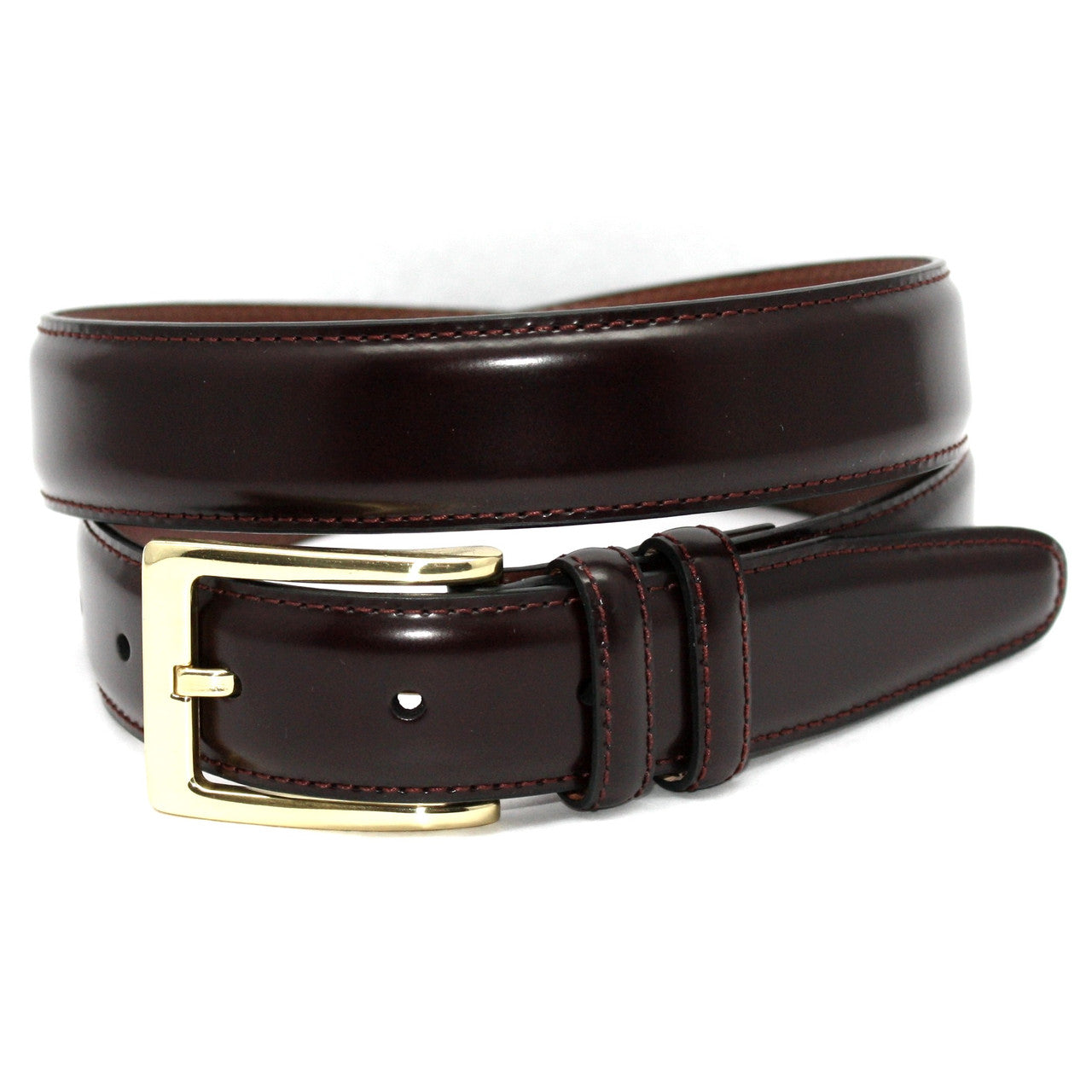
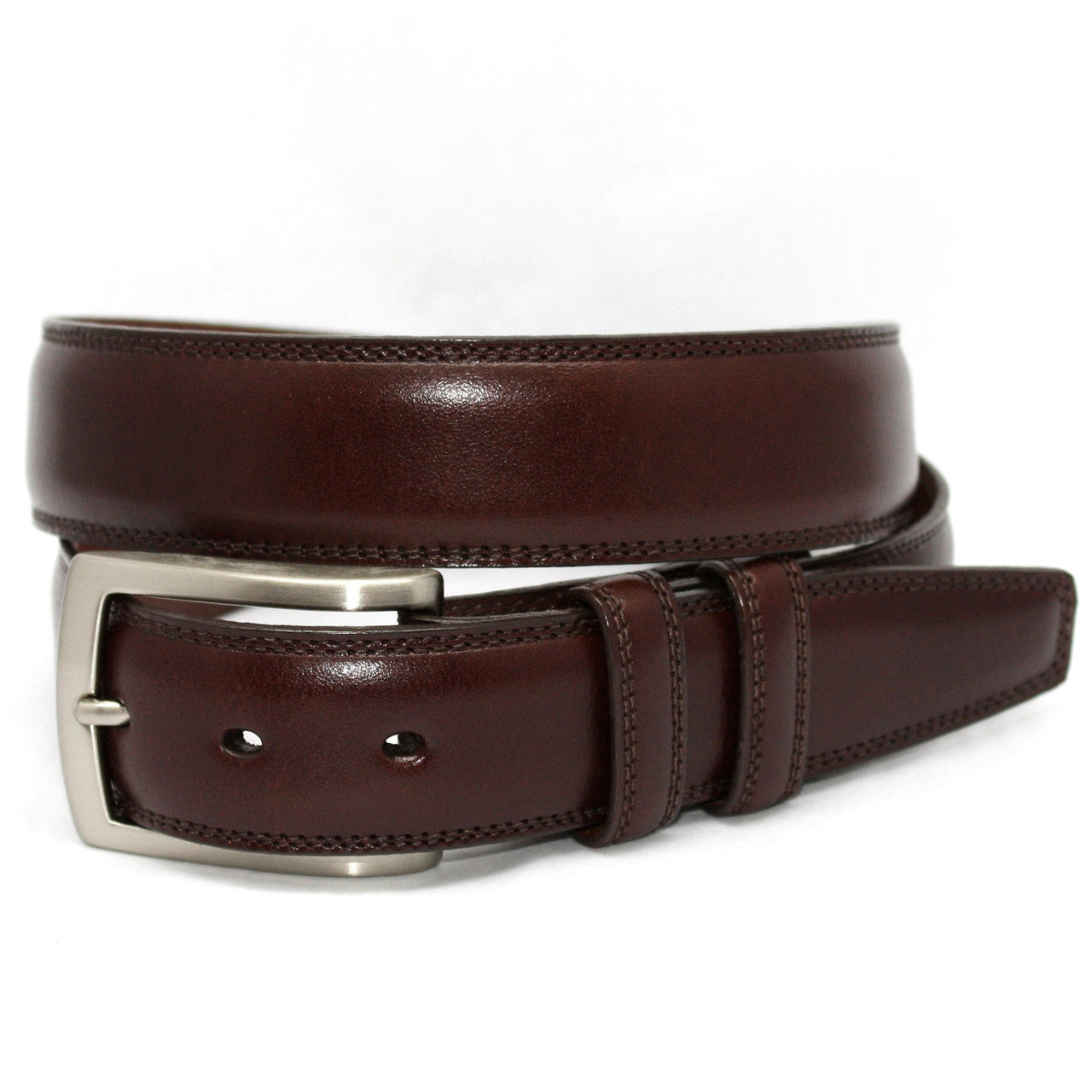
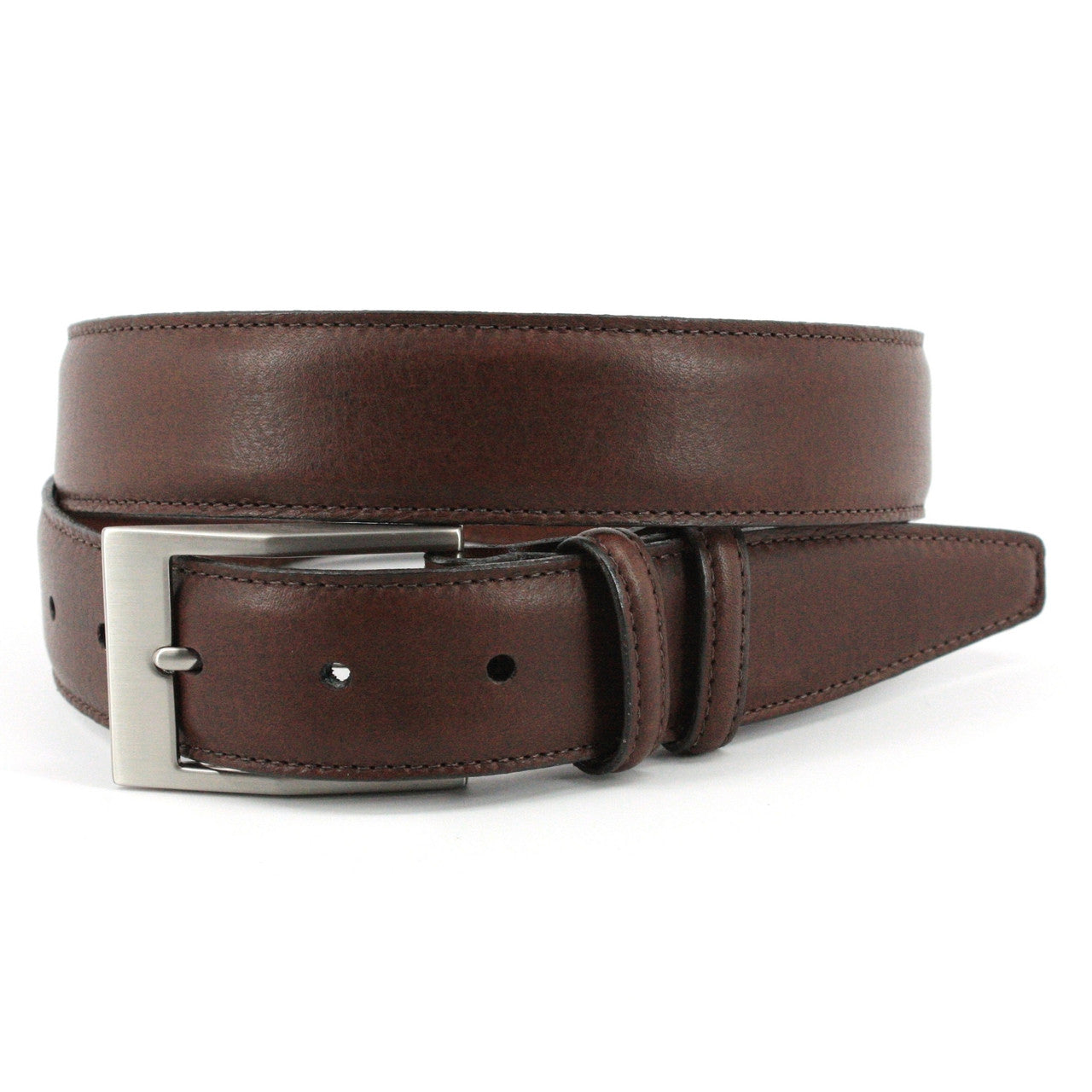
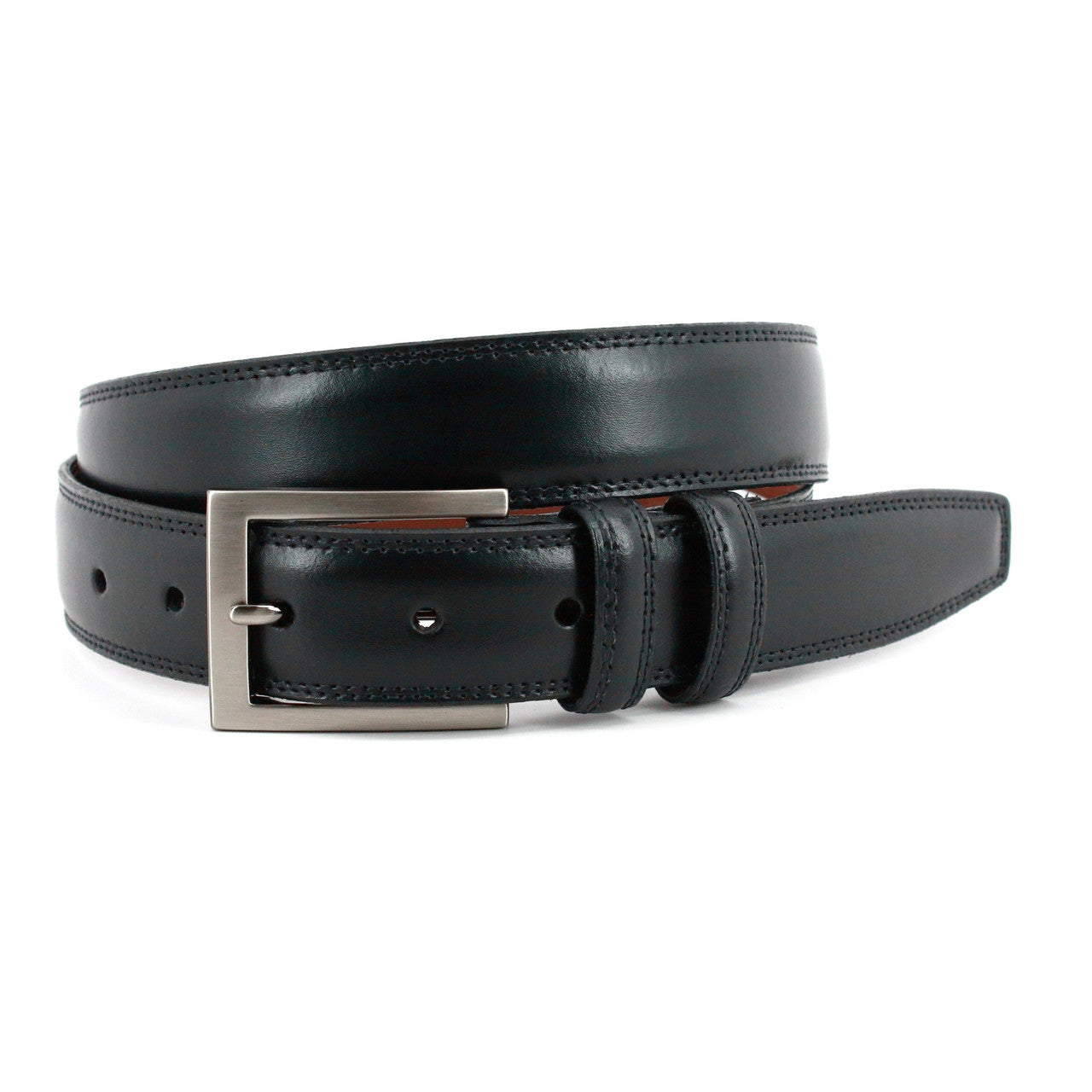
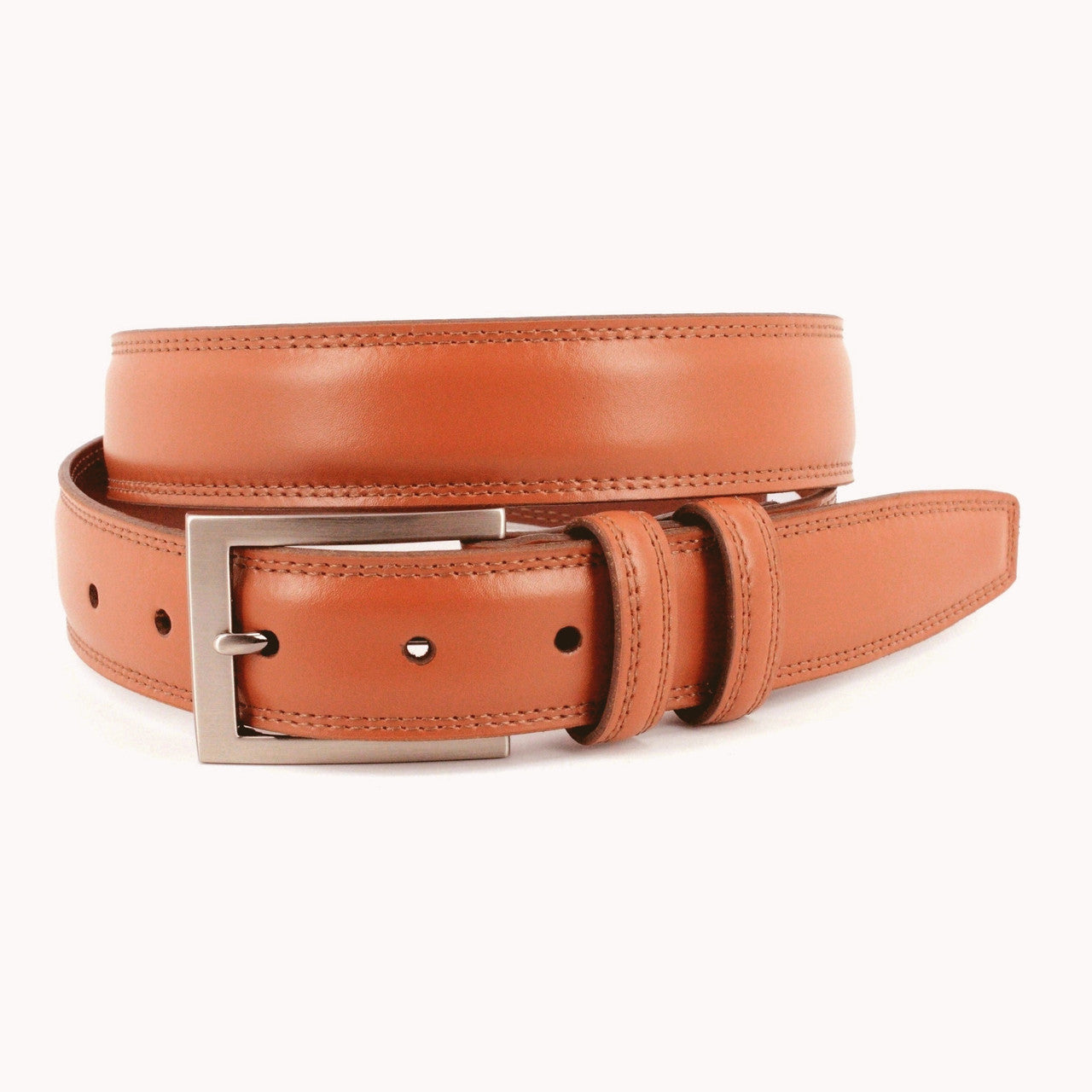
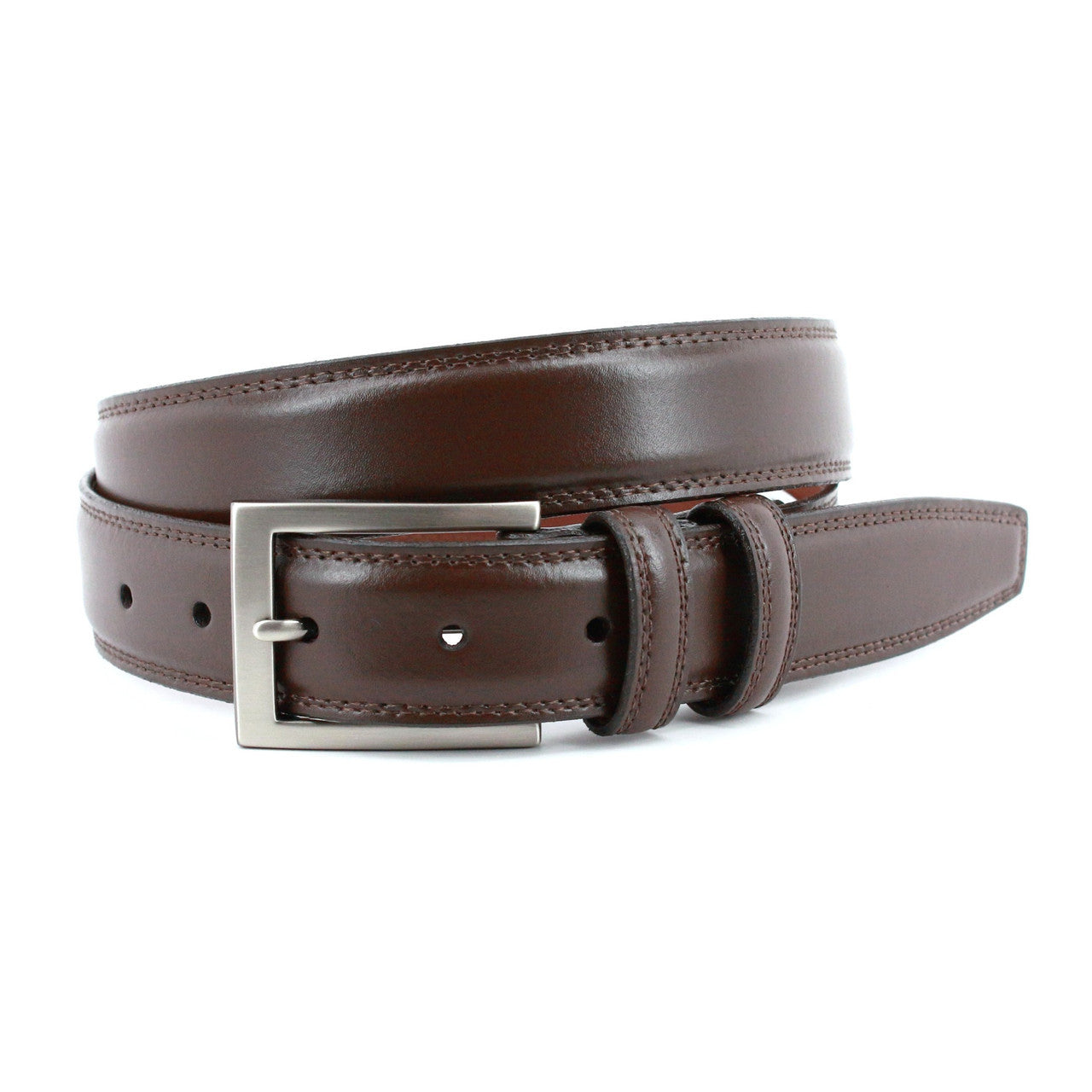
Italian aniline leather at $90 is the value of the page, in black, brown, and tan. Dyed through with no pigment on top, so it shows real grain and picks up color as you wear it.
Antigua leather at $75 in burgundy is the least expensive belt in the collection.
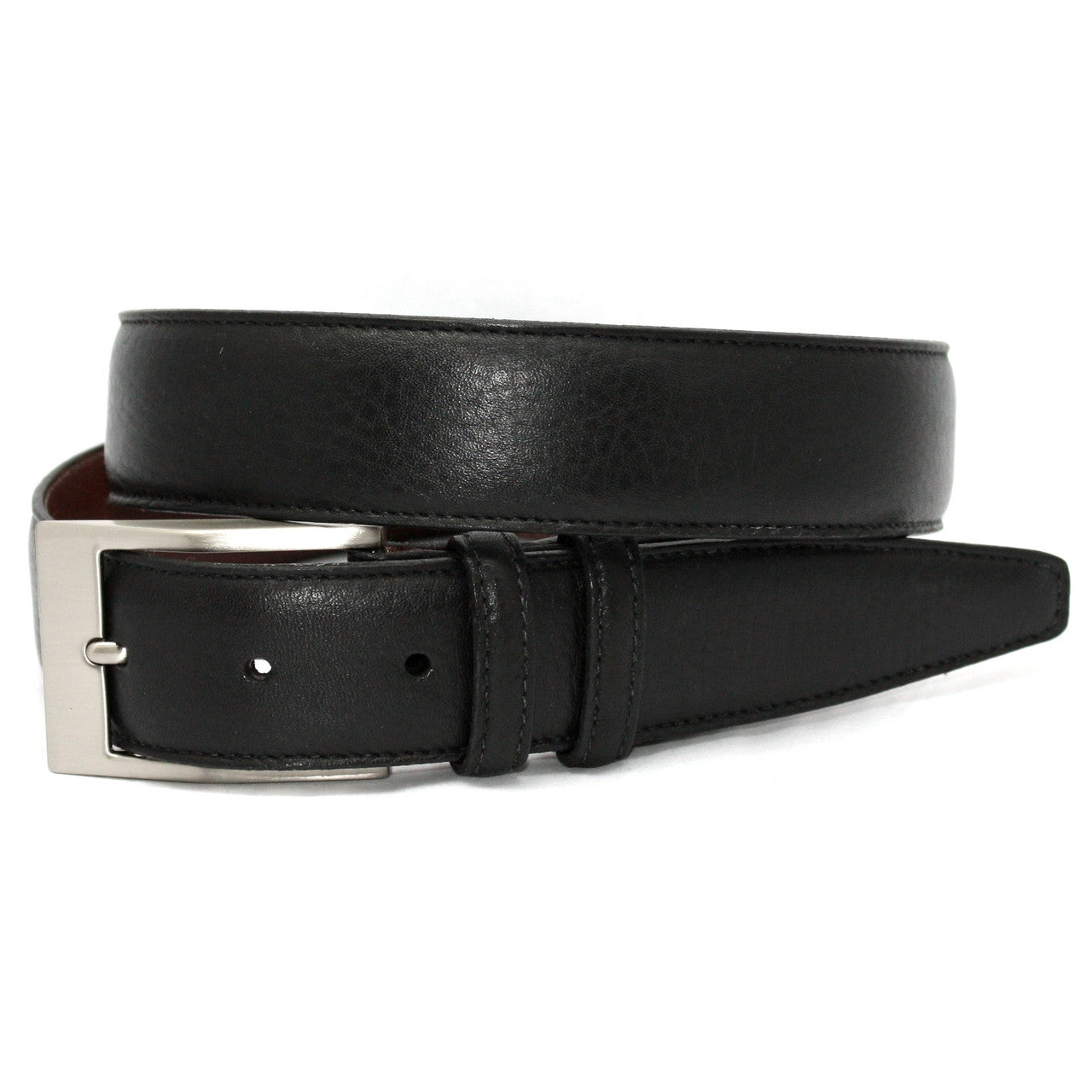
Pebble grained calfskin at $125 in black and brown, and burnished kipskin at $130 in brown, for dressier wear.
Soft deertan glove leather at $125 in black and chestnut. The softest strap here, with essentially no break-in.
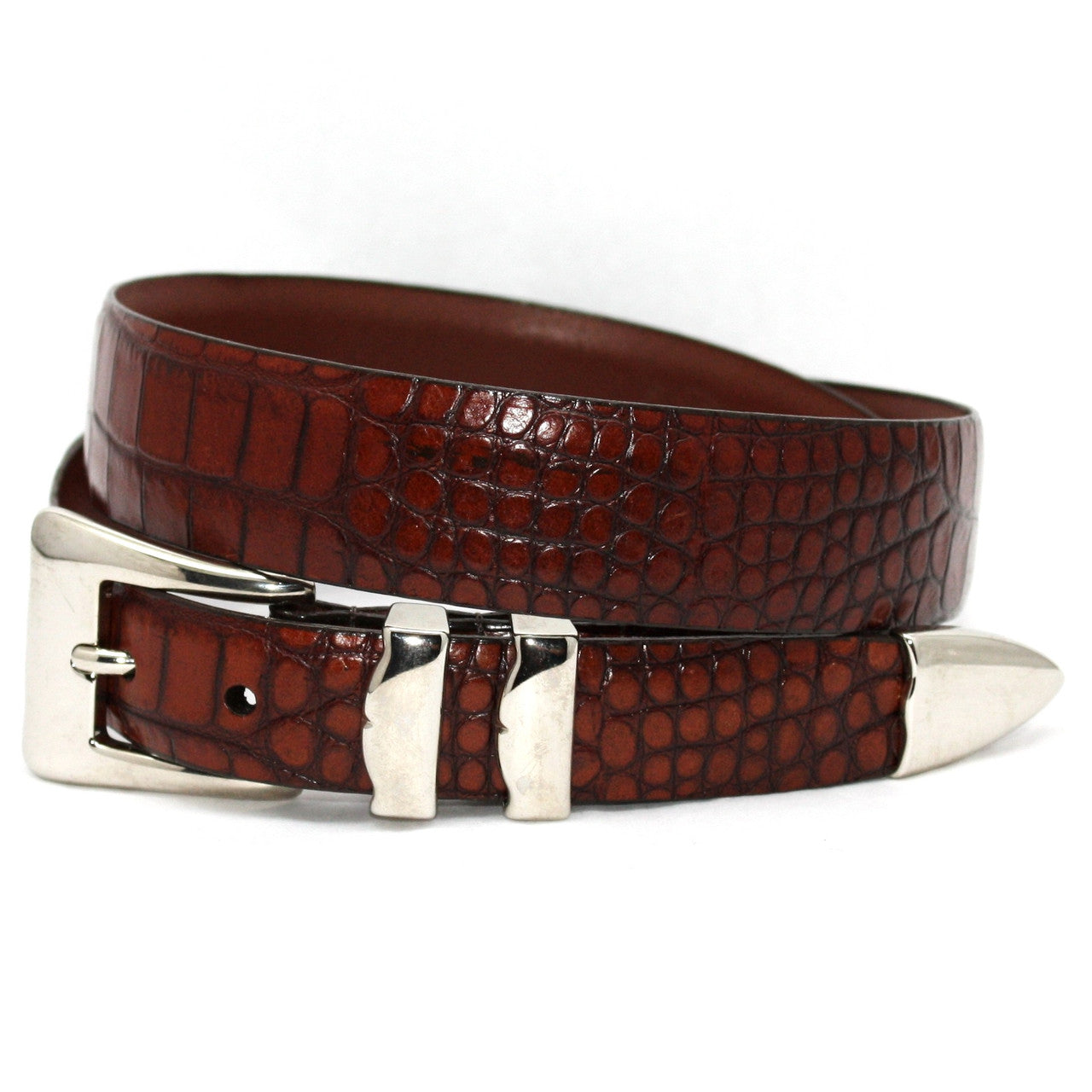
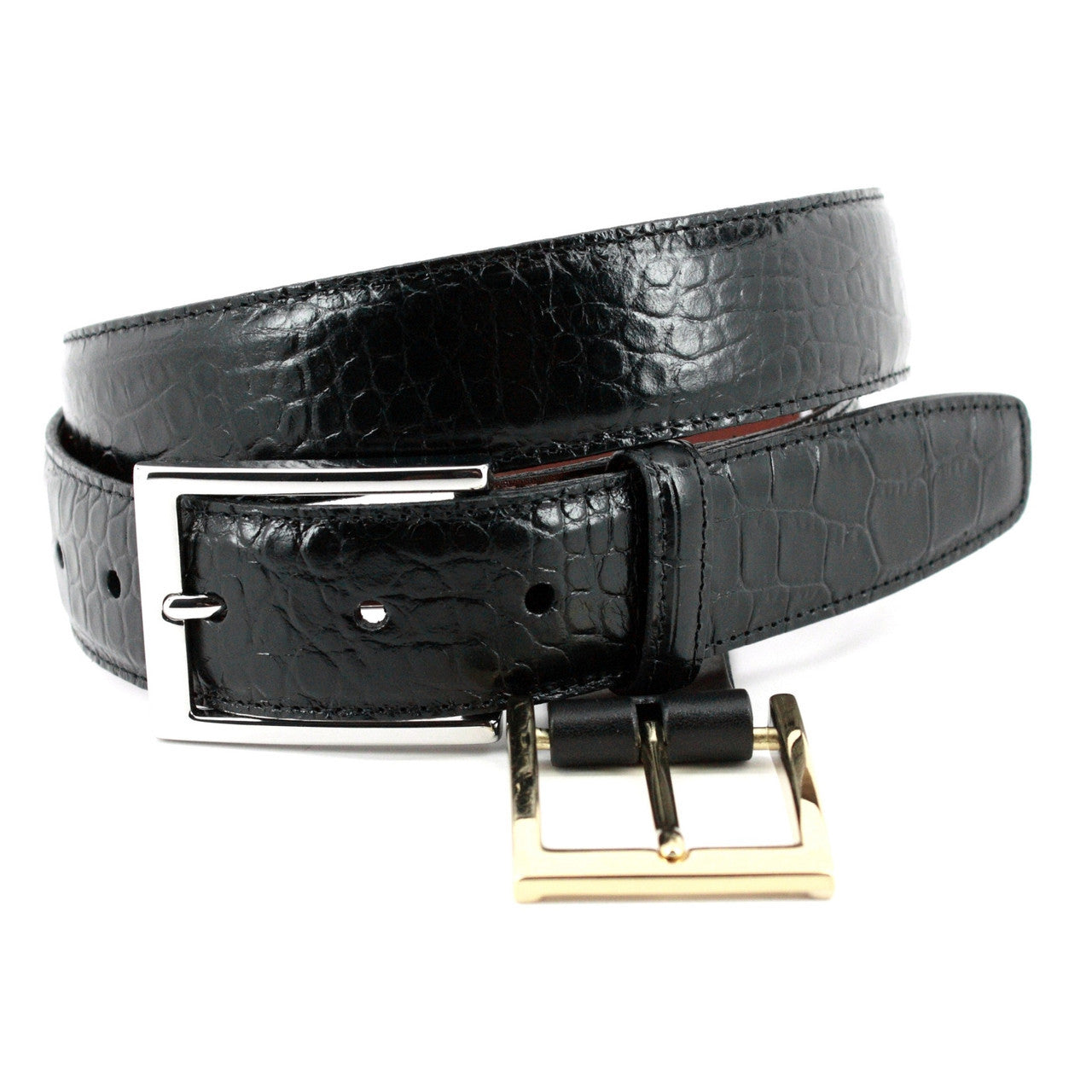
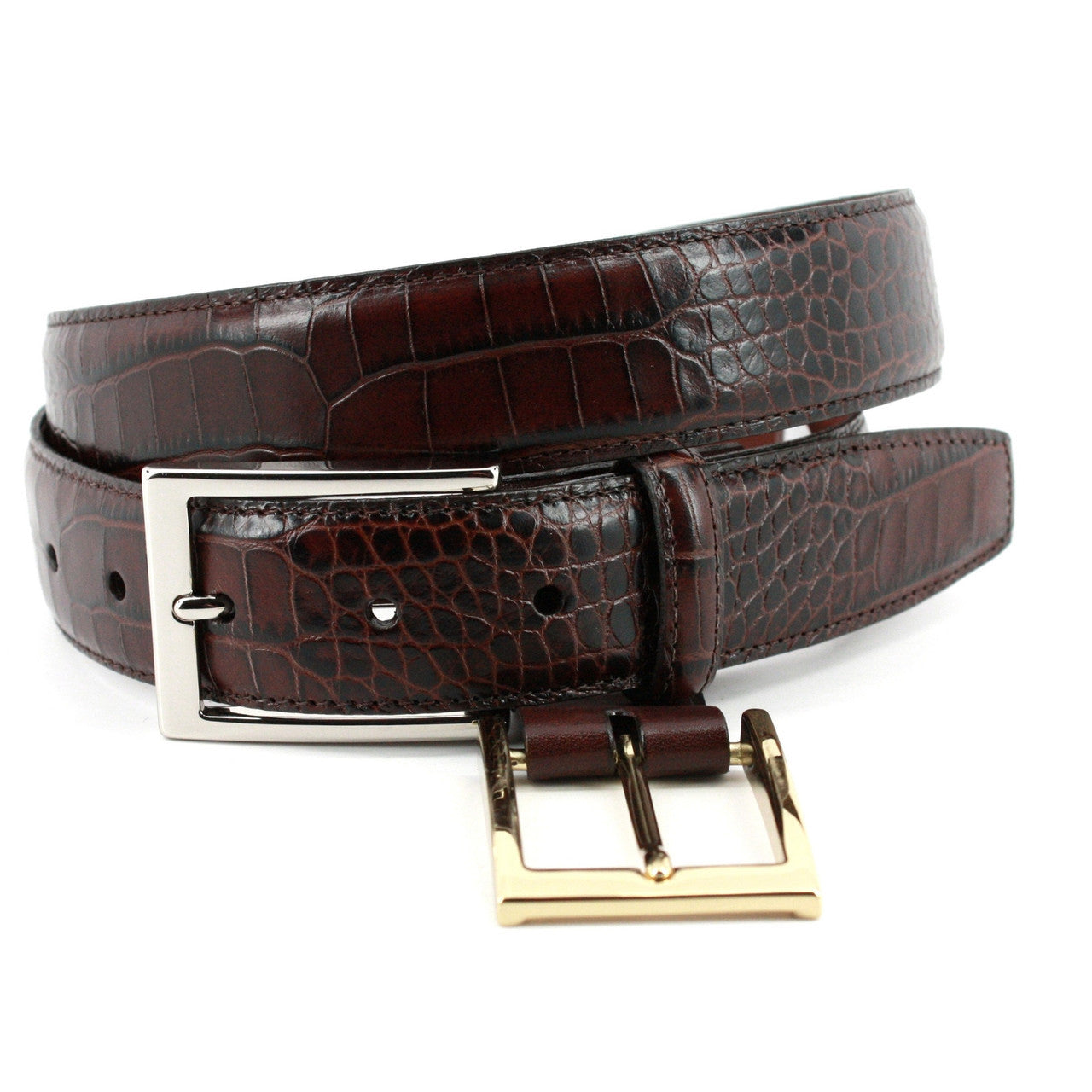
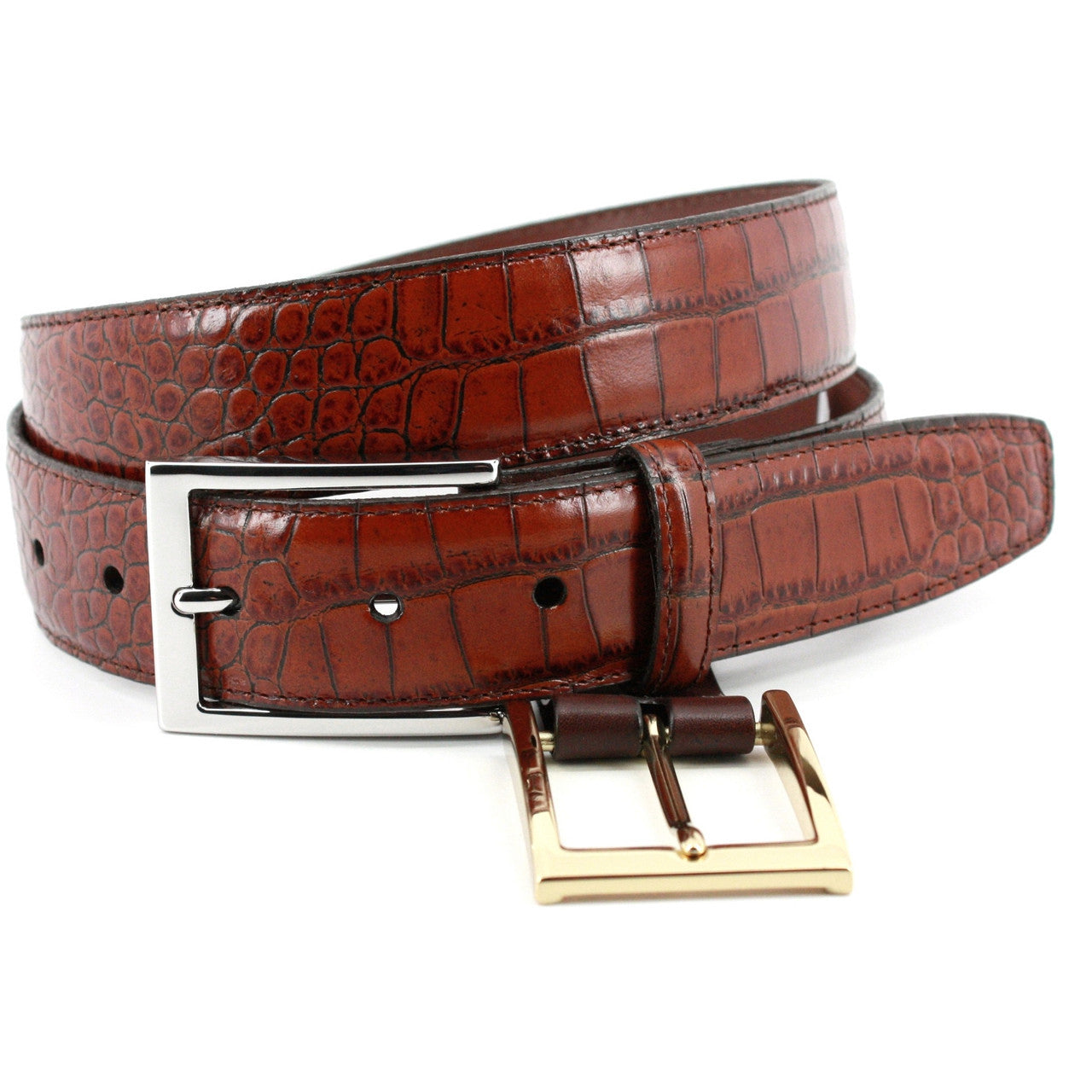
Alligator grain embossed calfskin at $130 in black, brown, and cognac, plus a version at $125 that comes with a four-piece buckle set.
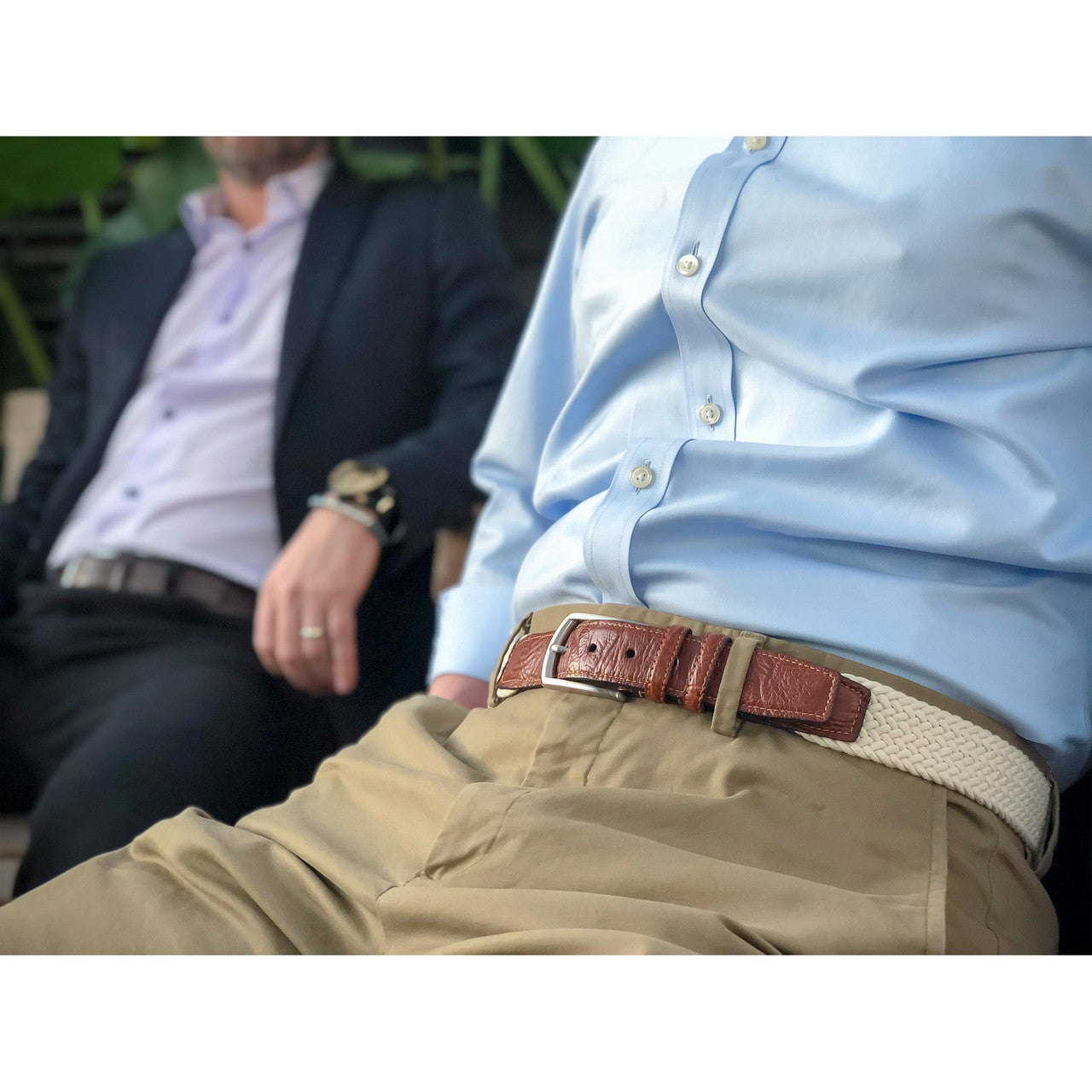
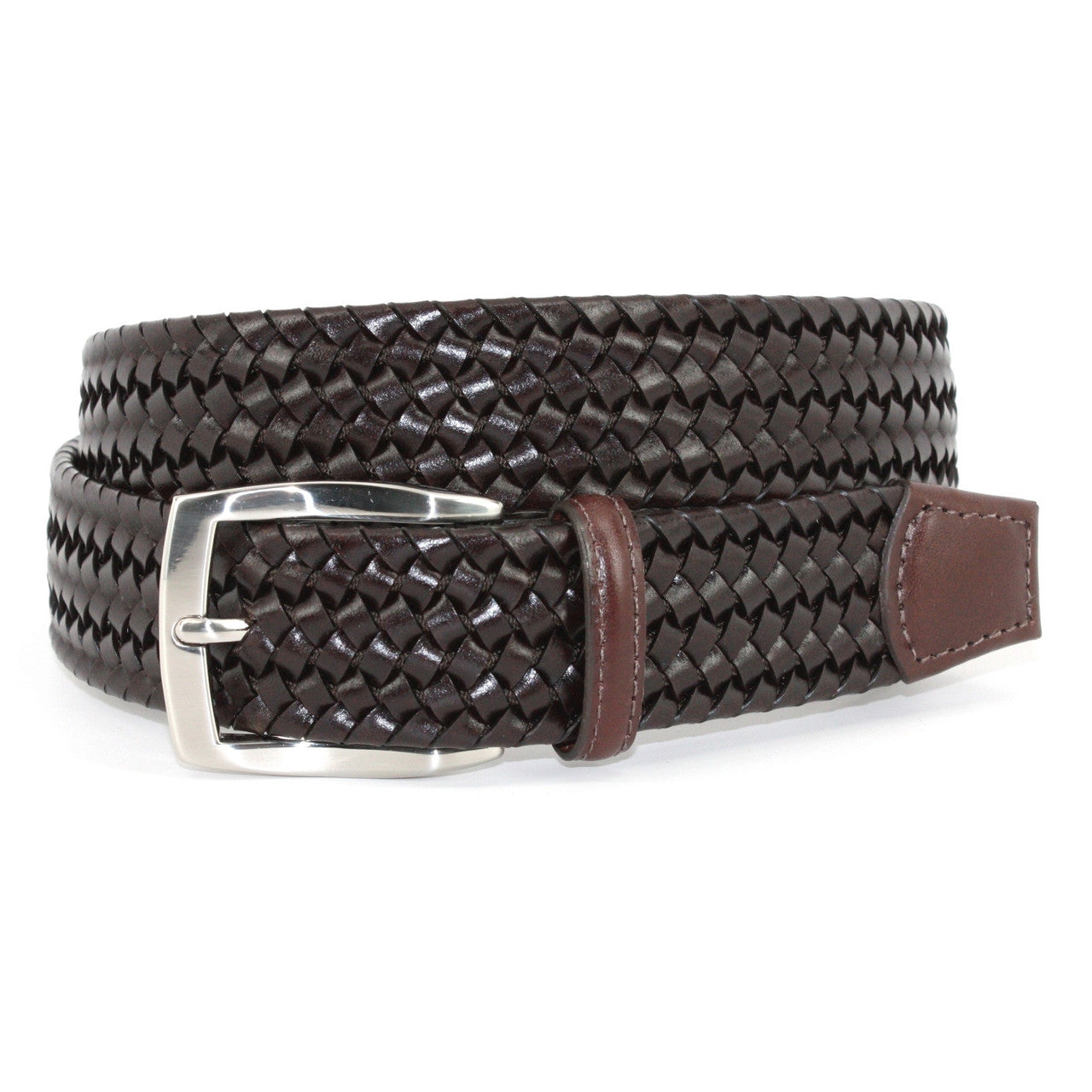
Italian woven cotton elastic at $110 to $115 in cream and black, and woven stretch leather at $130 in black and brown. Both give, which past 44 matters more, not less.
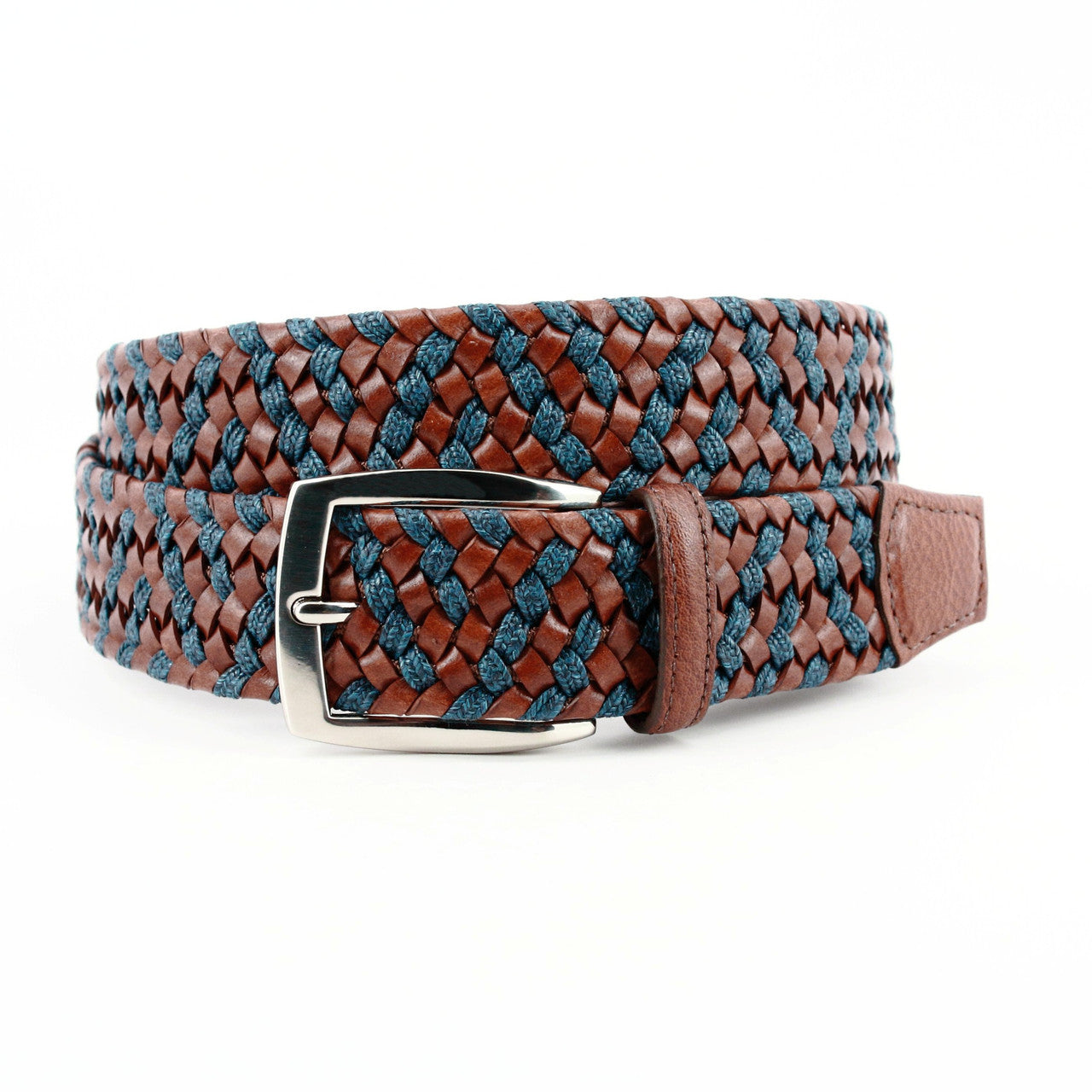
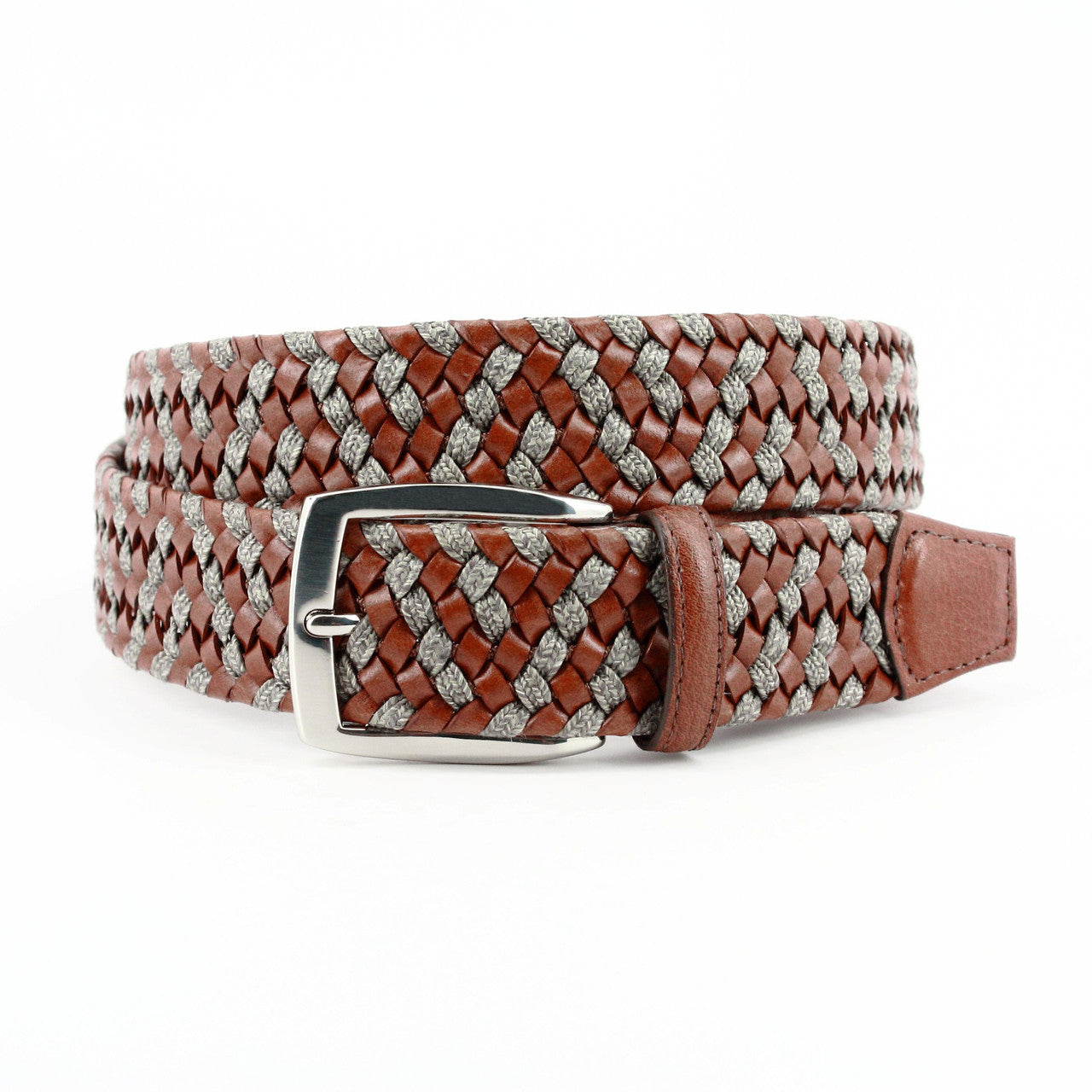
Braided leather and linen at $130 in cognac with navy and cognac with taupe.
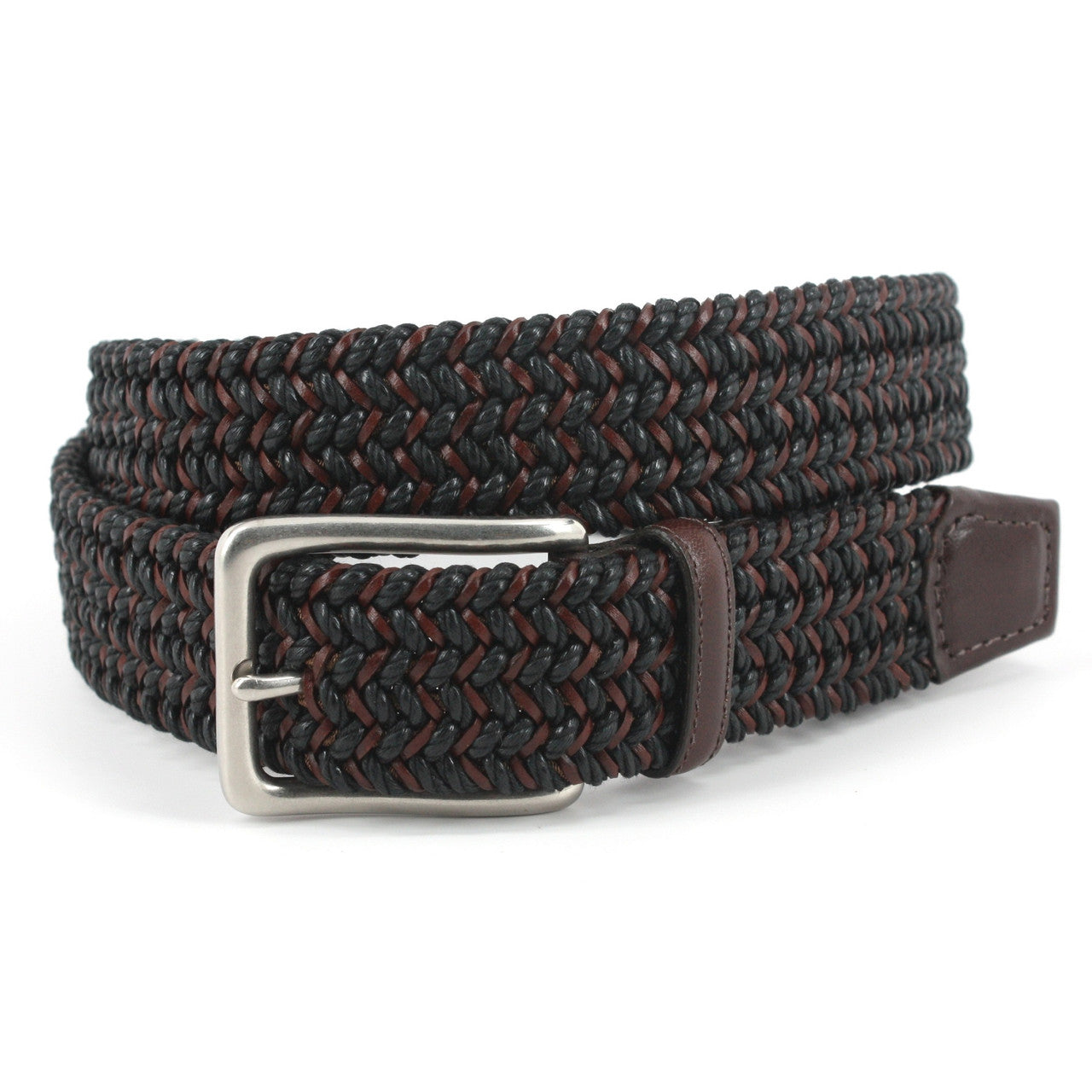
Woven cotton and leather at $135 in black and brown.
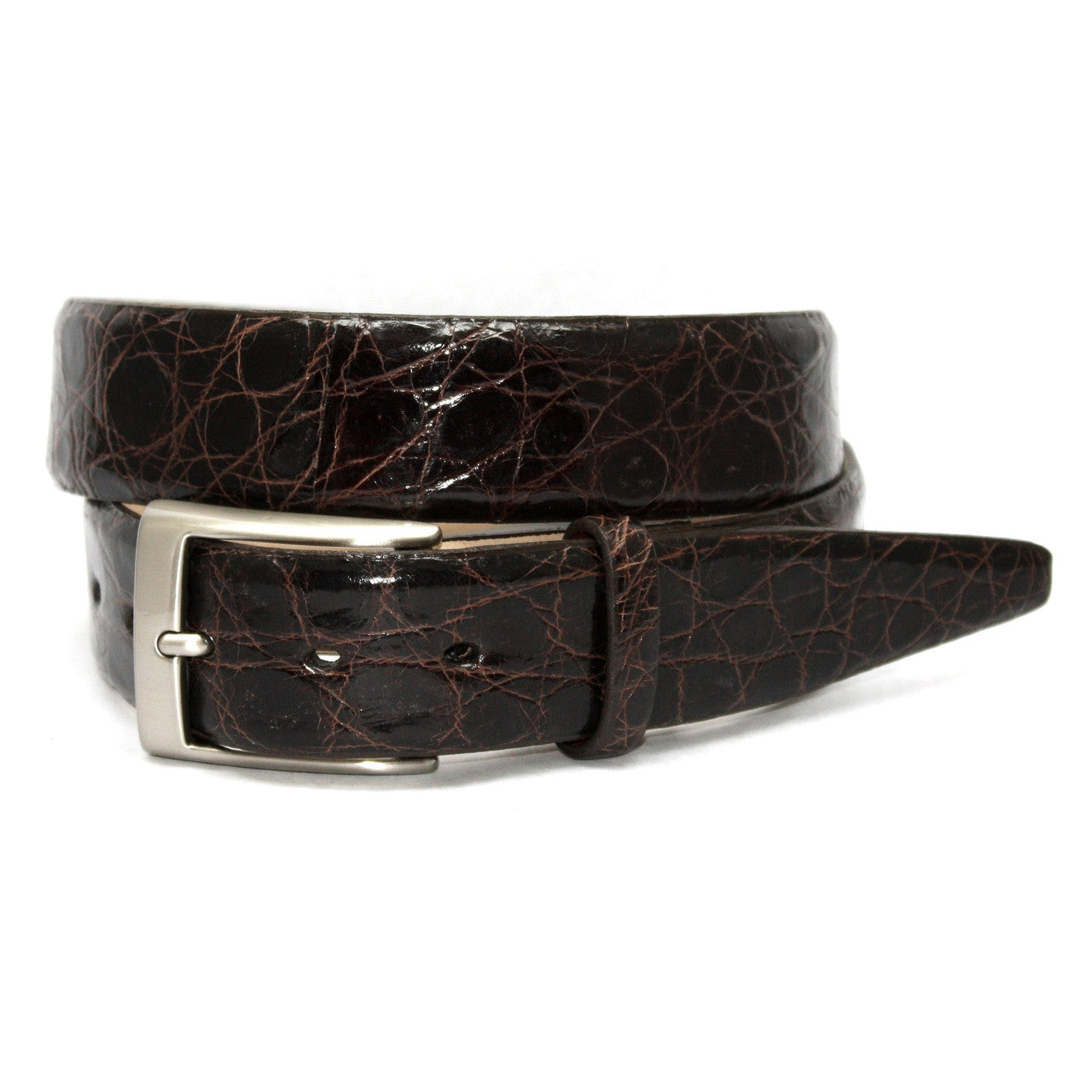
Glazed South American caiman at $500, because a man in a 50 should be able to buy an exotic belt too.
Related
Standard lengths of most of these are in all belts. For the narrow, quiet end of the line see Dress Belts, and for texture and weight see Casual. The full stretch range is in Woven & Stretch.
Questions we get
What sizes do you carry?
Standard runs start at 30. Extended sizes on this page go to 54.
What size belt do I need for a 46 waist?
A 48. Add two inches to your pant waist, whatever the waist size.
Why do big and tall belts cost more?
Yield. A hide has a finite usable length, so fewer long straps come out of it and more of the hide gets rejected for flaws. Extended sizes here run about $20 to $30 above the standard length of the same belt.
Are these the same quality as the standard sizes?
They're the same belts, cut longer. Same leather, same construction, same hardware.
What if I'm between sizes?
Go up, and look at the woven and braided styles. A woven belt has no fixed holes, so the prong sets anywhere in the weave and the fit is exact.
Do you carry big and tall in exotic skins?
Caiman, in glazed brown at $500.
How do I measure instead of guessing?
Lay a belt you wear flat and measure from the fold at the buckle to the hole you use most. That number in inches is your belt size.