Calf, kip, and veal
Three words for hides from the same animal at different ages, and they aren't interchangeable.
Calfskin comes from a young animal. The grain is tight and fine, the hide is thin relative to its strength, and it takes a polish better than anything else here.
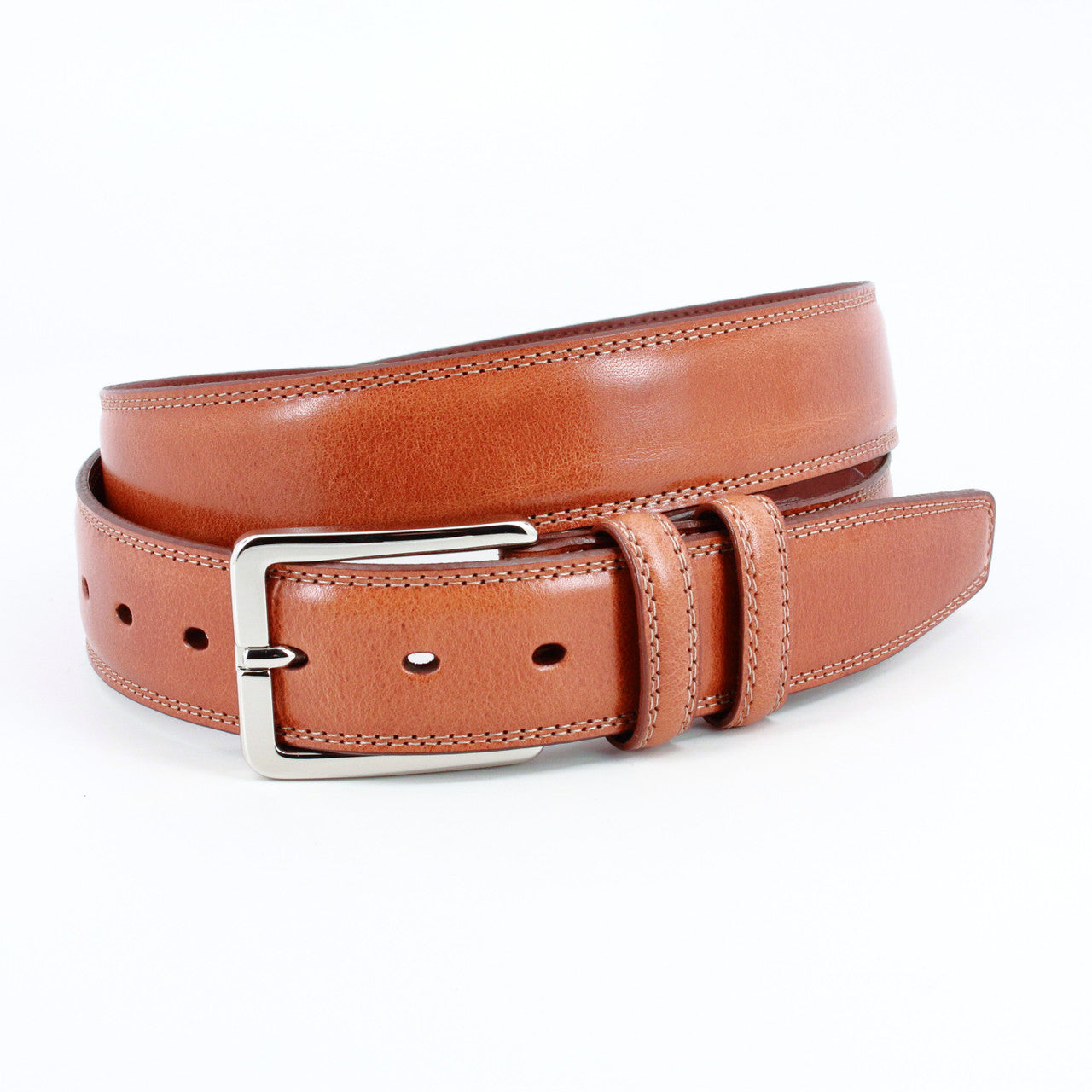
Kipskin is from an older calf, between calf and full cowhide. Slightly thicker and a little more durable, with grain nearly as fine. Our burnished kipskin at $105 and hand stained kipskin at $125 are among the best value belts we carry, and most men couldn't tell them from calf.
Veal is the term you'll see on our reversible belt, and it means calf.
What the finish words mean
This is what you're actually choosing between.
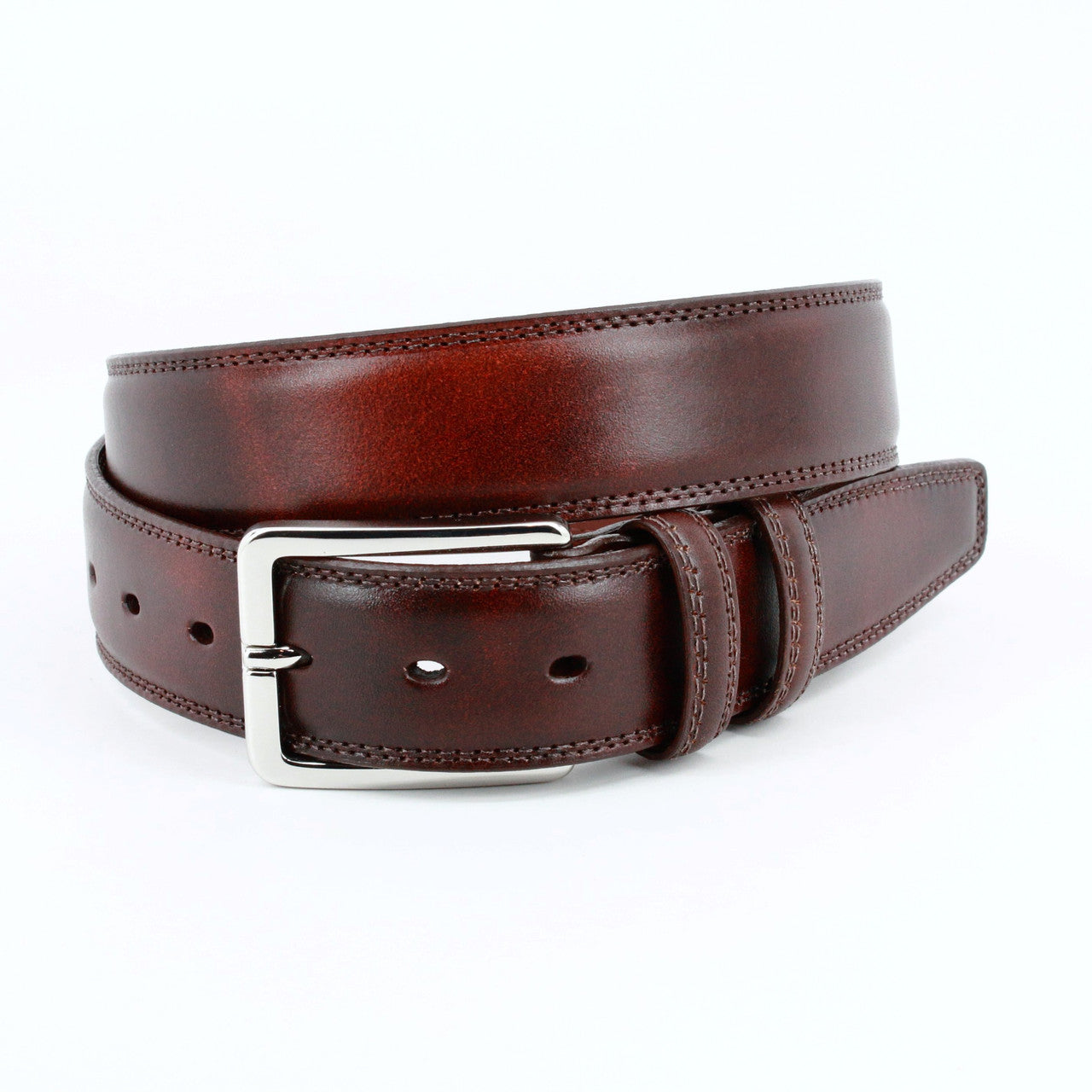
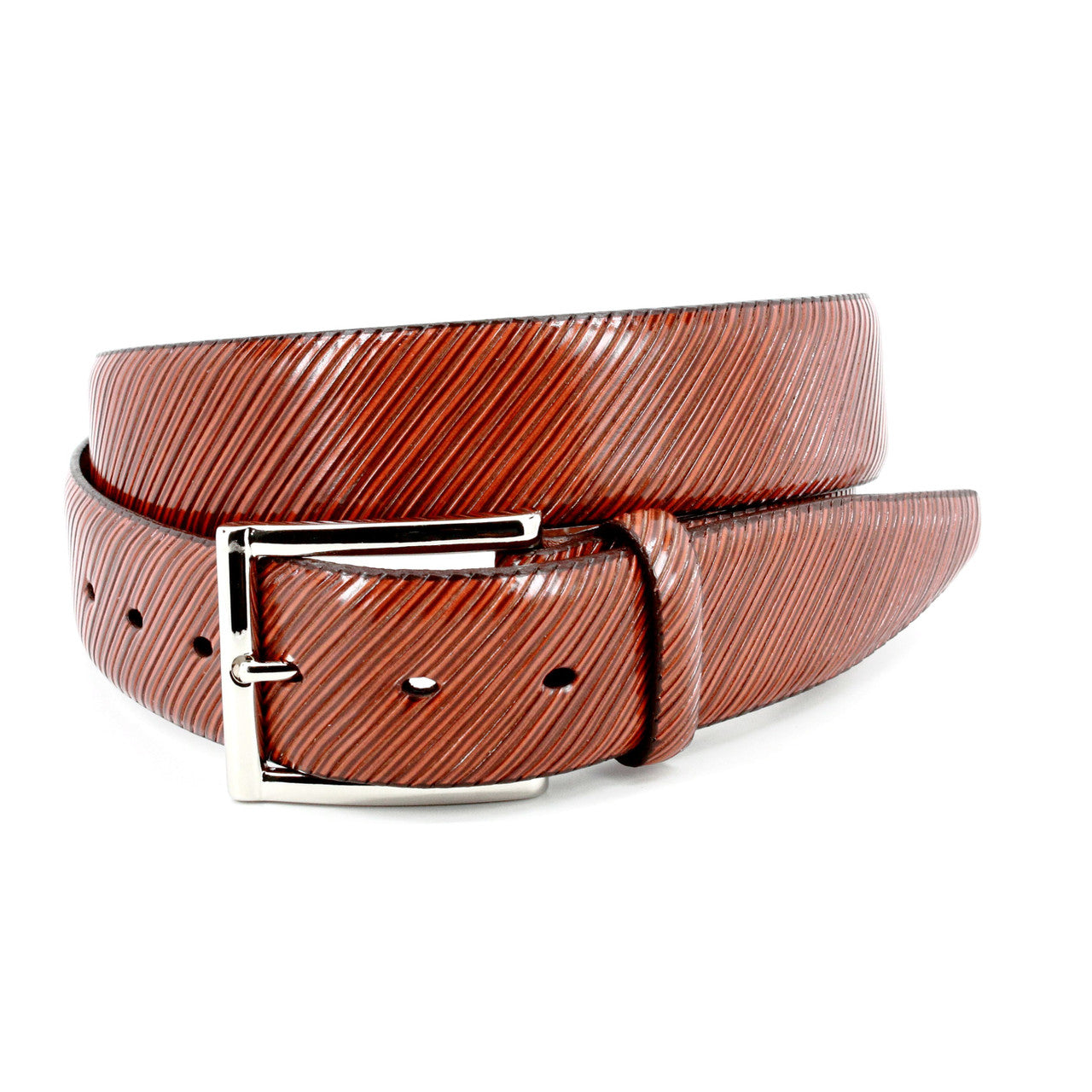
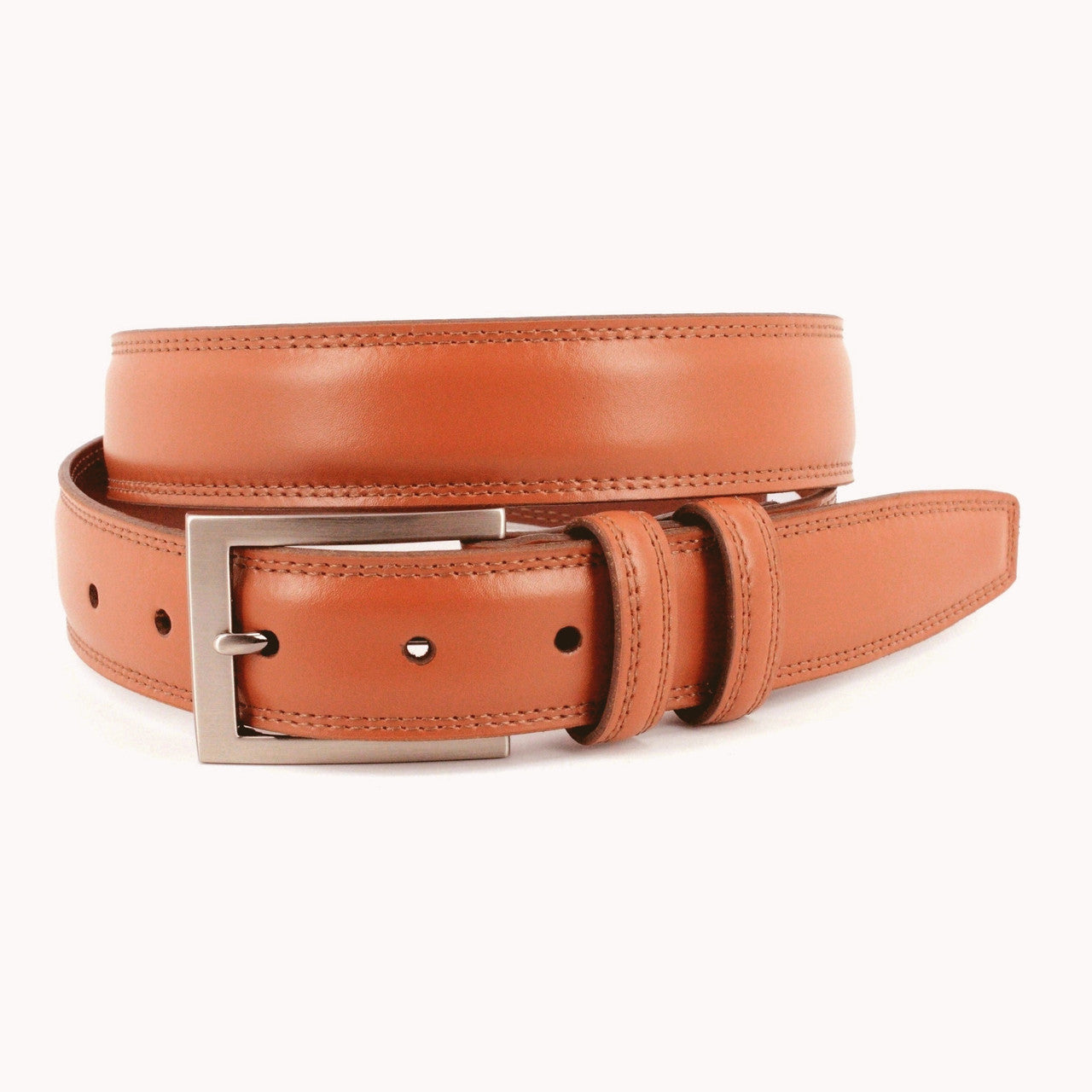
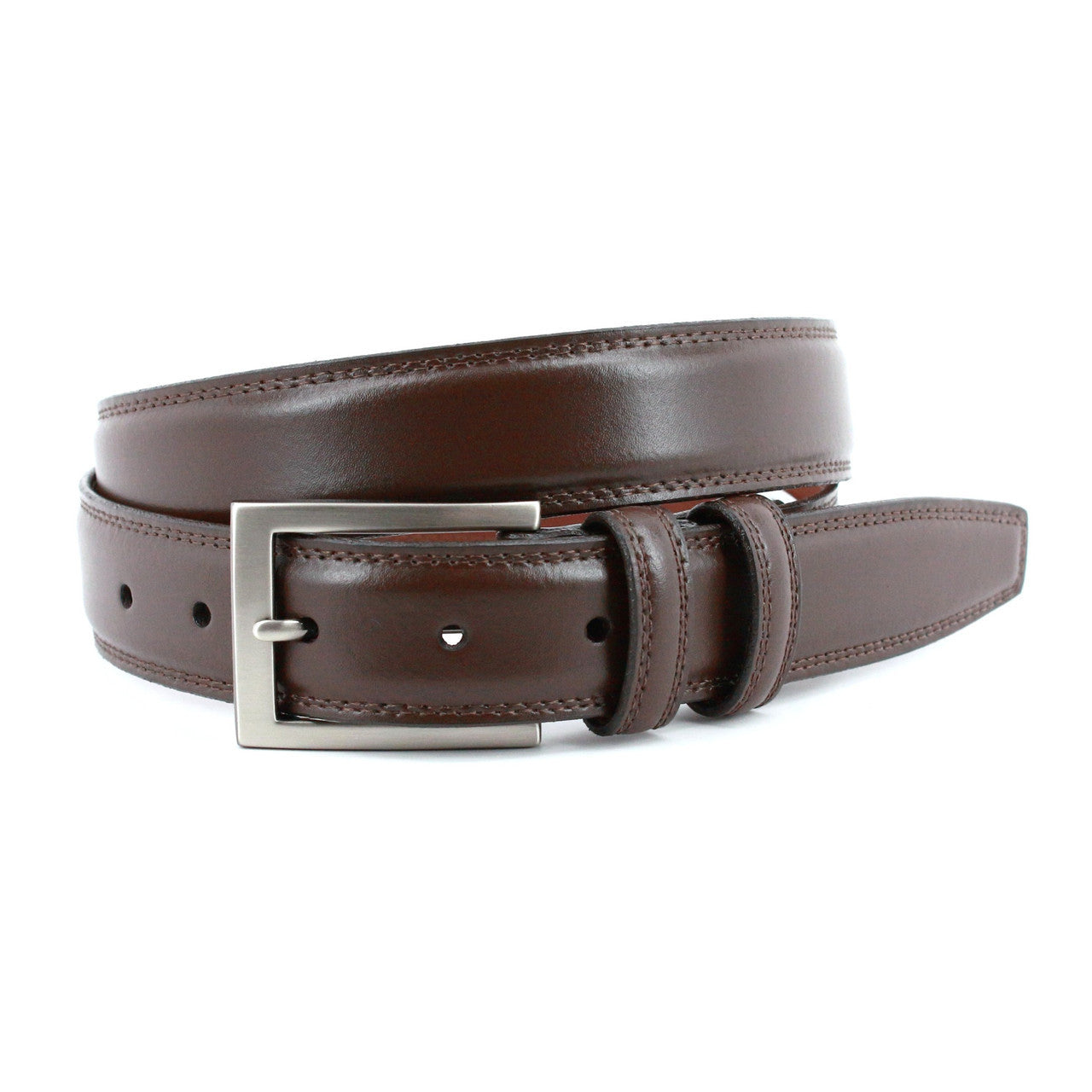
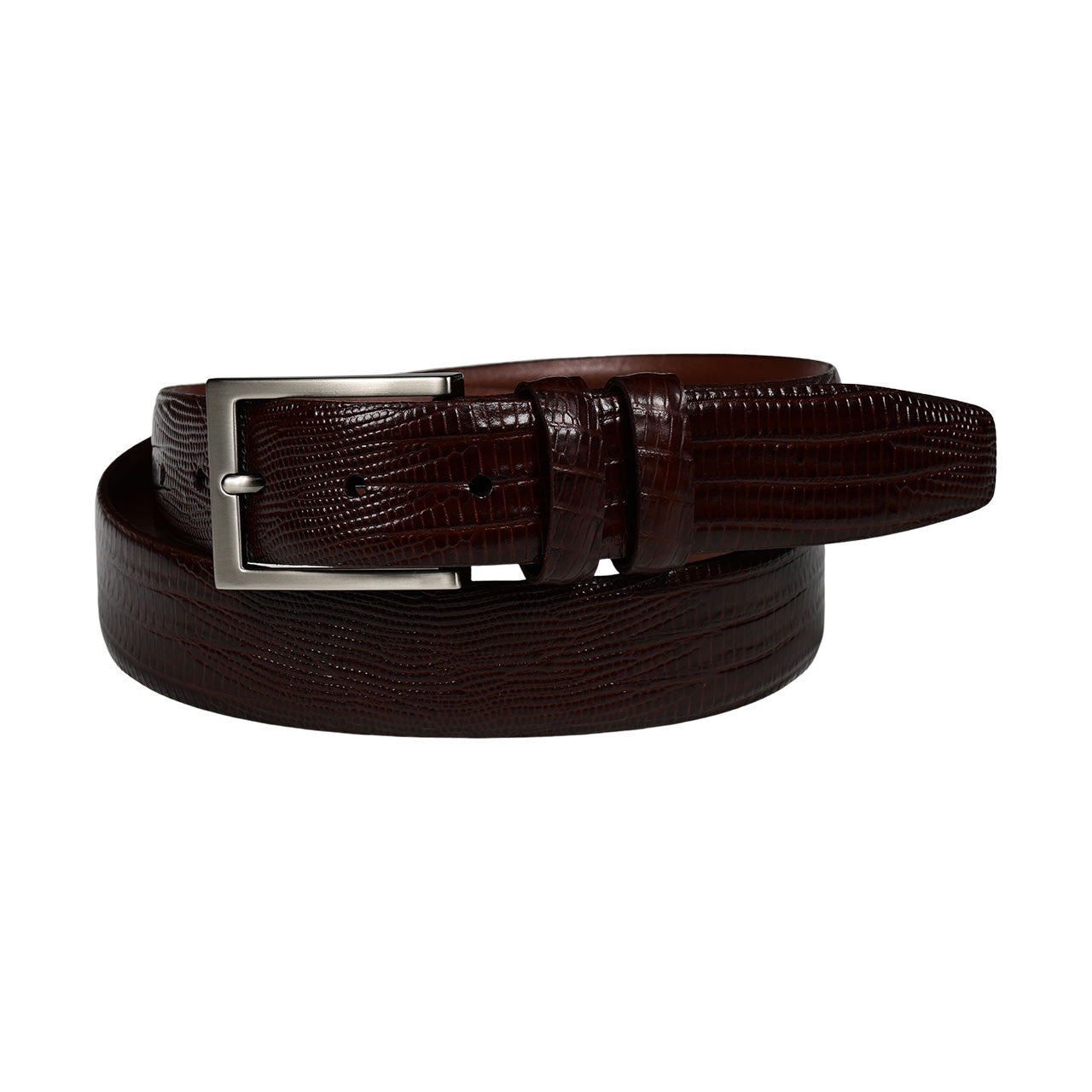
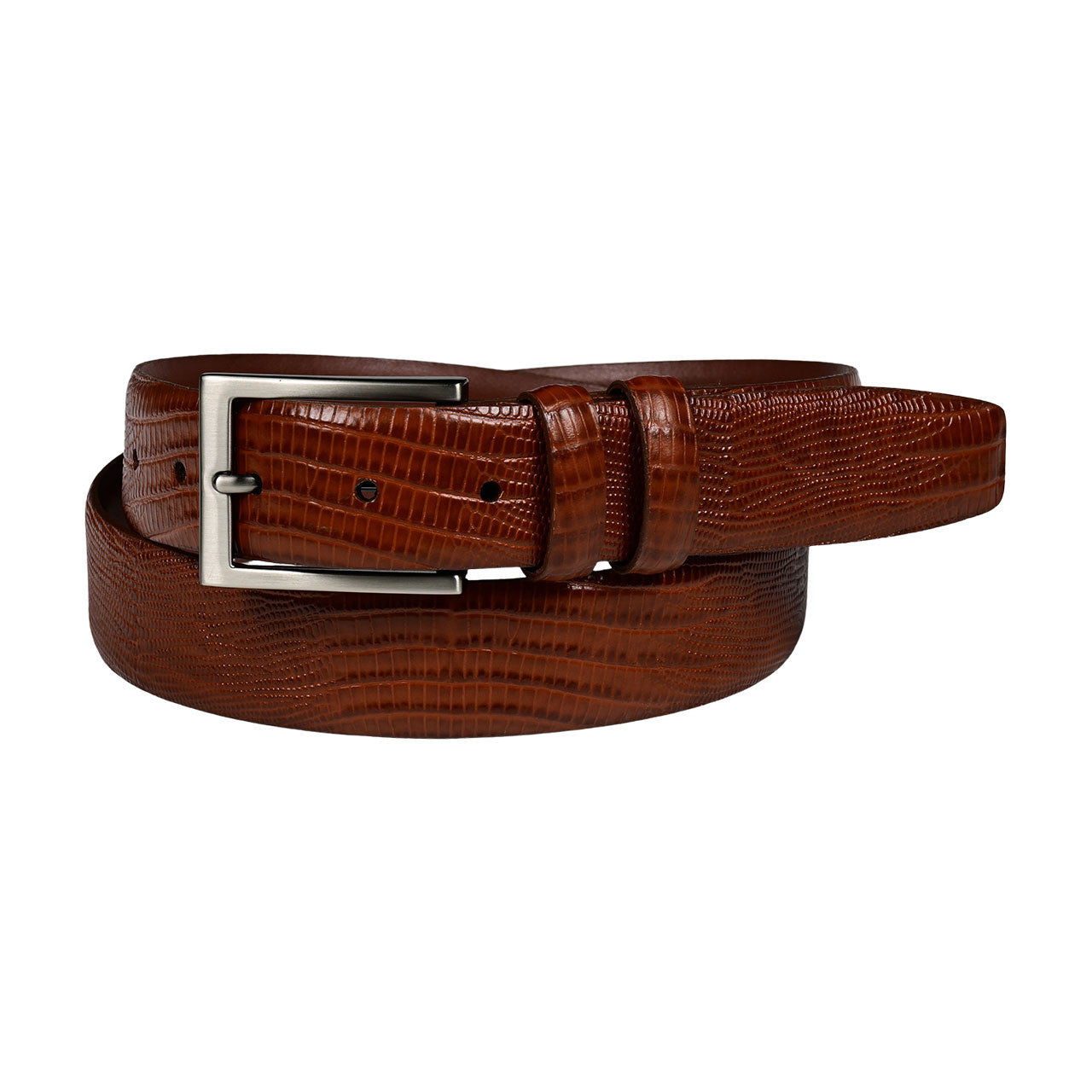
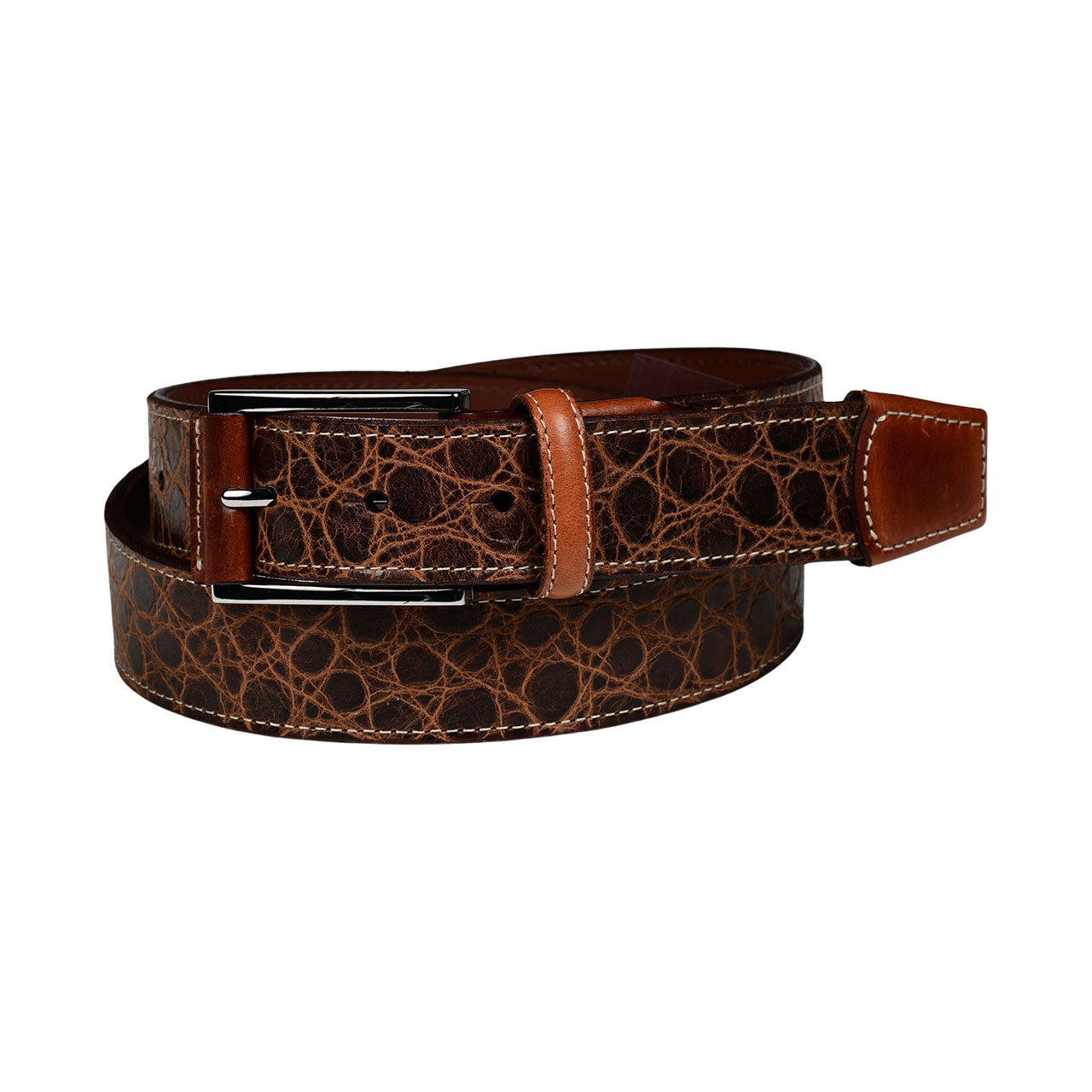
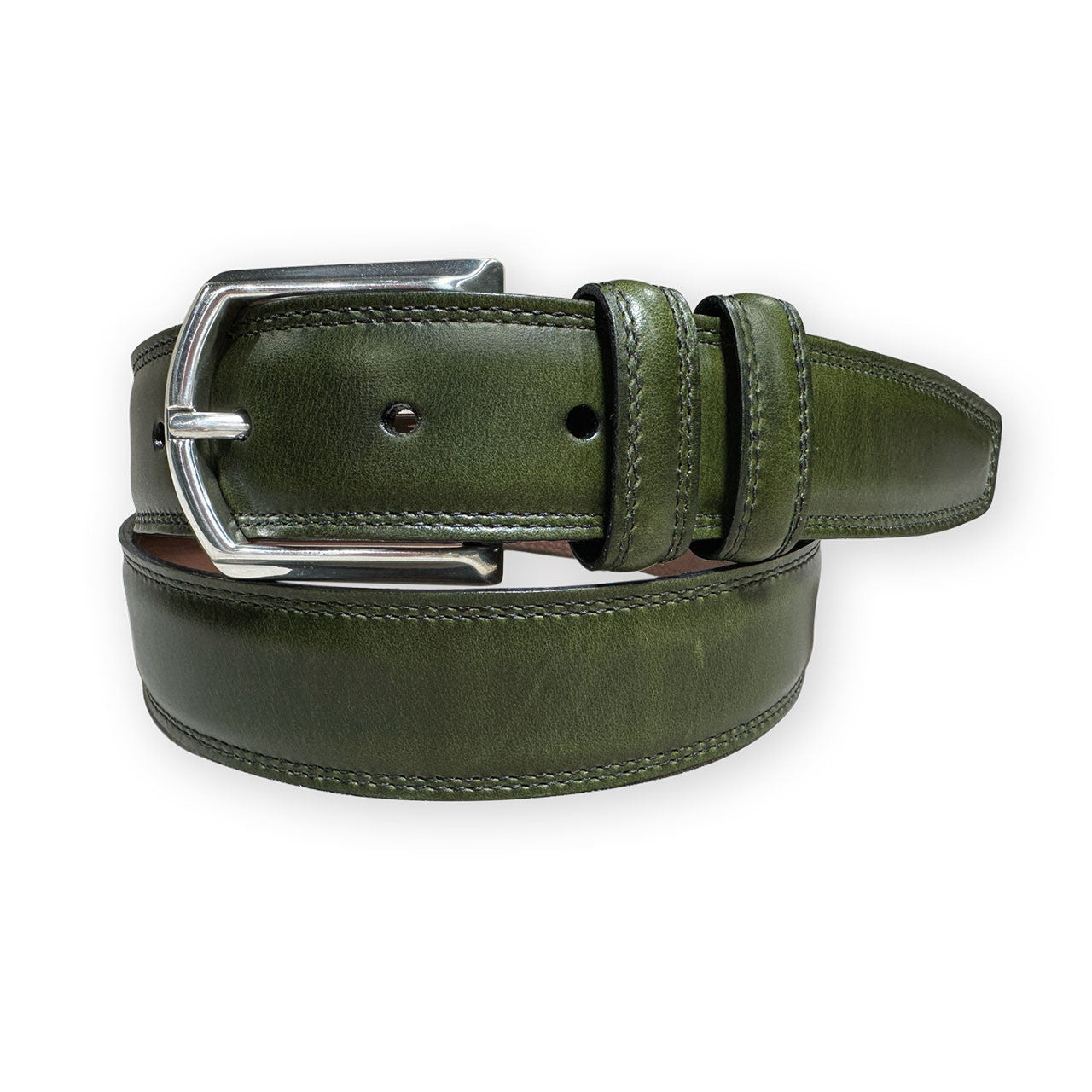
Burnished means color applied unevenly and worked in, so the leather is darker at the edges and lighter through the middle. It gives a strap depth and an aged look from day one. Our Italian burnished calfskin is $170 and the burnished kipskin $105.
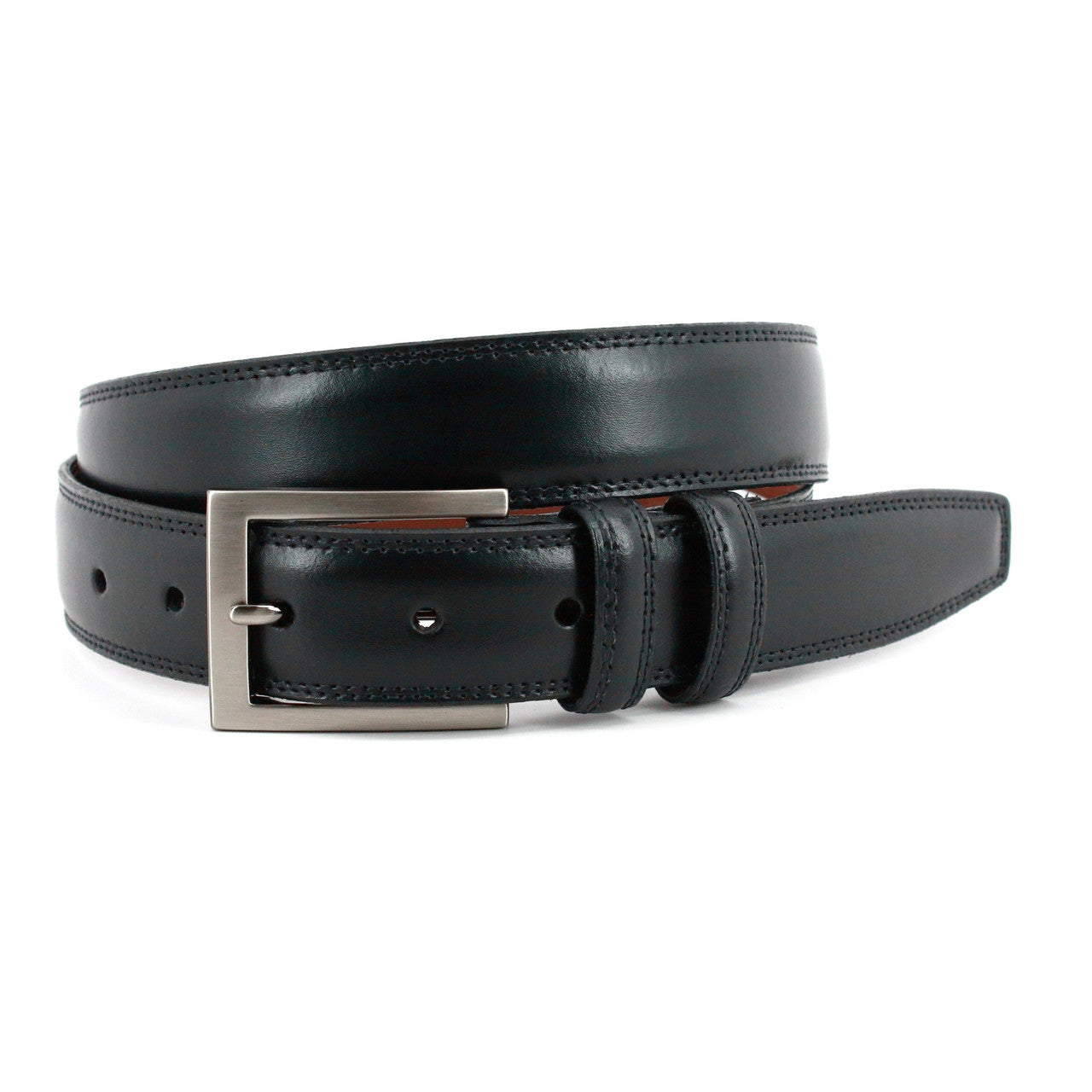
Glazed means polished under pressure to a high shine. Formal, reflective, and the classic look under a suit. Glazed kipskin $90.
Milled means the leather was tumbled in a drum to raise a soft, irregular grain. Glazed milled calfskin at $185 gets both: texture from the milling and shine from the glazing. It's the dressiest thing on this page.
Tumbled is the same drum process without the glaze. Softer, more matte, more casual. Burnished tumbled at $90.
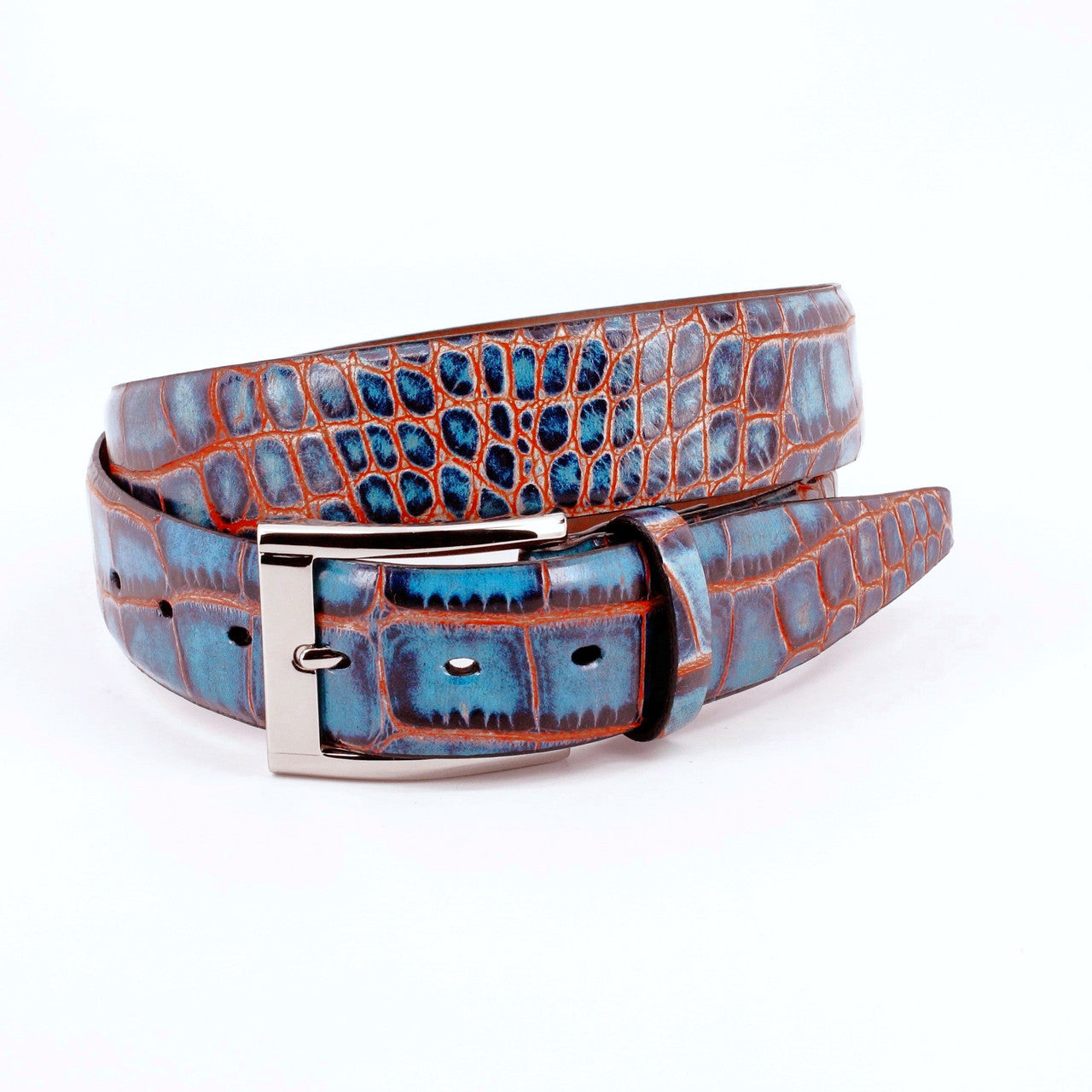
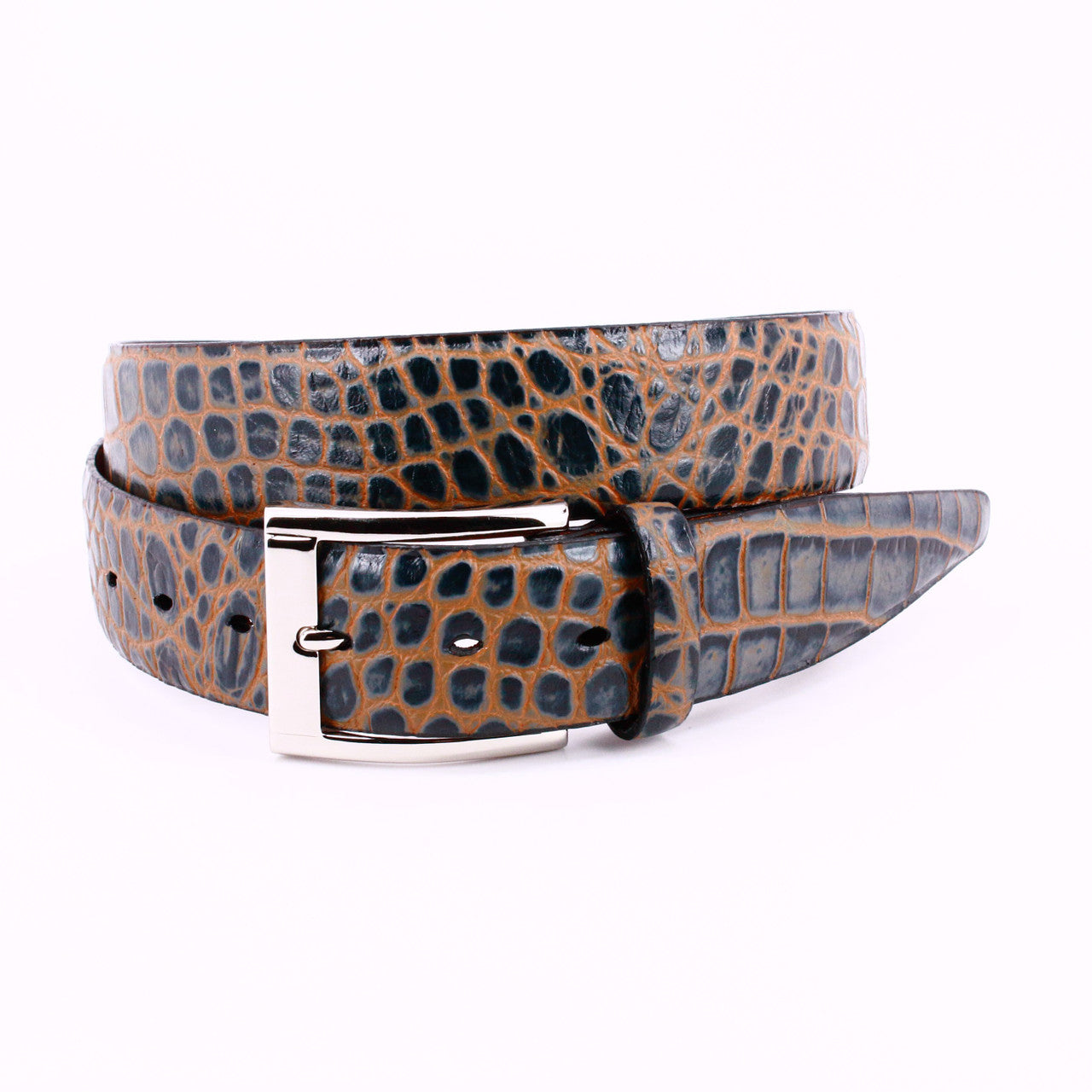
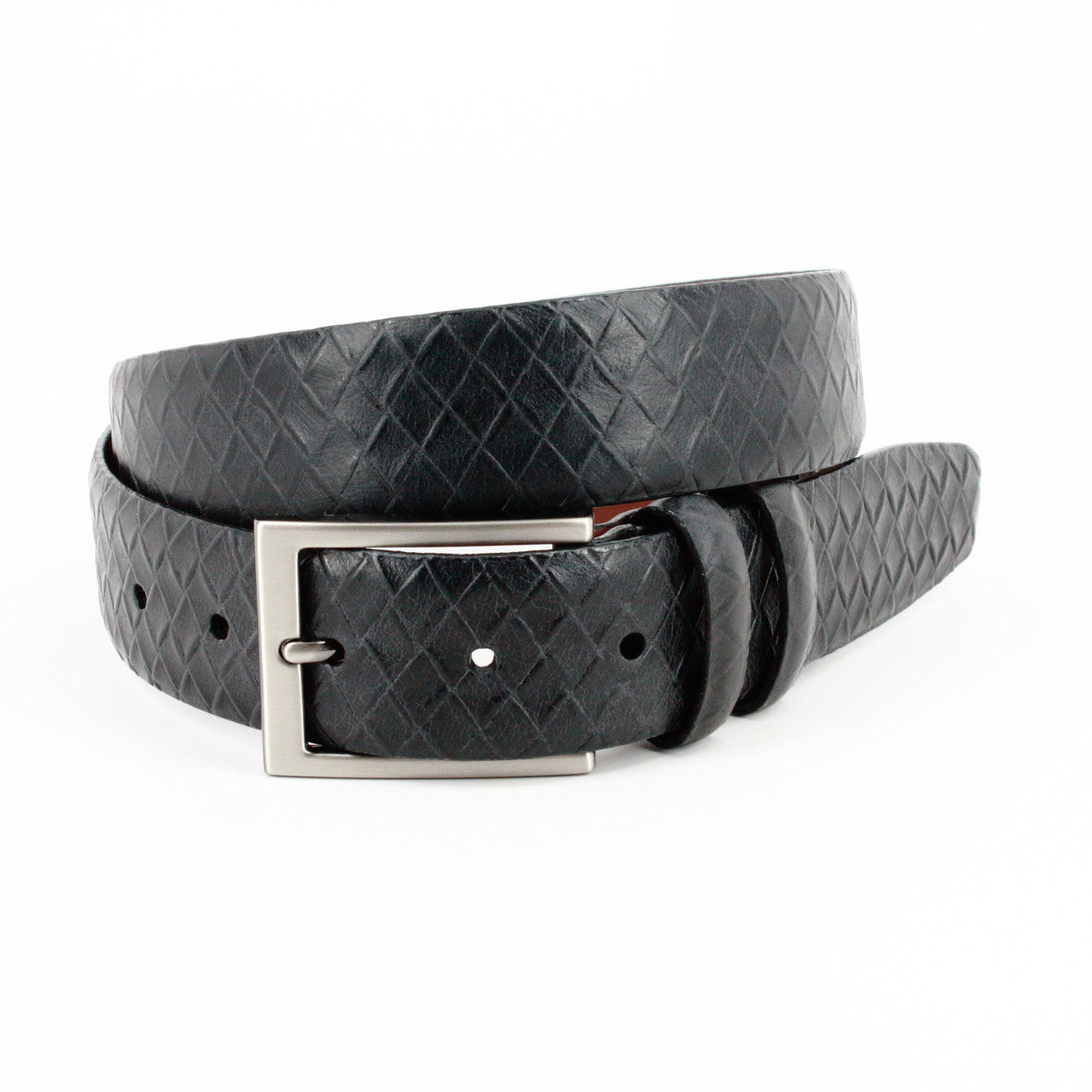
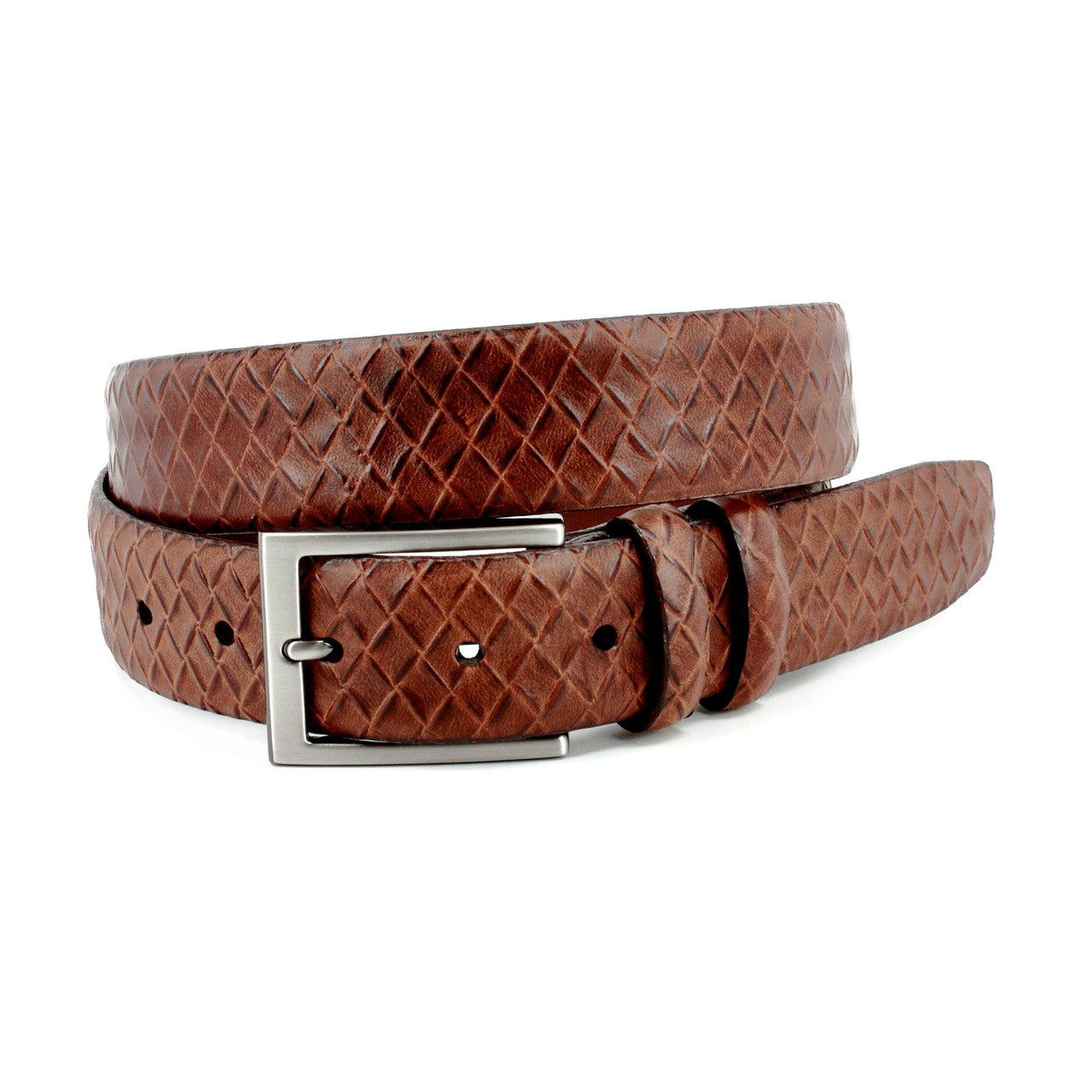
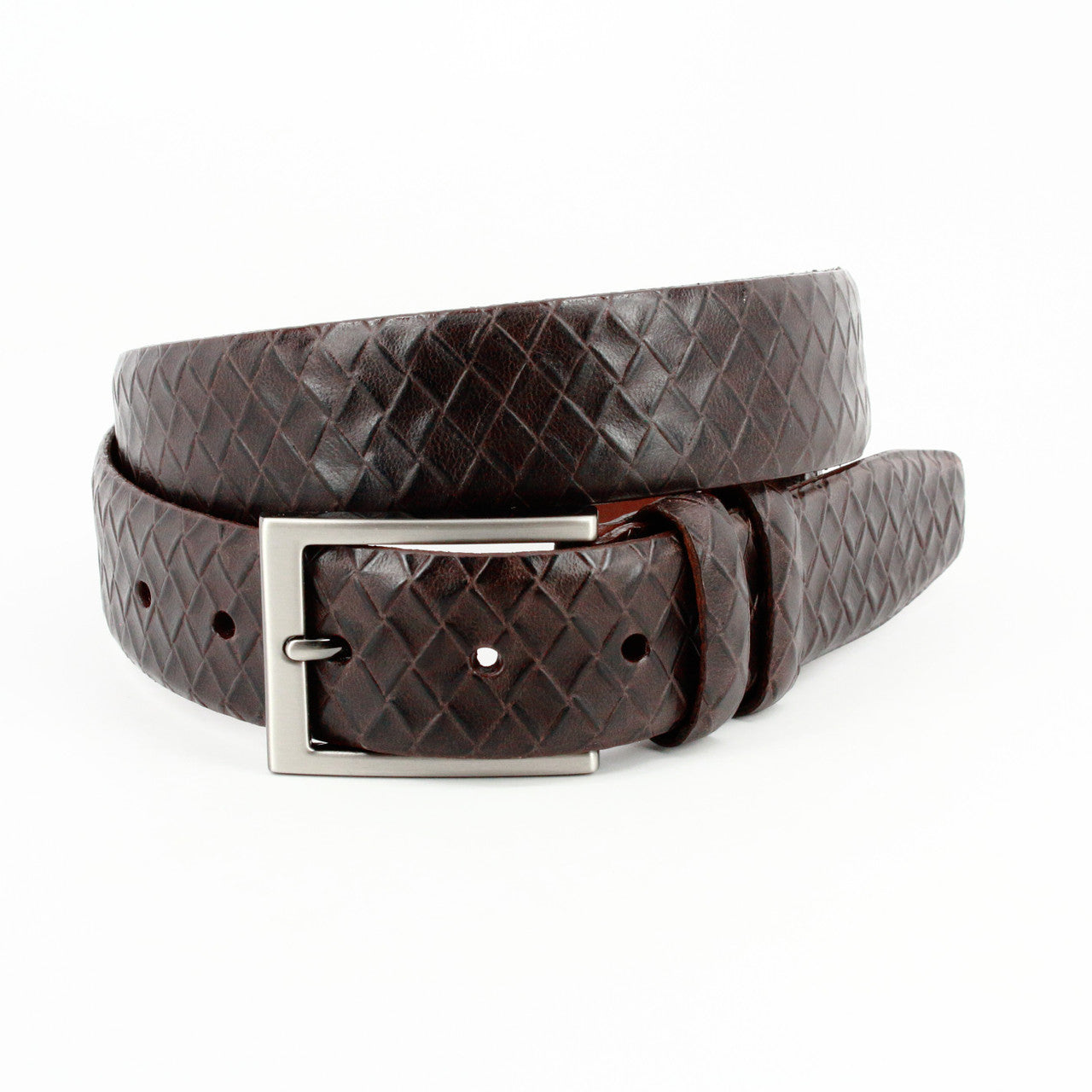
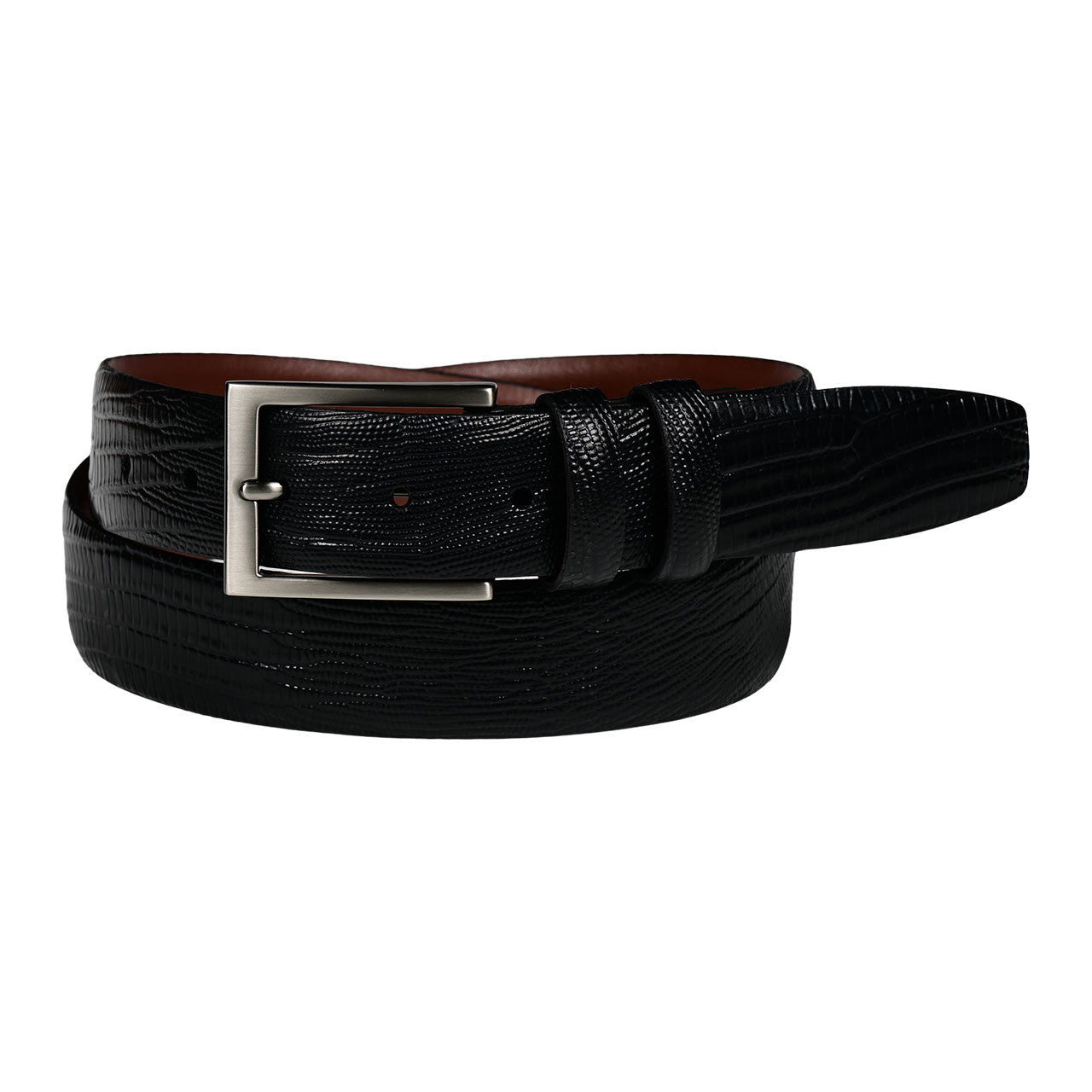
Pebble grained is a raised pebble texture, at $95 in black and brown. Note the difference from bison, where the pebble is the animal's own grain rather than a finish.
Bulgaro is a traditional Italian finish, firm and slightly waxy, at $150.
Hand stained means color applied by hand rather than sprayed, so no two straps are identical. Kipskin at $125 in espresso, walnut, and brown.
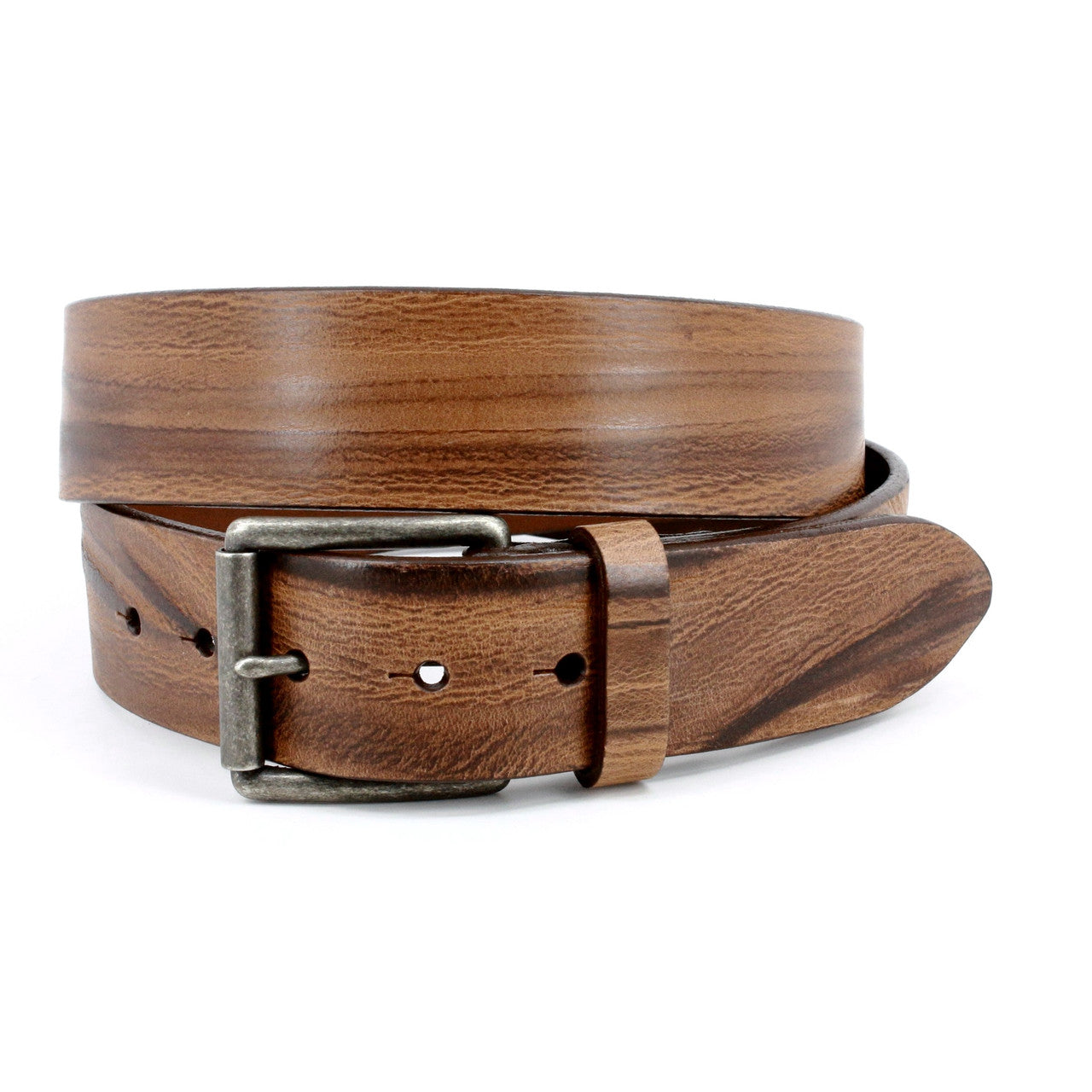
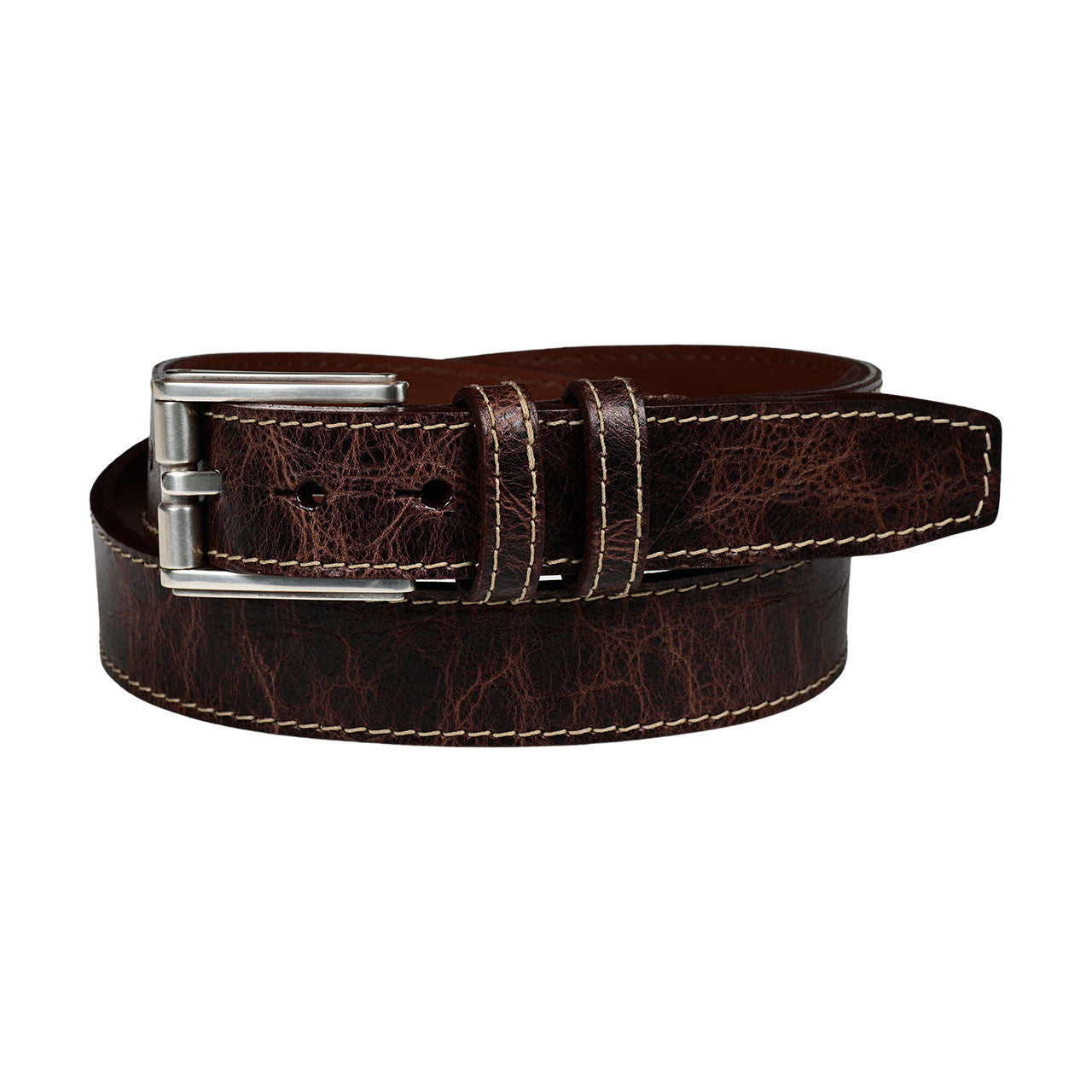
Aniline is dyed all the way through with no pigment layer on top, so you see the real grain including the animal's own marks. It picks up color with wear faster than anything else here, and at $70 it's the least expensive belt on the page.
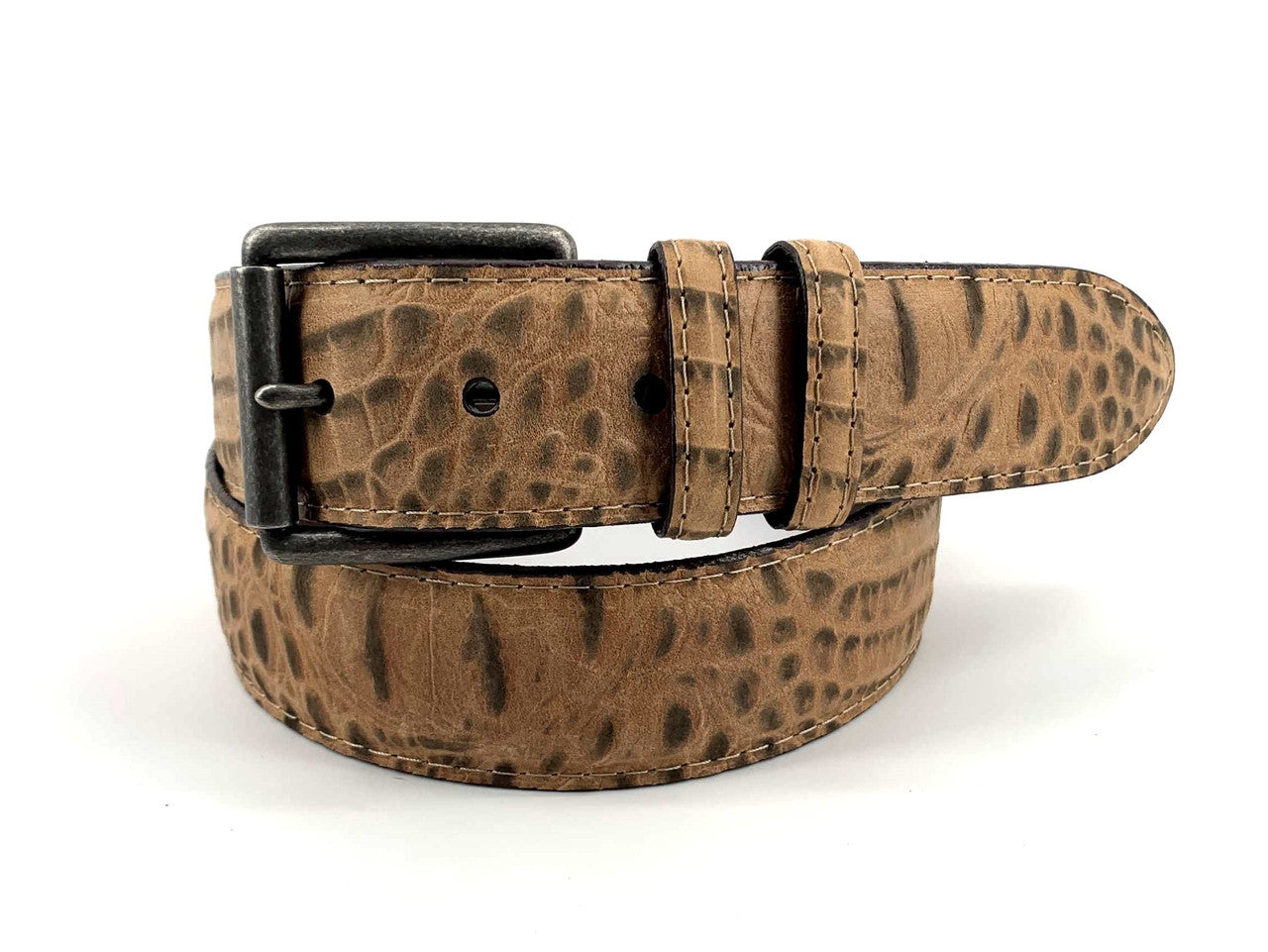
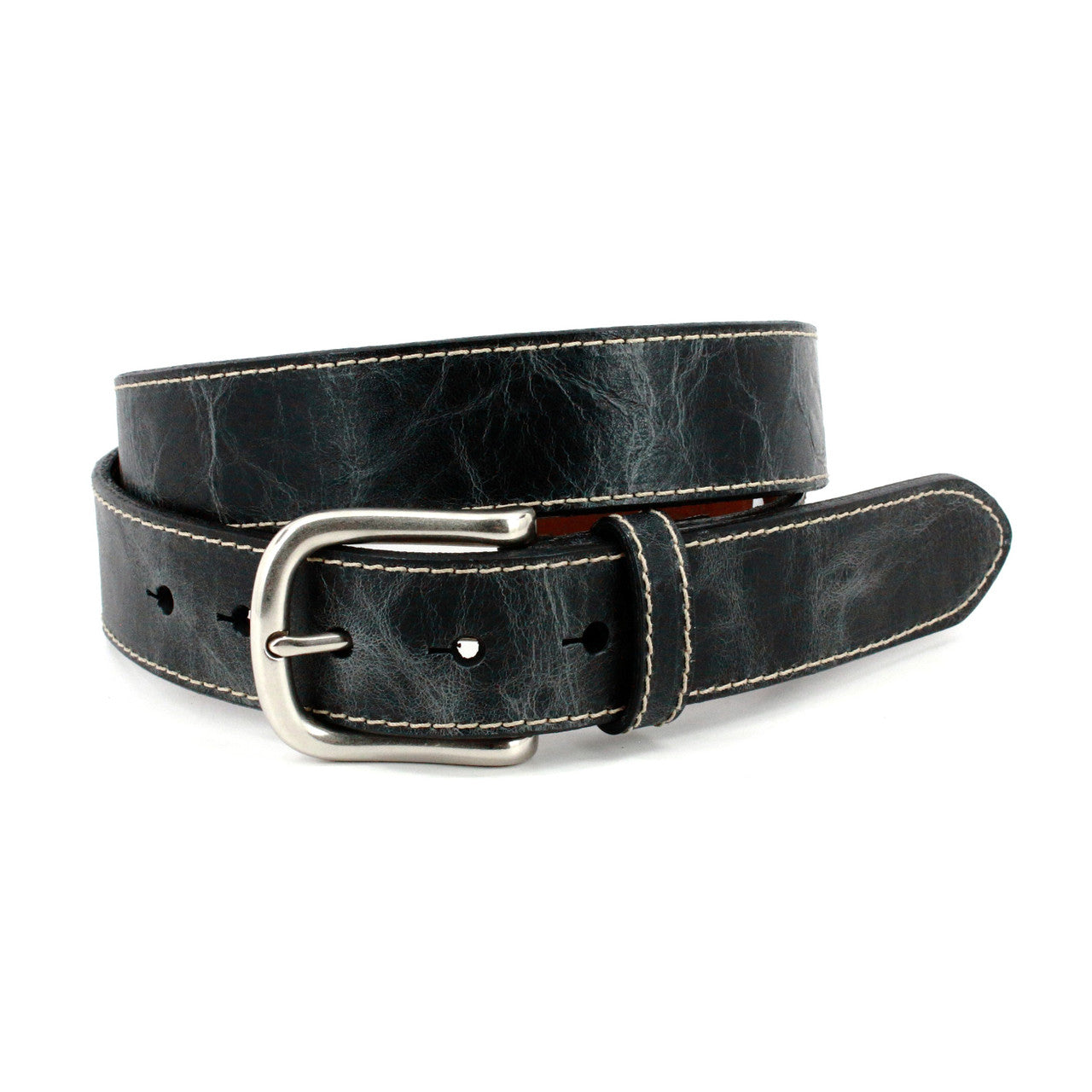
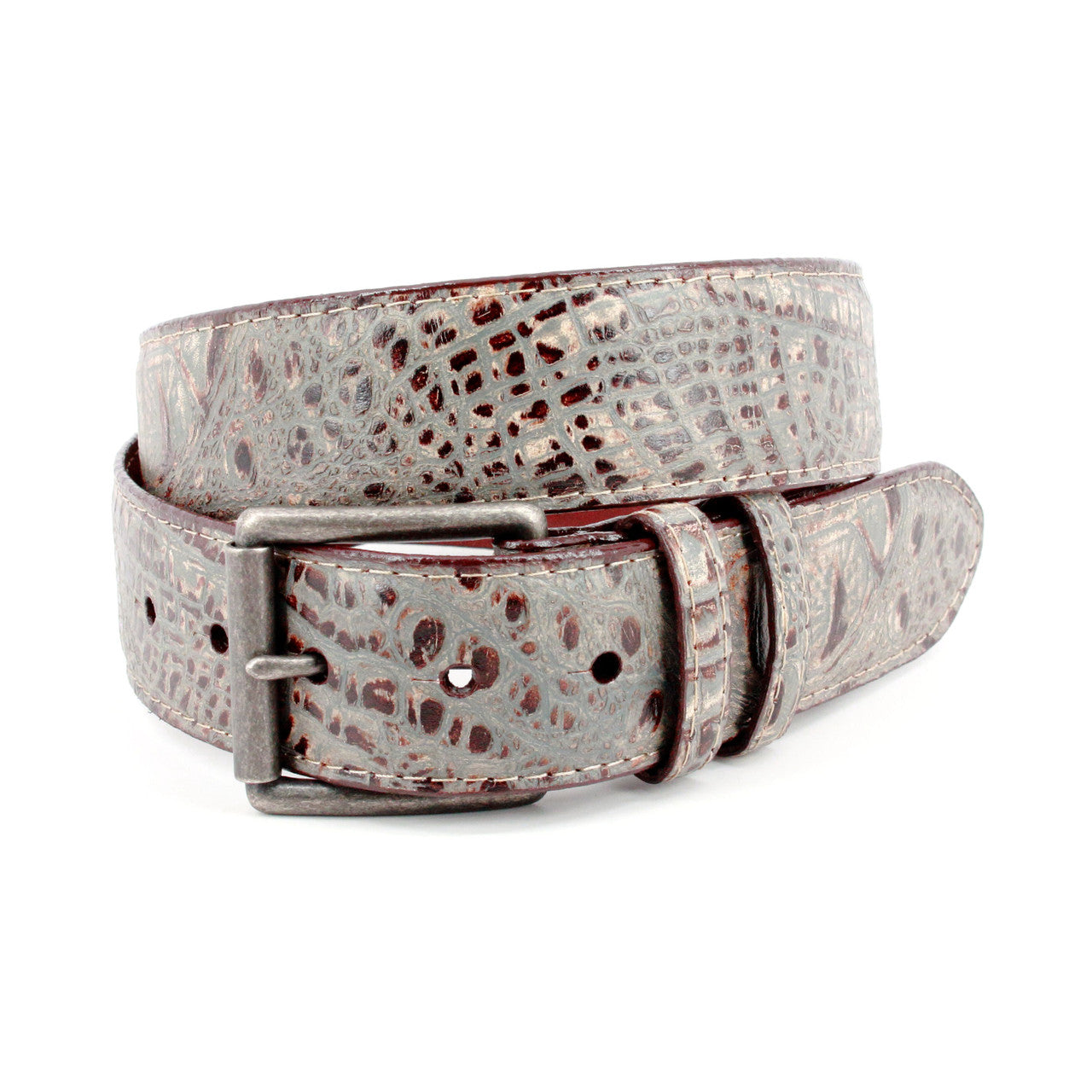
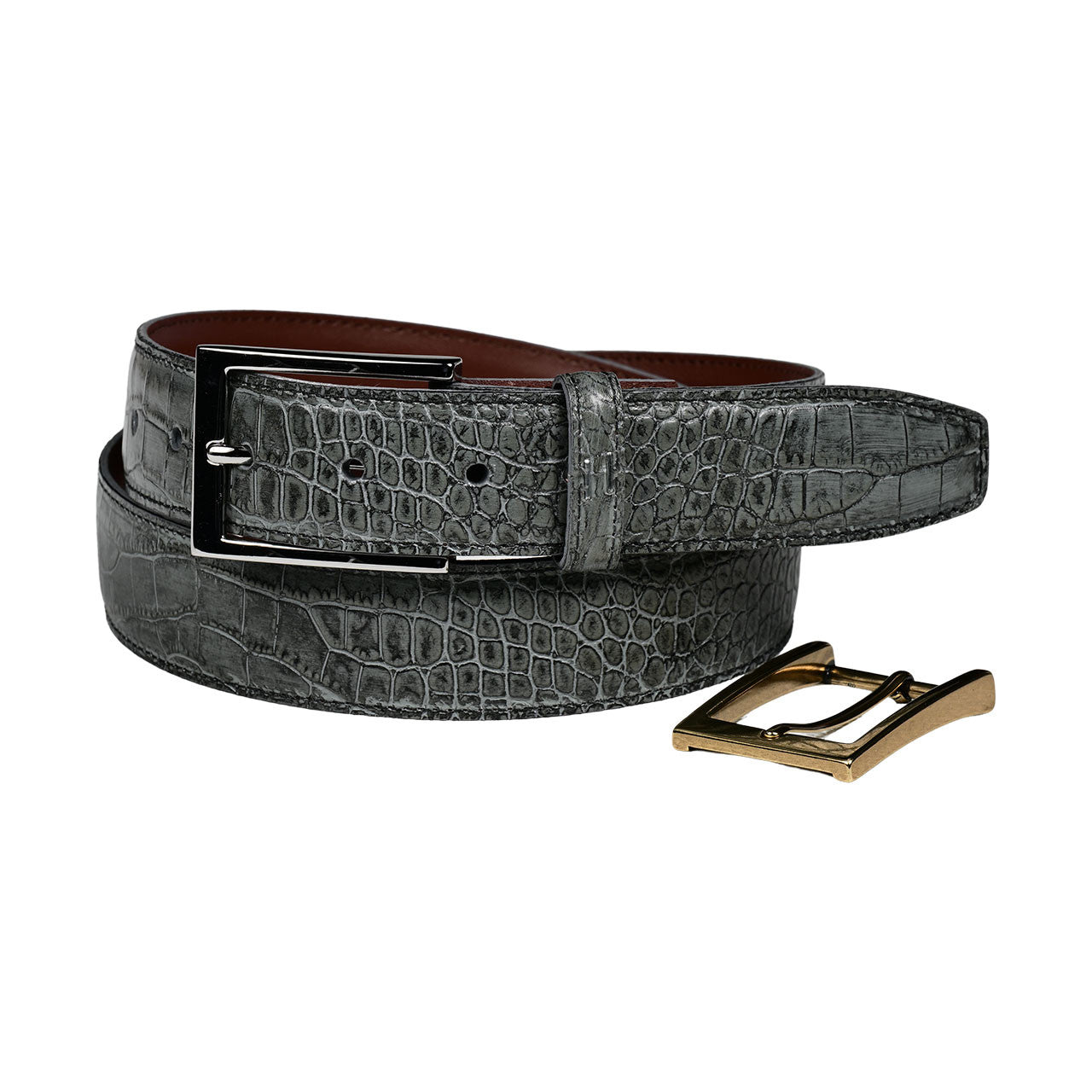
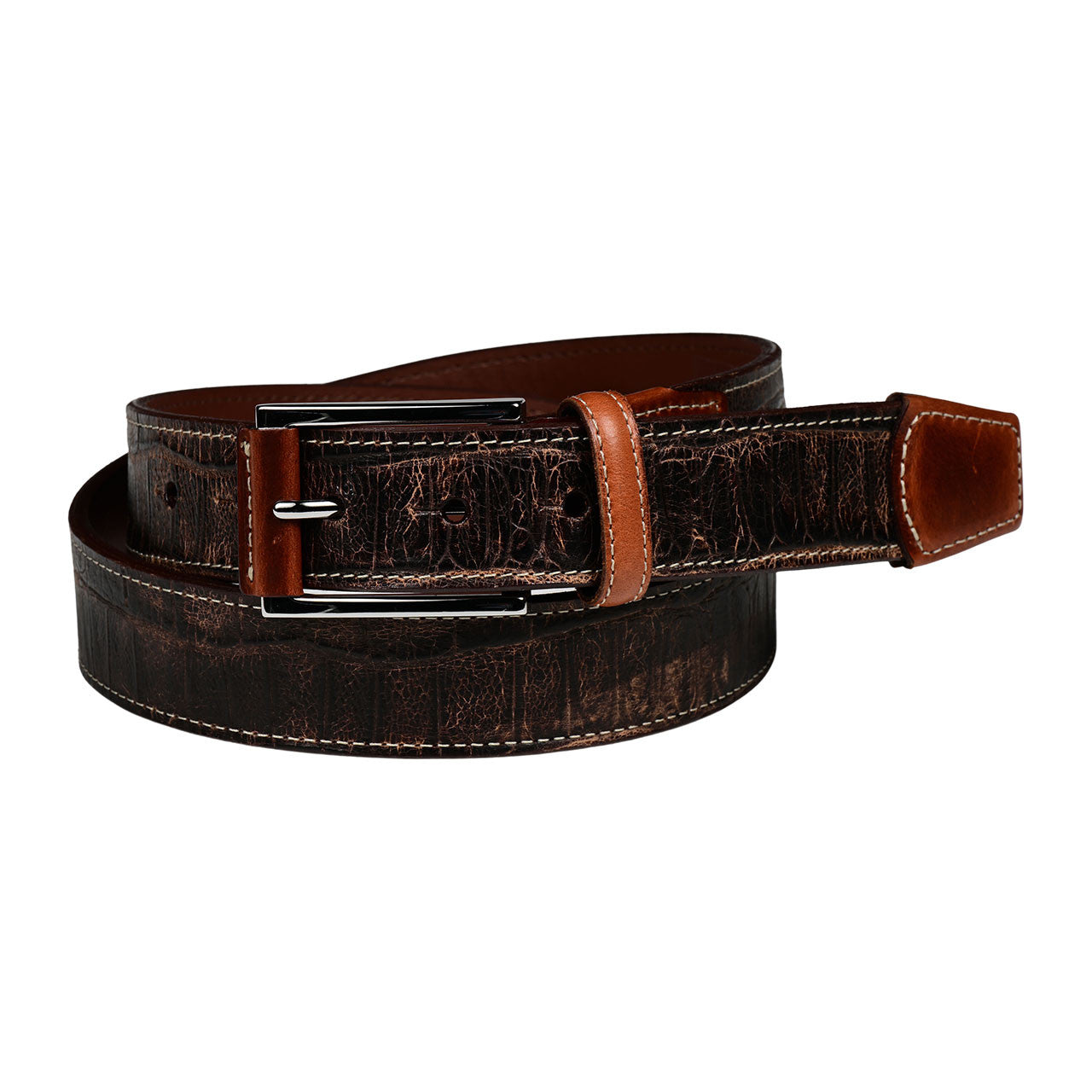
Distressed is finished to look worn from the start, usually with antique brass hardware.
Two belts in one
Two reversible styles here, and they're the most practical thing on the page if you travel.
The pebbled veal to burnished veal at $105 goes black on one side and cognac on the other, with two different textures. The aniline reversible at $75 is black to brown. The buckle rotates, you flip the strap, and one belt covers both your shoe colors.
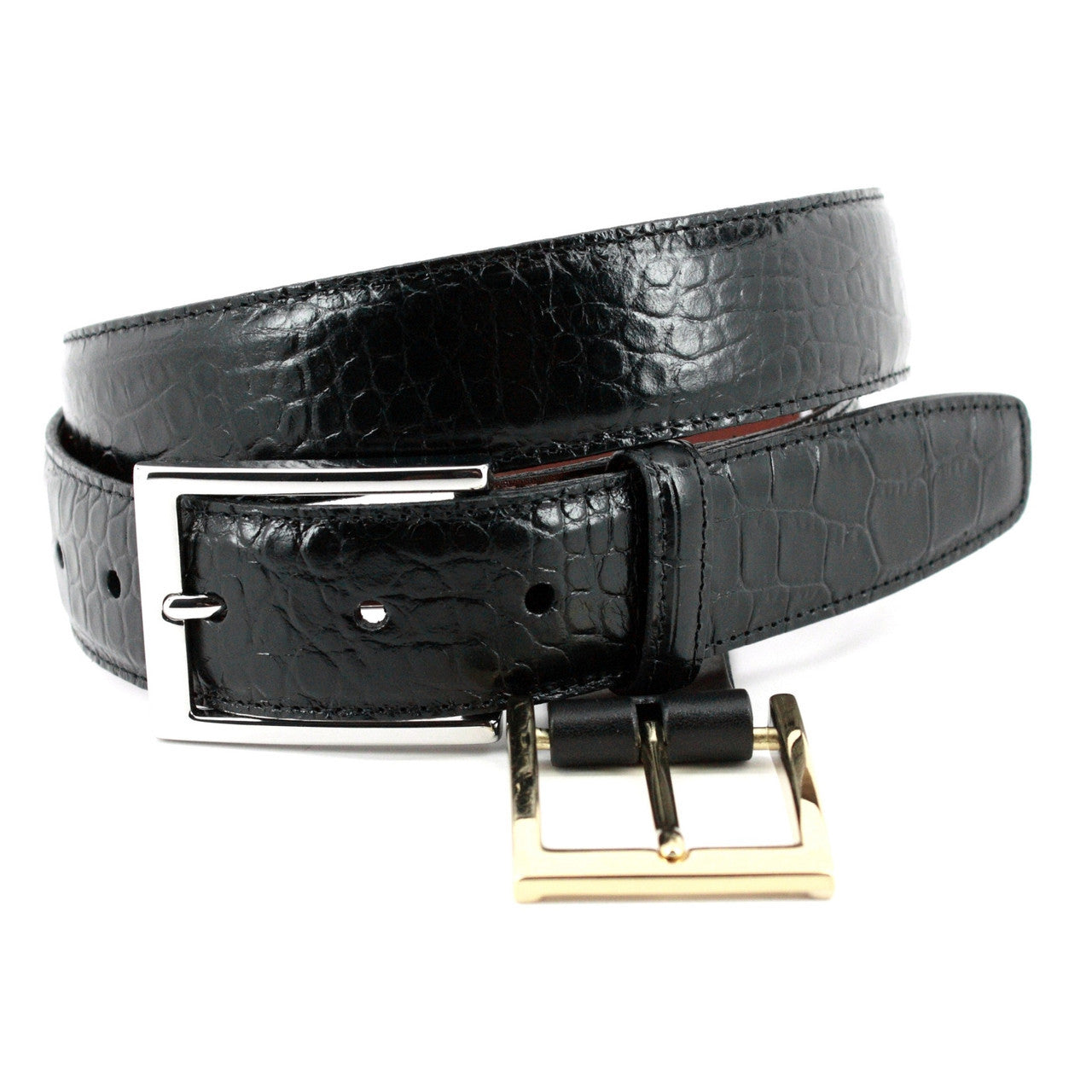
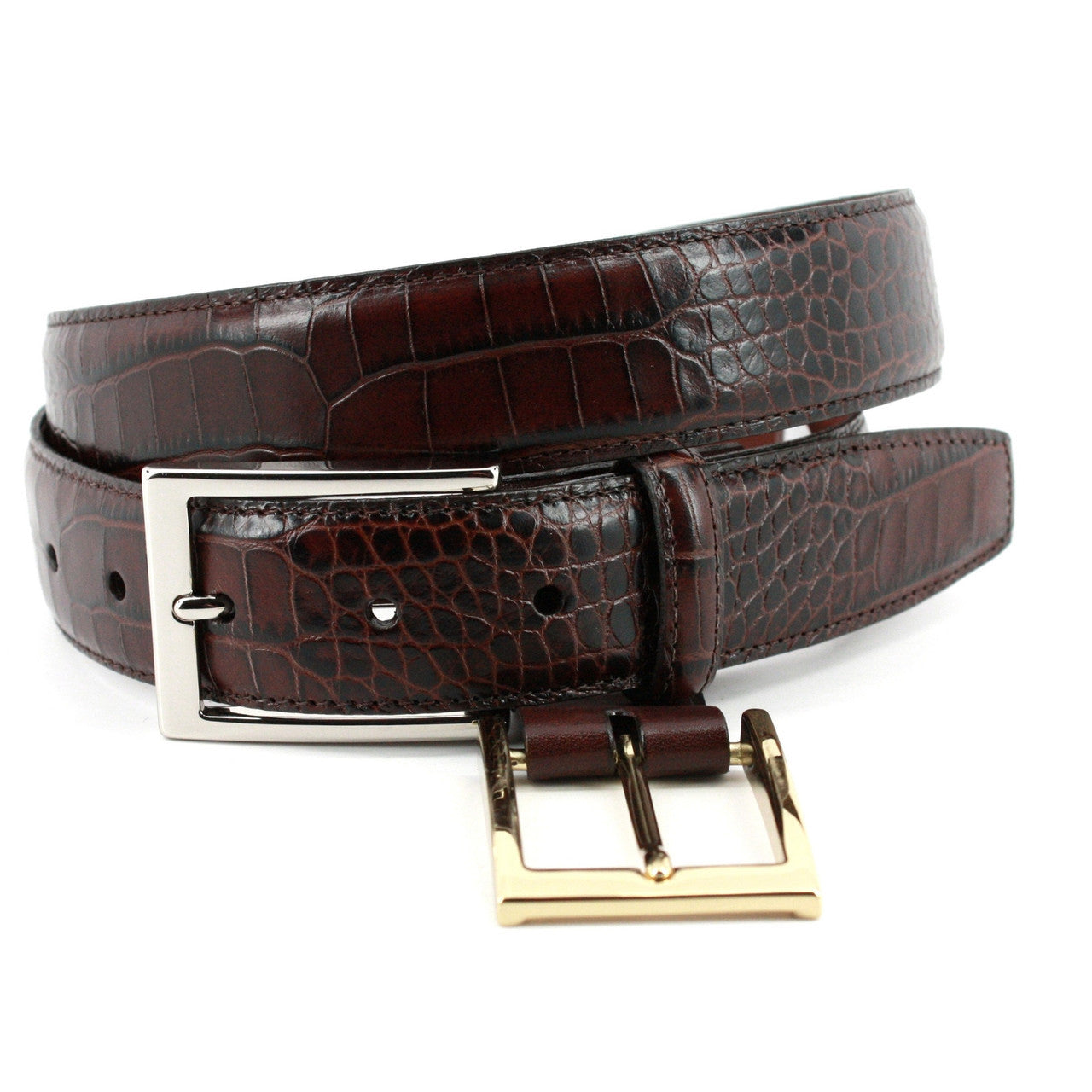
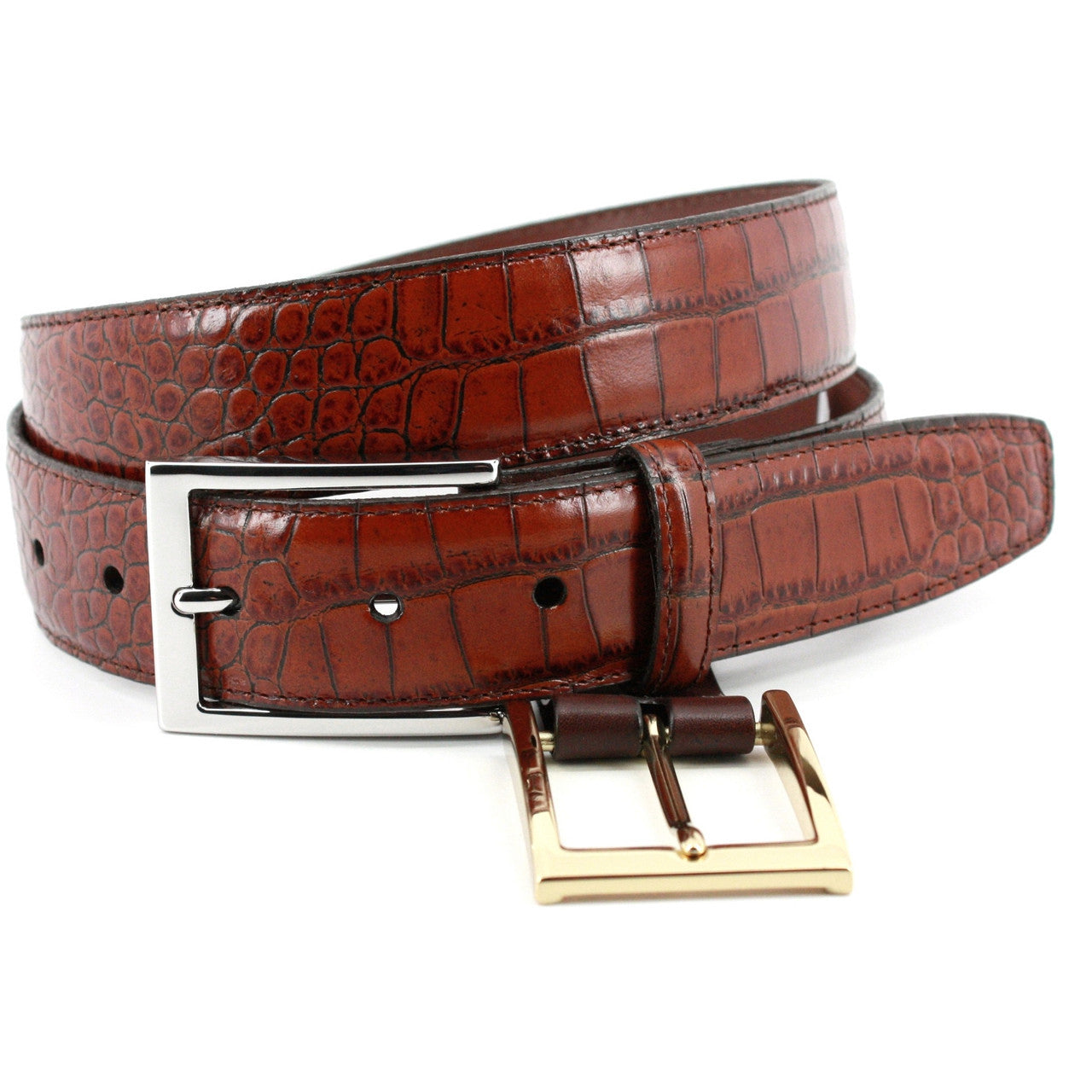
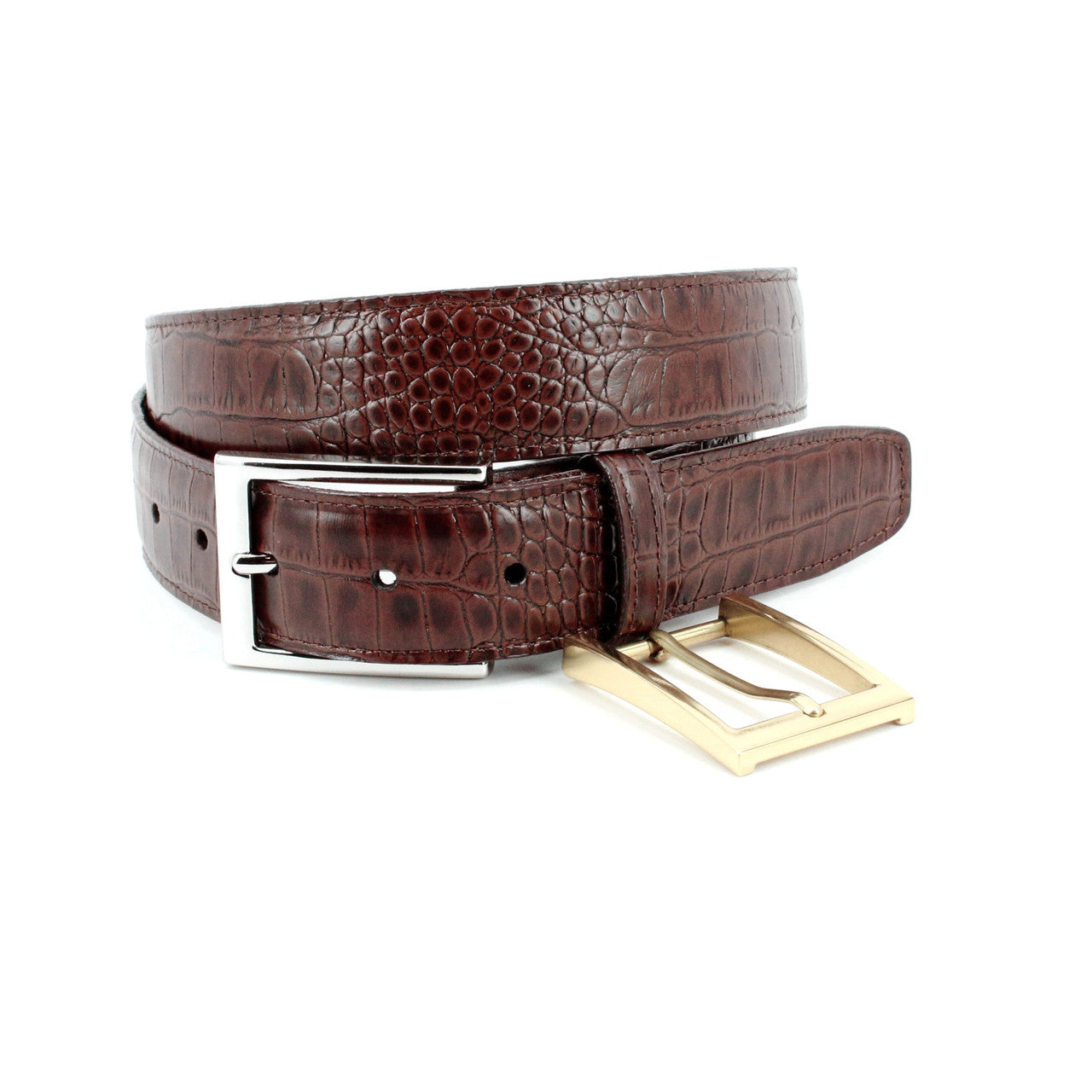
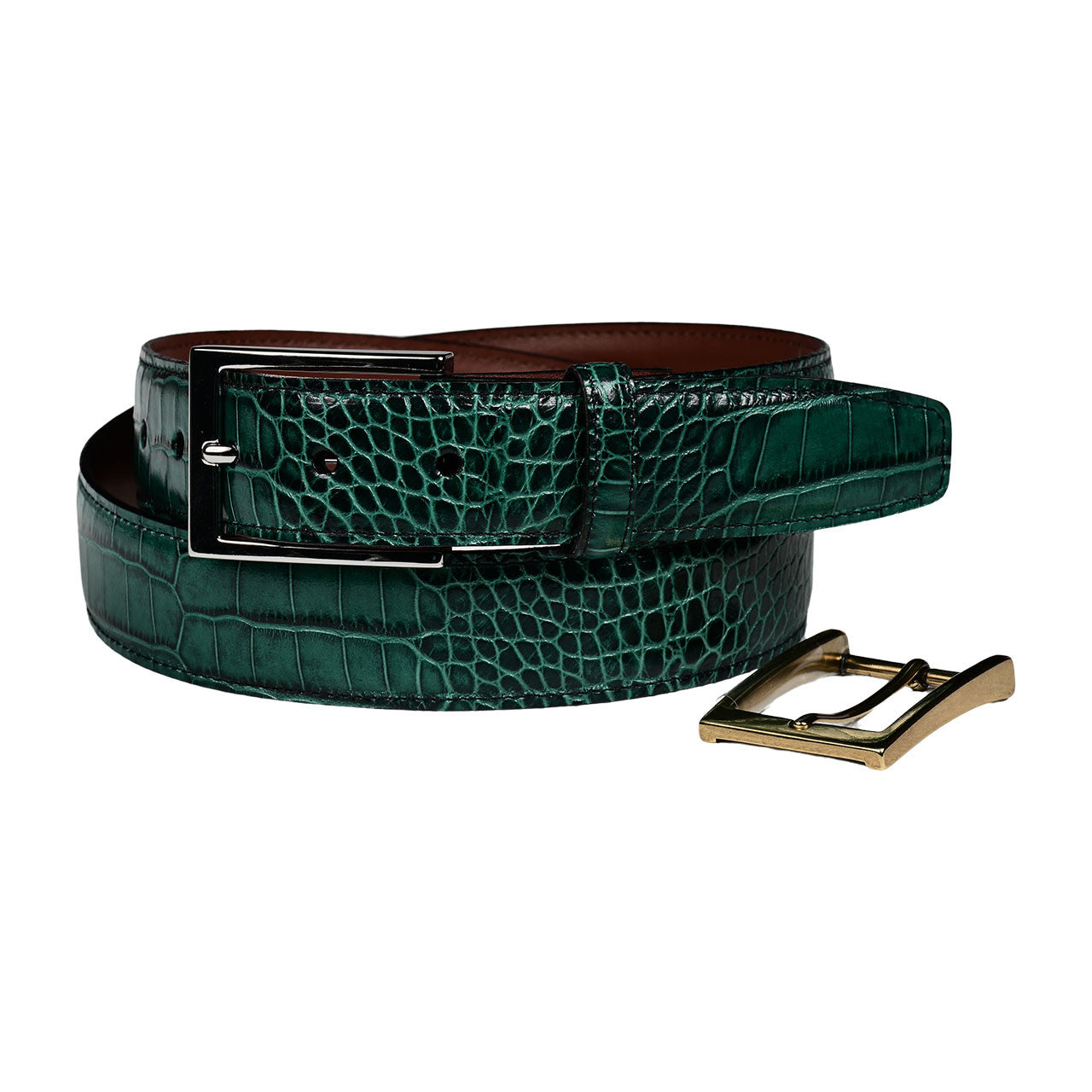
Separately, several styles are listed as double buckle option, which means you choose brass or nickel at checkout. Brass with brown, tan, and cognac. Nickel with black, grey, and navy.
What to buy
First belt, spend the least: Italian aniline at $70. Real leather, dyed through, and it improves with wear.
Best value: burnished kipskin at $105. It looks like a $170 belt.
Under a suit: glazed milled calfskin at $185, in black or navy. Navy is the one most men don't think to buy and then wear constantly.
One belt for everything: a reversible at $75 or $105.
Care
Calfskin is the easiest leather here to look after and the easiest to ruin with too much product.
Wipe with a dry cloth. Condition about twice a year, and use very little, because conditioner darkens leather permanently and there's no undoing it. A burnished or hand stained belt is especially easy to flatten this way, since the whole point is uneven color.
Rotate your belts, store them rolled or hanging flat, and let a wet belt dry away from heat.
Related
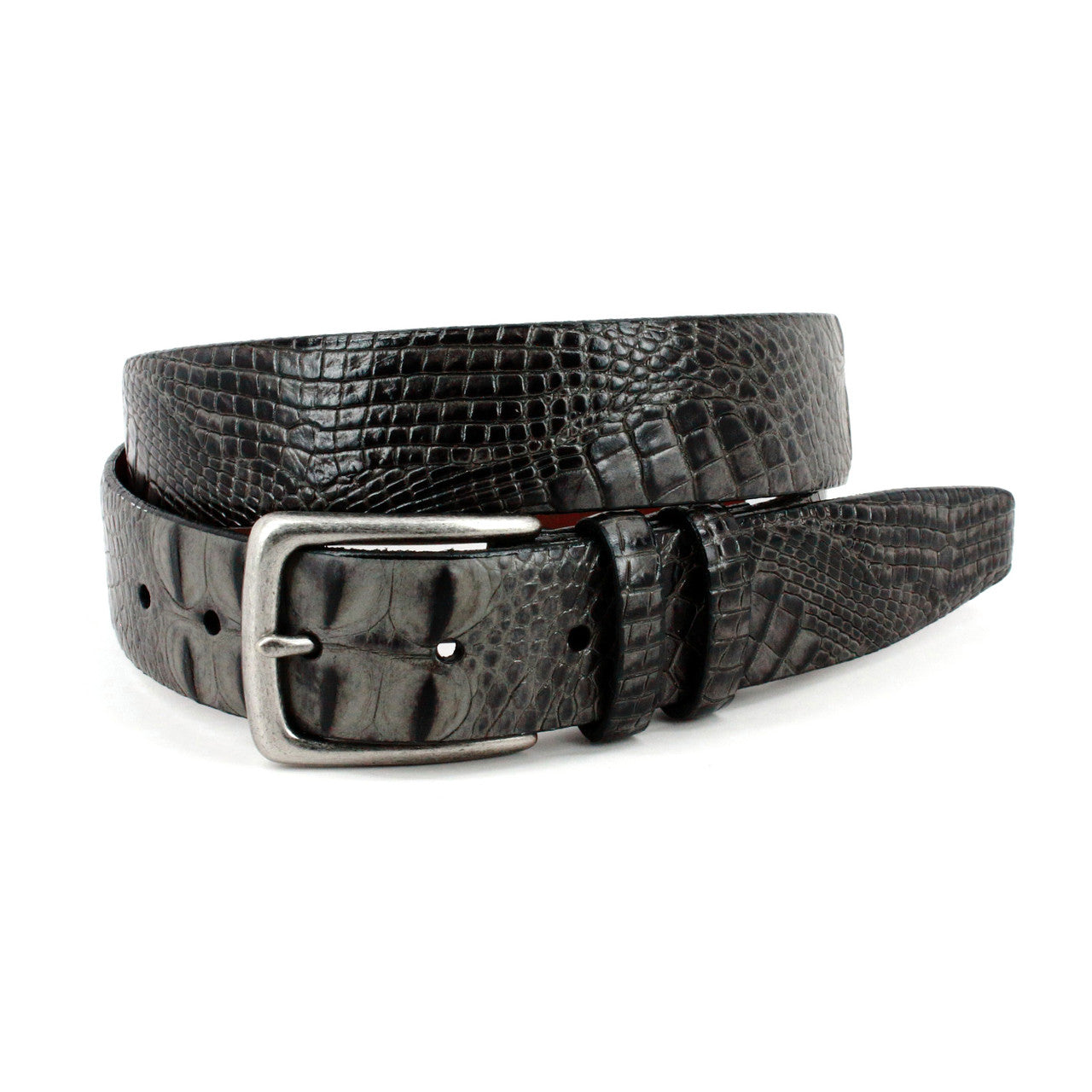
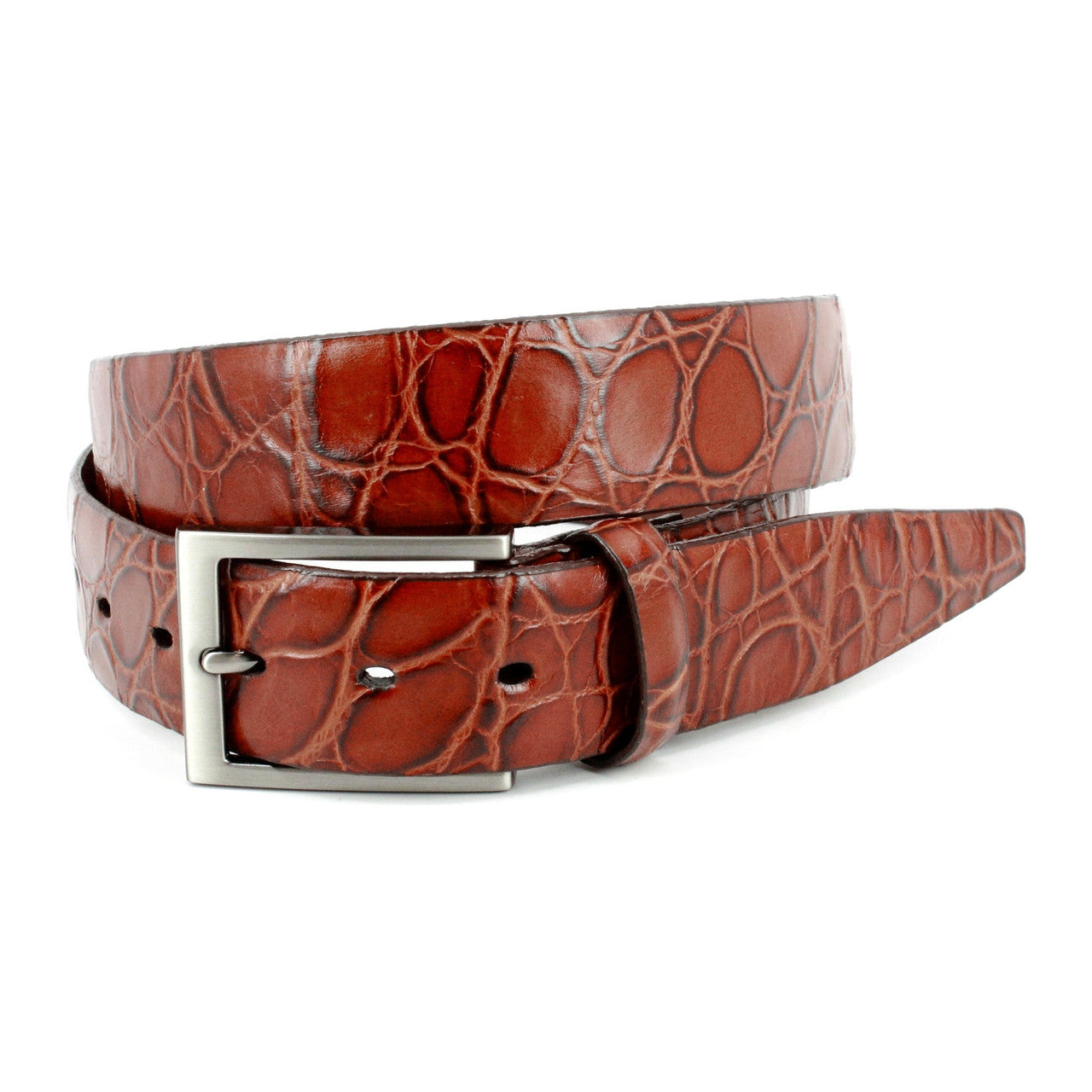
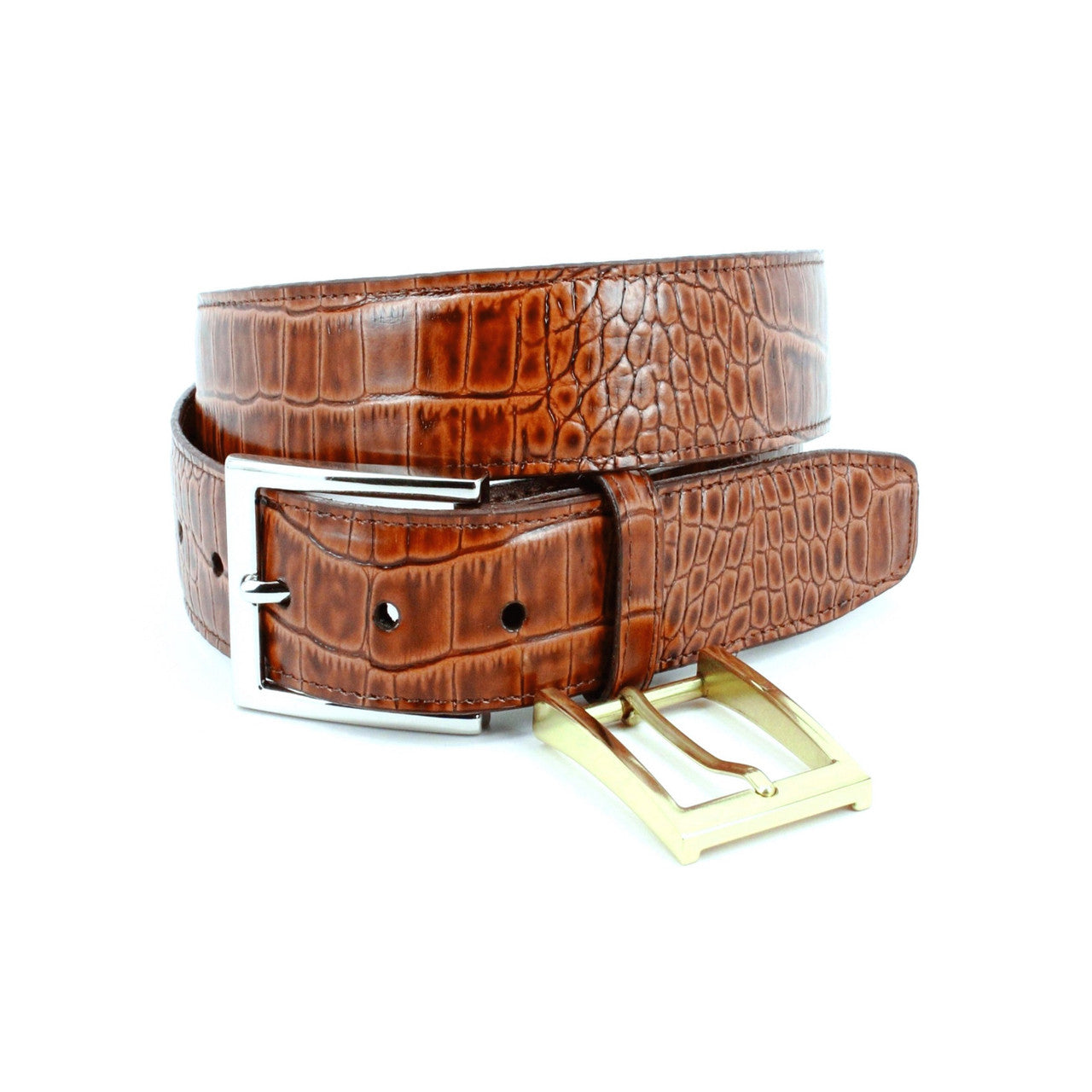
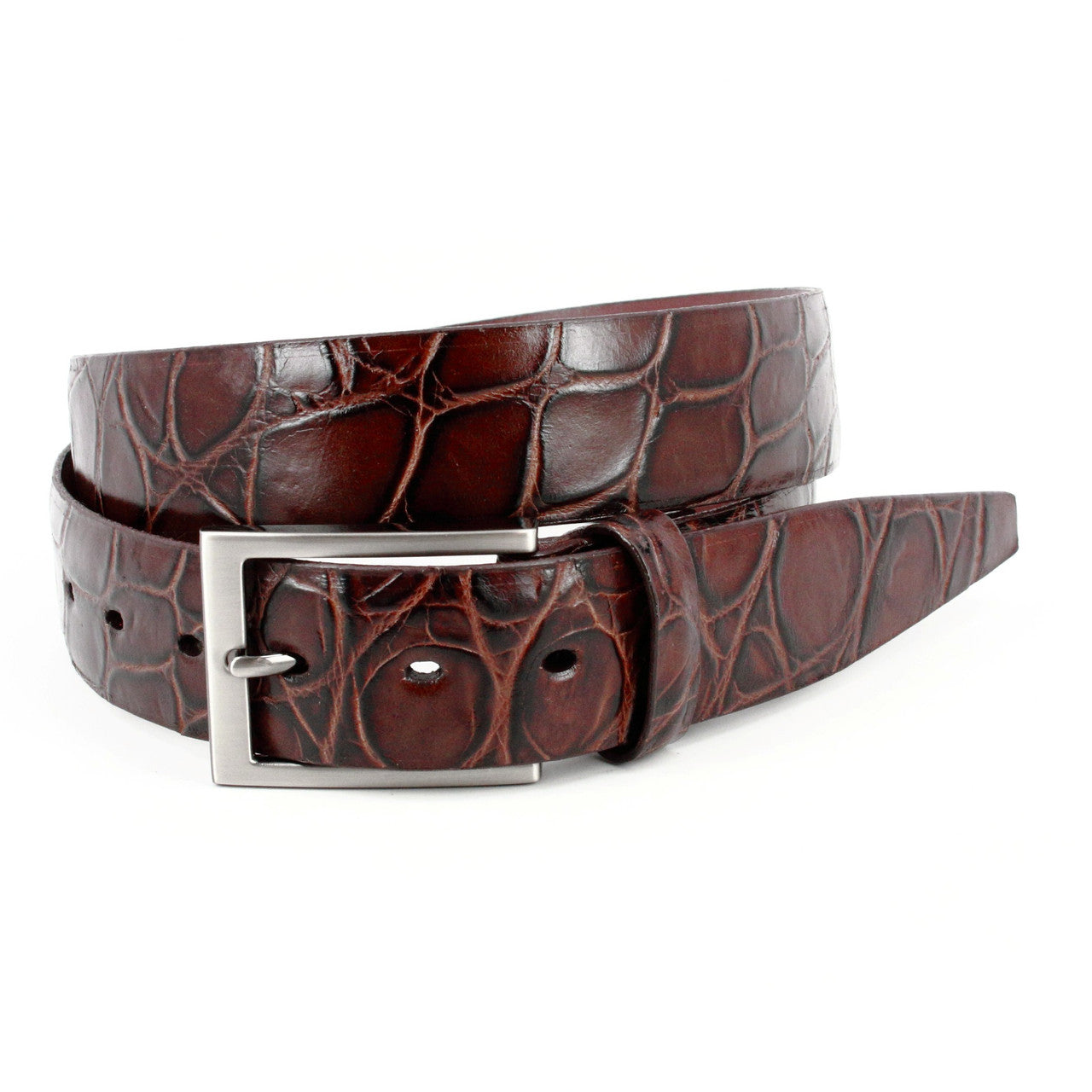
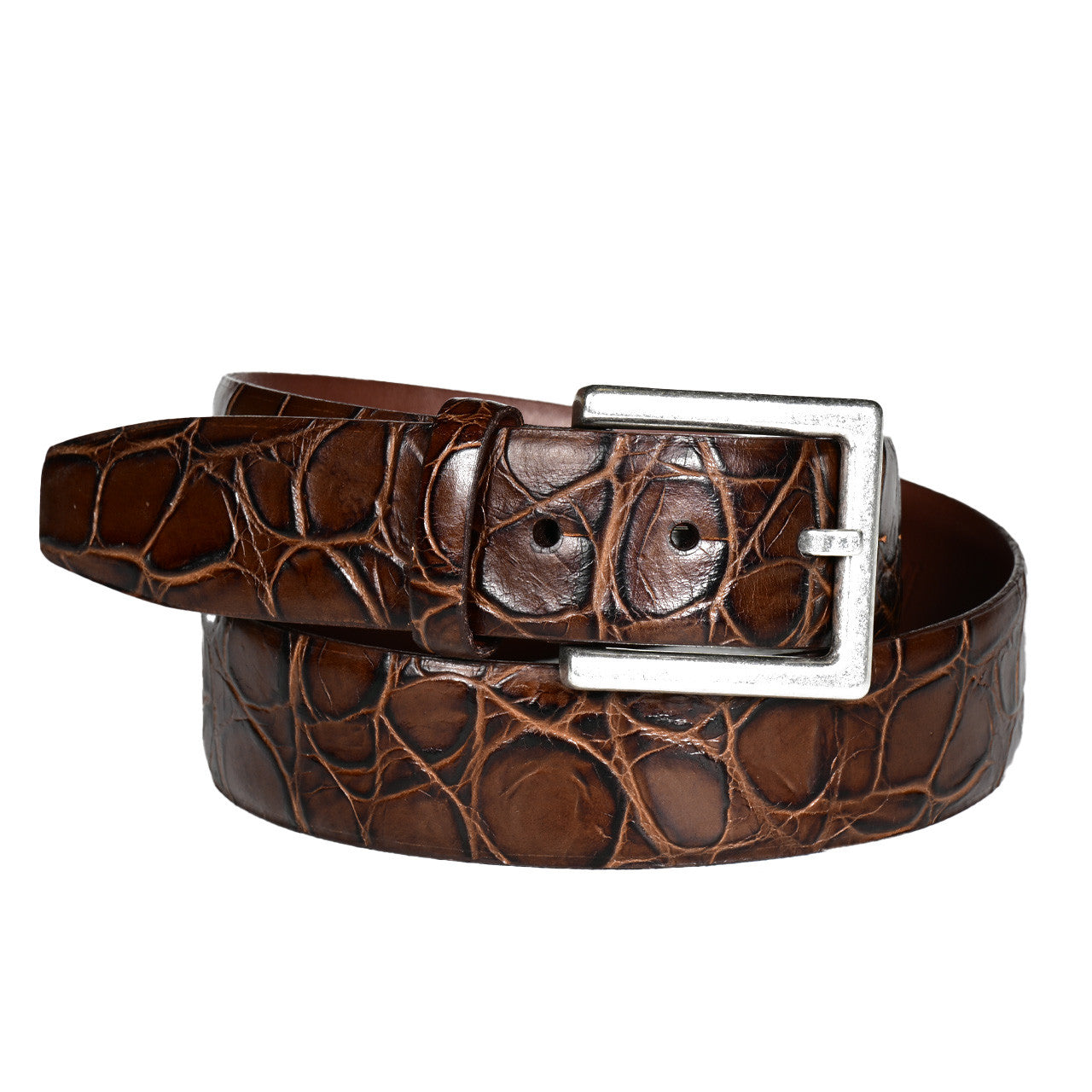
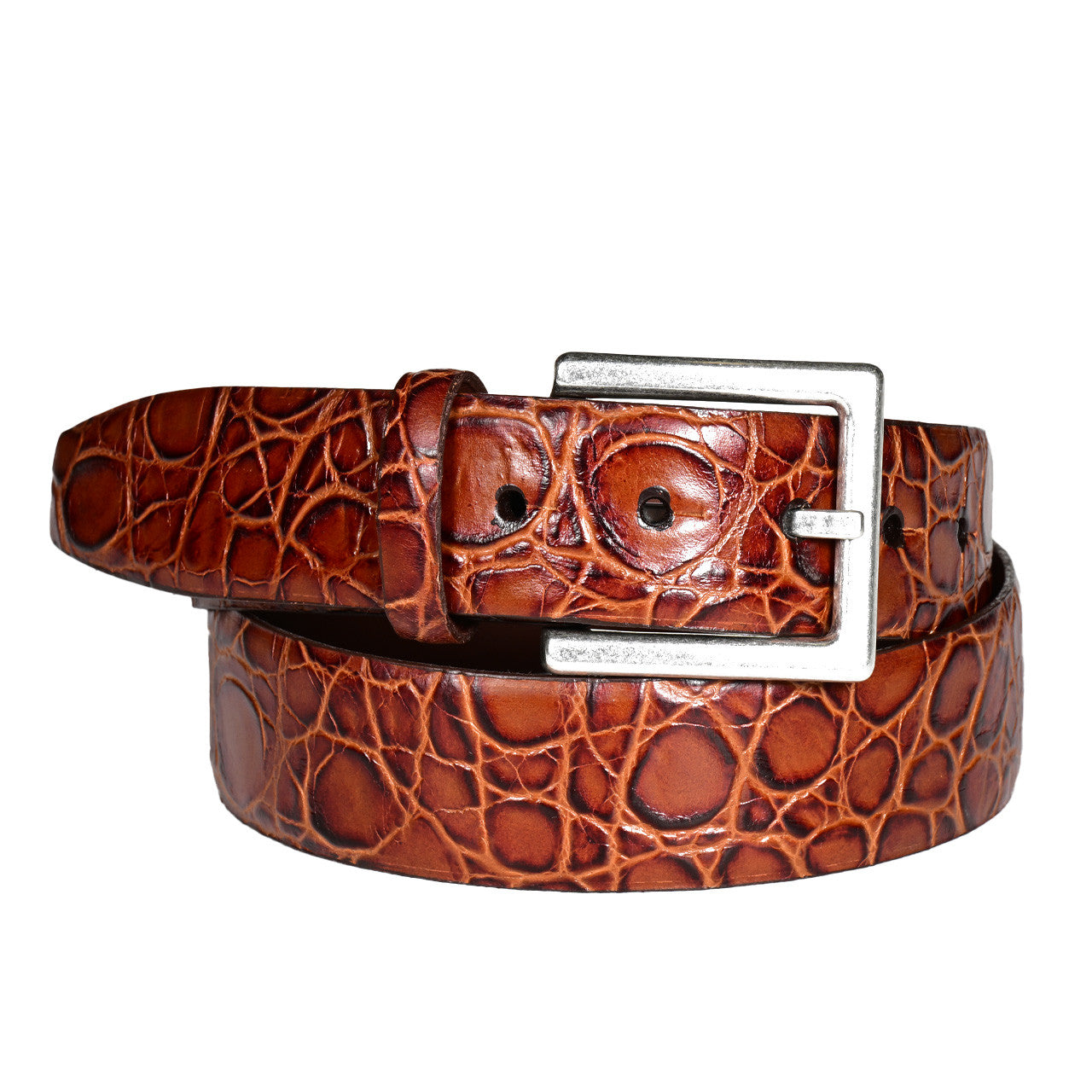
For calfskin stamped with exotic patterns, see Embossed Exotic. For the napped side of the same hide, see Suede. For natural pebble grain rather than a finish, see Bison. Narrow dress straps are in Dress Belts, longer sizes in Extended Sizes, and the whole line in all belts.
Questions we get
What is the difference between calfskin and kipskin?
Both come from young cattle. Calfskin is from a younger animal with a finer, tighter grain that takes a higher polish. Kipskin is from an older calf, slightly thicker and a little more durable, with grain nearly as fine.
What does burnished leather mean?
Color applied unevenly and worked into the leather, so the strap is darker at the edges and lighter through the middle. It gives depth and an aged look from the first day.
What does milled leather mean?
The leather was tumbled in a drum to raise a soft, irregular grain. Glazed milled leather is milled first for texture, then polished for shine.
What is aniline leather?
Leather dyed all the way through with no pigment coating on the surface, so the natural grain and the animal's own markings stay visible. It develops color with wear faster than finished leather.
Is calfskin better than cowhide?
For a dress belt, generally yes. Calfskin has a finer, tighter grain and takes a higher polish. Full cowhide is thicker and better suited to heavy casual straps.
Which calfskin belt should I buy first?
Italian aniline at $70 if you want the least expensive real leather belt that improves with age, or burnished kipskin at $105 if you want the best value on the page.
How do I care for a calfskin belt?
Wipe with a dry cloth and condition about twice a year using very little product. Too much conditioner darkens leather permanently and flattens the uneven color on burnished and hand stained straps.